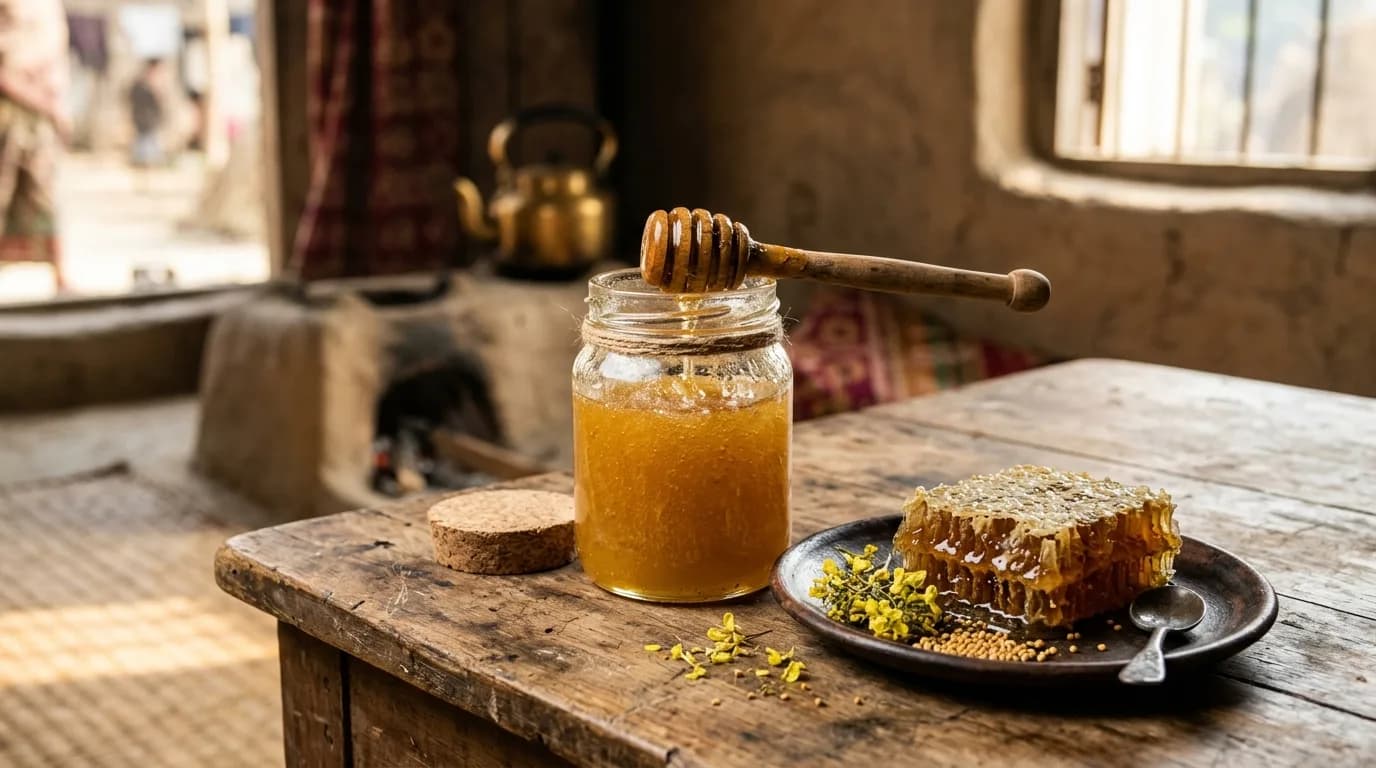
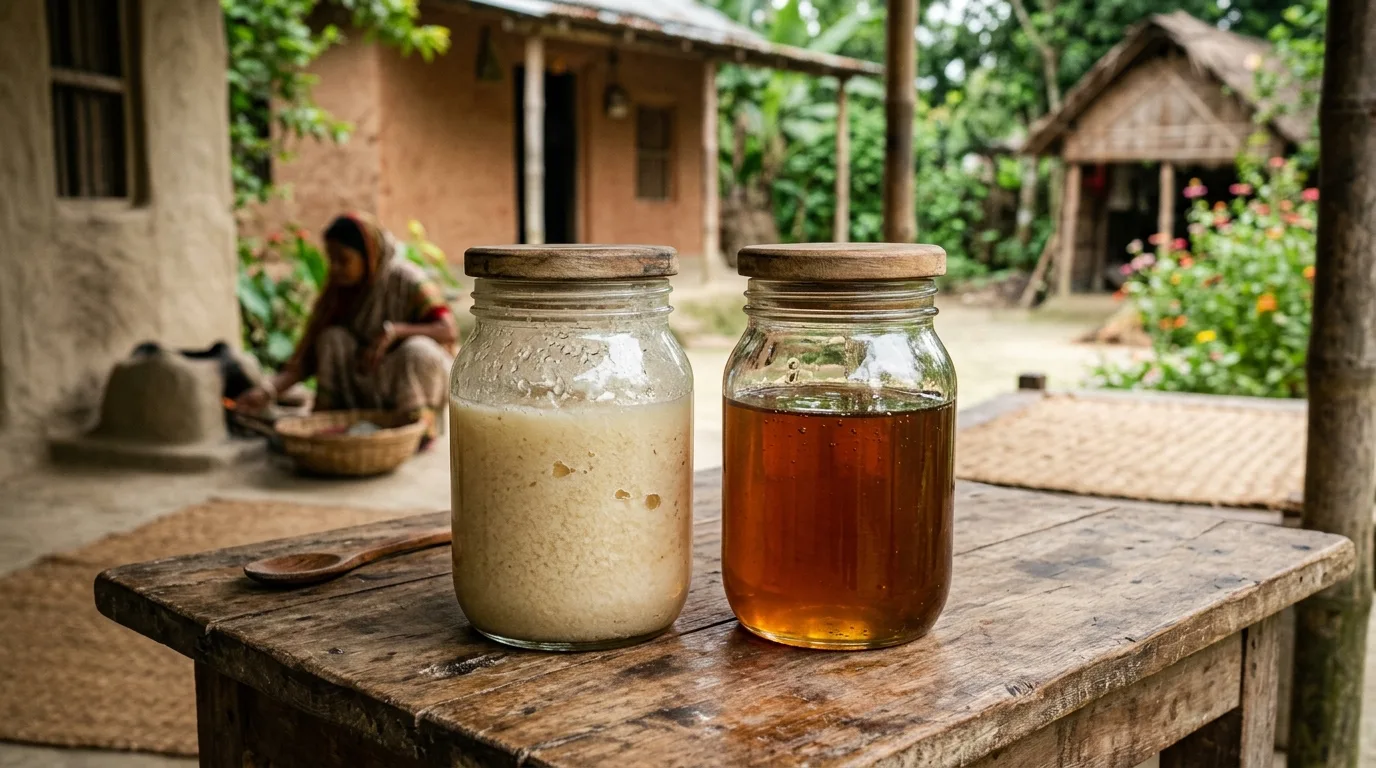
Every winter, as morning mist settles over the riverbanks of northern Bangladesh, our customer messages start sounding the same. A jar of clear golden honey arrived just a few weeks ago, but now it looks cloudy, gritty, or firm enough to cut with a knife. People often worry someone fed them table sugar or cheap adulterated syrup. The truth is simpler: understanding why pure honey crystallizes in winter shows that this change is actually one of the clearest signs of unadulterated honey.
Crystallized honey isn't spoiled, and it isn't fake. It's chemically natural, safe to eat, and full of flavor. To see why it happens, we have to look past common market myths and check the natural sugars bees gather from flowers.
The Chemistry of a Supersaturated Natural Solution
Honey isn't simple sugar syrup; it's a dense, supersaturated natural solution[1]. Under typical room conditions, honey holds about 70% to 80% natural sugars—mostly fructose and glucose—dissolved in just 15% to 20% water[1]. Chemically, that small volume of water can't keep so many solids dissolved forever[1]. The balance is unstable by nature, simply waiting for the right conditions to settle out.
Honey's two main sugars behave quite differently. Fructose dissolves easily and stays dissolved, but glucose doesn't hold onto water nearly as well[1]. As glucose separates from the water, the molecules hook onto each other, creating firm glucose monohydrate crystals[1].
They don't just appear out of thin air. The crystals need tiny seed particles—called nucleation sites—to take hold and grow[1]. In raw, unheated honey, thousands of these specks float naturally: grains of floral pollen, flecks of beeswax, propolis dust, and microscopic air pockets[1],[4]. Glucose crystals latch onto these bits, gather strength, and spread across the jar[1],[4]. Commercial honey pushed through ultra-fine filters under heavy pressure strips these particles away. It stays clear on store shelves, but it loses its natural character along the way.
Why Pure Honey Crystallizes in Winter: Temperature and Seasonal Triggers
If honey is always supersaturated, why does it firm up mostly between November and February? Ambient temperature drives the speed of the whole process[4].
Laboratory tests show that glucose crystals form fastest between 10°C and 15°C[4]. Below 10°C, honey turns thick and sluggish, which slows down molecular movement and delays crystal growth[4]. Above 20°C, the sugars dissolve back into the liquid, keeping the jar fluid. Indoor winter temperatures in Bangladesh usually hover right between 10°C and 18°C. Our local cold weather sits squarely in the sweet spot for rapid crystallization.
A lot of people tuck honey into the fridge hoping to keep it fresh. Most home refrigerators run between 4°C and 10°C, which drops the honey straight into that rapid crystallization zone instead of keeping it liquid[4]. The practical place to store your jar is in an airtight glass container inside a dark kitchen cupboard at an even 20°C to 25°C, away from damp corners and direct sunlight.
Floral Sources and the Ratios That Predict Crystallization Speed
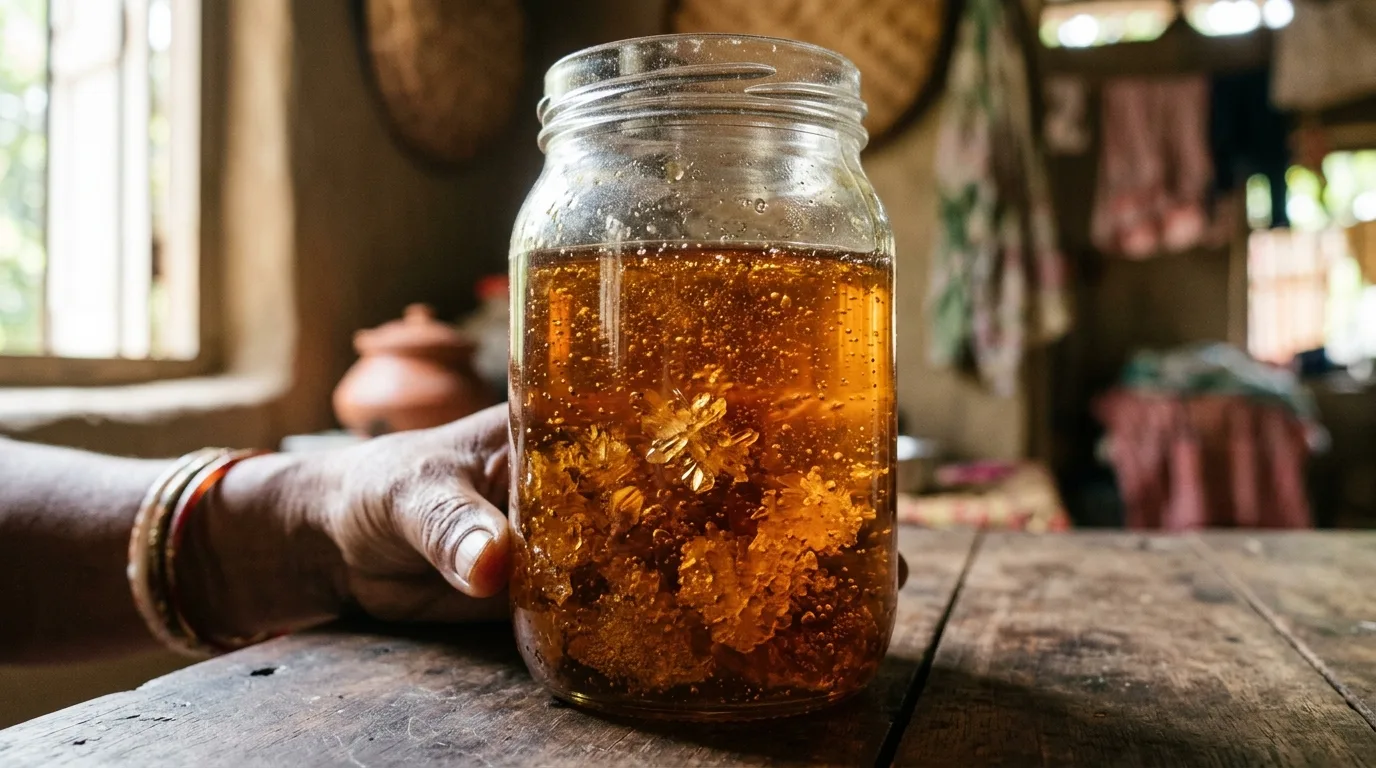
You might have noticed that one jar turns into a pale, thick paste within two weeks, while honey from mangrove forests stays runny for years. The flowers the bees visited determine how the honey behaves[1],[4].
Beekeepers and food scientists watch two primary measurements to predict setting speed: the Fructose-to-Glucose (F/G) ratio and the Glucose-to-Water (G/W) ratio[4],[5]. Honey with an F/G ratio under 1.11 sets quickly, while a ratio above 1.33 stays liquid far longer[4],[6]. In the same way, if the G/W ratio climbs above 2.1, the honey hardens in a matter of weeks; if it sits under 1.7, it can stay runny across whole seasons[4],[5].
| Honey Variety | Harvest Season & Region | F/G Ratio Profile | Crystallization Tendency |
|---|---|---|---|
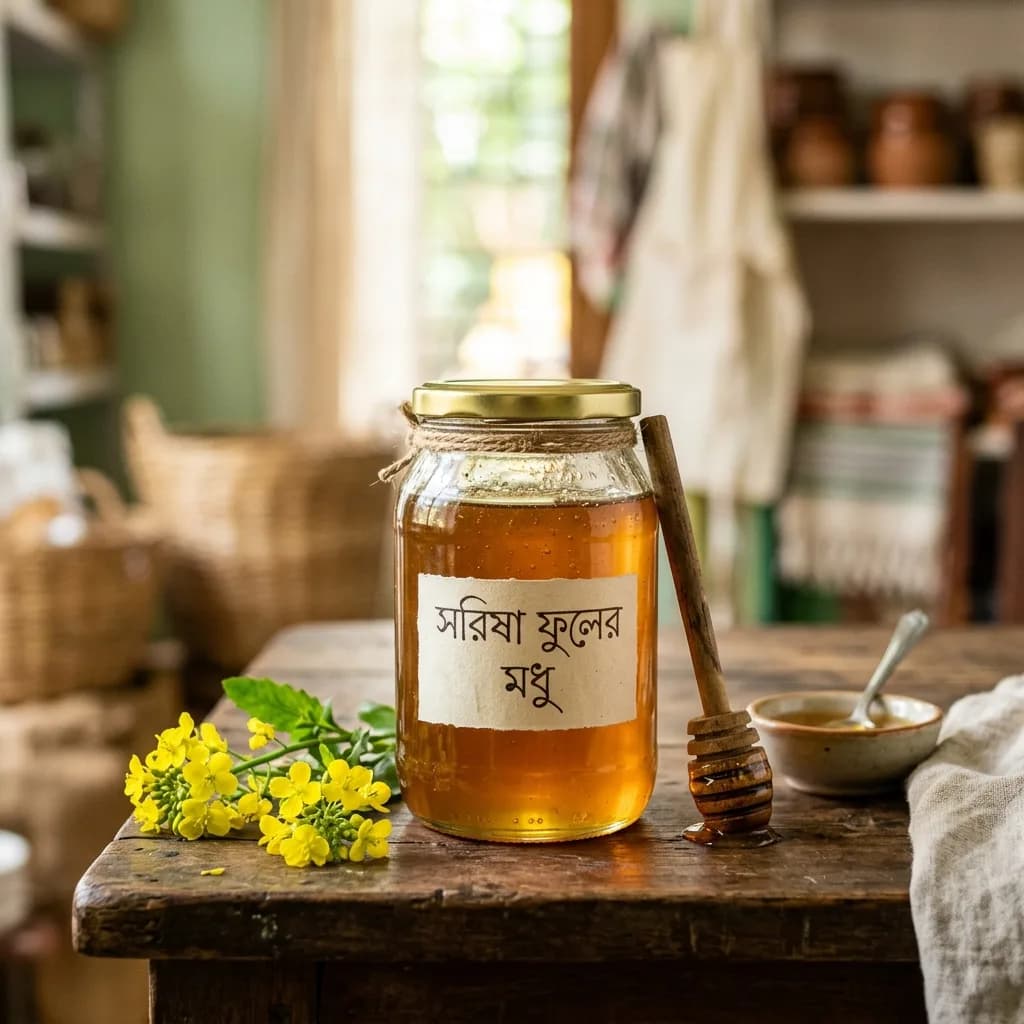
| Mustard Honey (সরিষা মধু) | Nov–Jan (Tangail, Sirajganj) | Low (< 1.1) | Rapid; sets into a creamy, white, ghee-like paste within days[4],[6] |
| Sundarbans Honey (খলসী, গেওয়া) | Mar–May (Coastal Mangroves) | High (> 1.3) | Very slow; remains fluid for months or years naturally[6] |
| Kalijira Honey (কালিজিরা মধু) | Nov–Dec (Central/North BD) | Moderate to High | Slow; dark amber tone with stable viscosity[6] |
| Litchi Honey (লিচু মধু) | Mar–Apr (Dinajpur, Ishwardi) | Moderate | Intermediate; may develop soft granular sediment over months |
Our raw Mustard Flower Honey shows this chemistry in action. Harvested during winter blooms in Manikganj and Sirajganj, its high natural glucose content makes it set into a smooth, buttery texture within days. In Europe, that velvety grain is made deliberately as creamed honey and prized as a spread on toast. Here in Bangladesh, folks unfamiliar with raw honey sometimes mistake the pale cream for hardened sugar syrup.
Crystallized Honey vs. Adulterated Syrup: Debunking Common Myths
One old myth claims that pure honey never hardens[2]. Because industrial packagers often blend in inverted syrups, add high-fructose corn syrup, or cook the honey to keep jars clear on a shelf, clear syrup has become an artificial benchmark for purity[2]. Unprocessed nectar doesn't work that way—it behaves like living produce.
There are still sensible safety and storage rules you should keep in mind:
- Secondary Fermentation Risk: When honey crystallizes unevenly, the glucose crystals squeeze out water into the remaining liquid layer[4]. If moisture in that loose layer climbs above 20%, natural osmophilic yeasts can wake up and ferment the sugars, leaving a sour, boozy smell[3],[4]. Keep the lid closed tight so it can't draw moisture from humid air.
- Infant Safety: Whether honey is liquid, granulated, or creamed, never give it to babies under 12 months. It can carry Clostridium botulinum spores that an infant's young gut cannot process safely.
- Texture Variations: Honeys that set quickly form fine, smooth crystals, while slower varieties form larger, crunchier grains[1],[4]. Both are genuine honey.
How to Safely Decrystallize and Store Raw Honey at Home
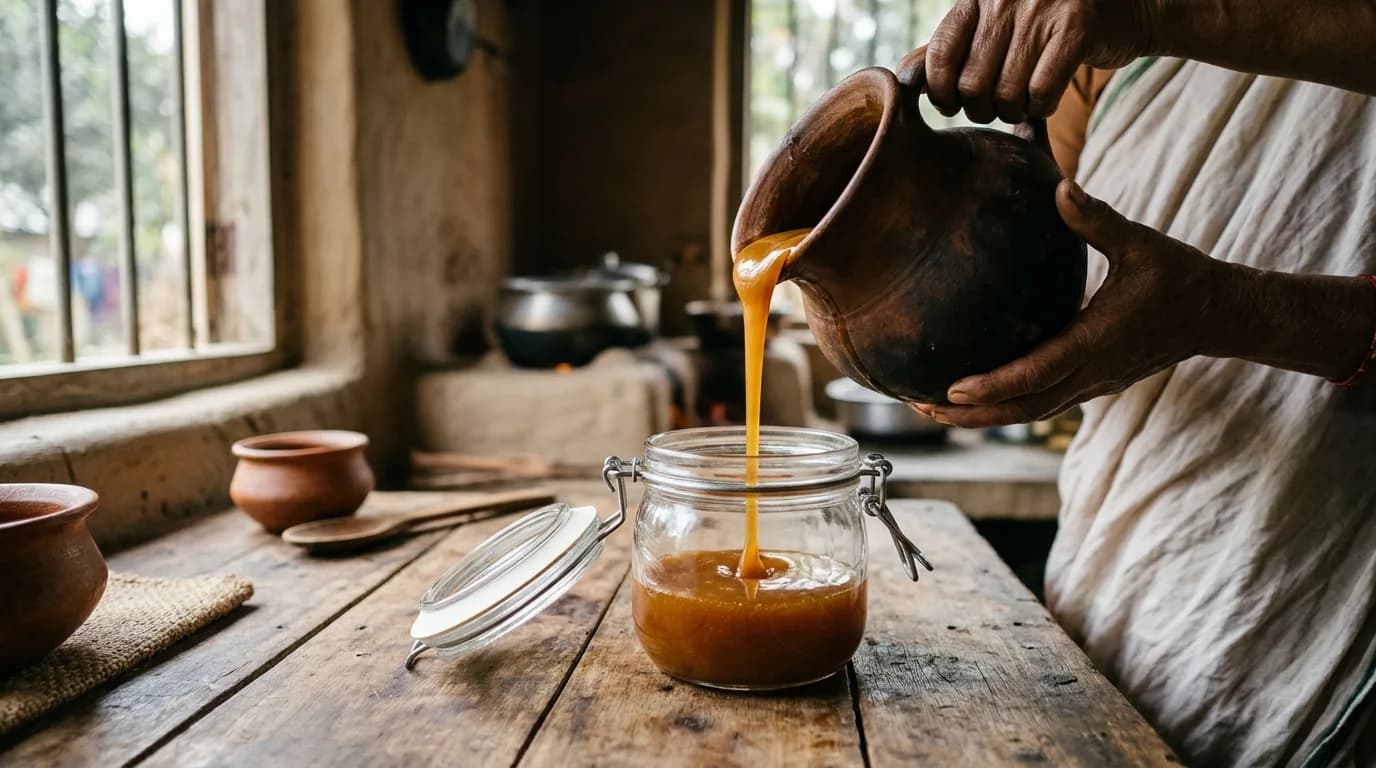
If you prefer a runny honey for your morning tea or warm paratha, softening a crystallized jar is straightforward. The key is avoiding high heat so you don't ruin what makes raw honey good.
Raw honey carries live enzymes like diastase and invertase, along with delicate organic acids and floral aromatics[4]. Setting a jar over an open flame, pouring boiling water on it, or putting it in the microwave damages those enzymes and drives up Hydroxymethylfurfural (HMF), a compound that signals heat damage[4].
A gentle warm water bath does the job properly[1]:
- Loosen the jar lid slightly so built-up pressure can vent.
- Set the glass jar into a bowl or pot of warm water.
- Keep the water between 35°C and 40°C, and don't let it go past 45°C (113°F)[1],[4]. That matches the natural warmth inside an active beehive on a sunny summer day.
- Let the gentle heat dissolve the glucose crystals over 20 to 40 minutes, giving it a stir now and then with a clean, dry spoon[1].
Pure Seasonal Harvests Delivered Across Bangladesh
At Rajshahir Mango, we've cared for our own family orchards in Rajshahi since 2013. Summers are all about tree-ripened, chemical-free mangoes, while our winters focus on bringing wholesome cold-season foods straight to your door.
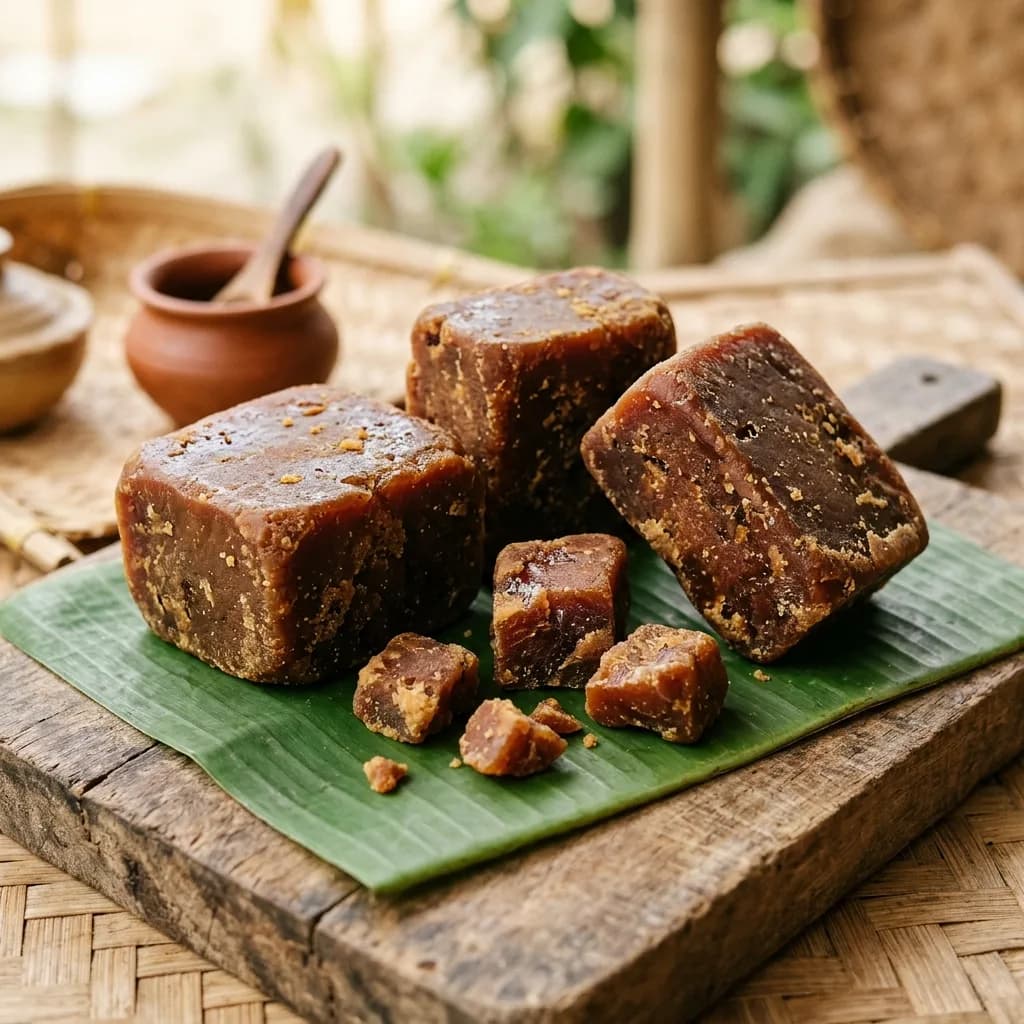
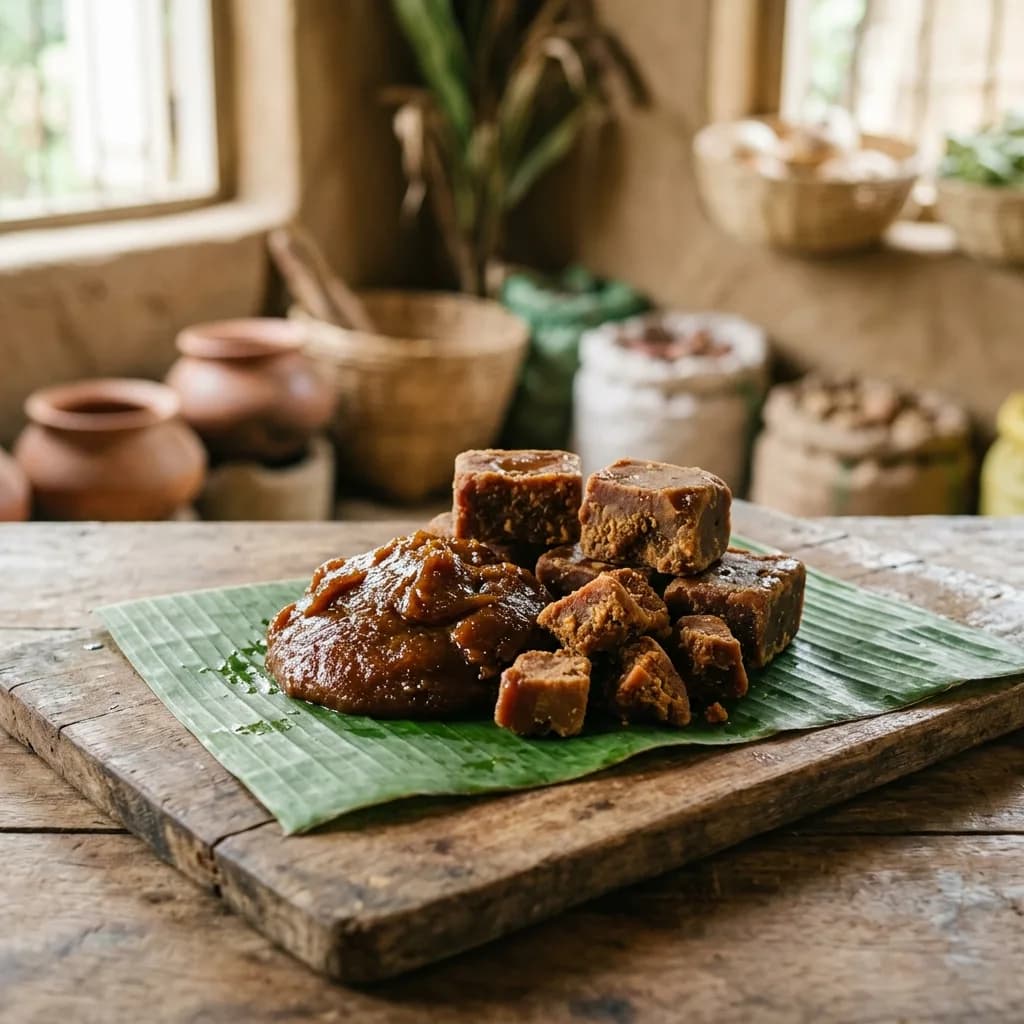
Just as we refuse to use chemical ripening agents on our fruit, every jar in our honey collection is raw, unpasteurized, and left unadulterated. It pairs naturally with our winter date-palm jaggery (khejur gur), collected fresh from trusted village gachis.
We deliver across Bangladesh through reliable couriers, with payment options including cash on delivery, bKash, Nagad, and bank cards. You get honest food the way nature packed it—raw, seasonal, and real.