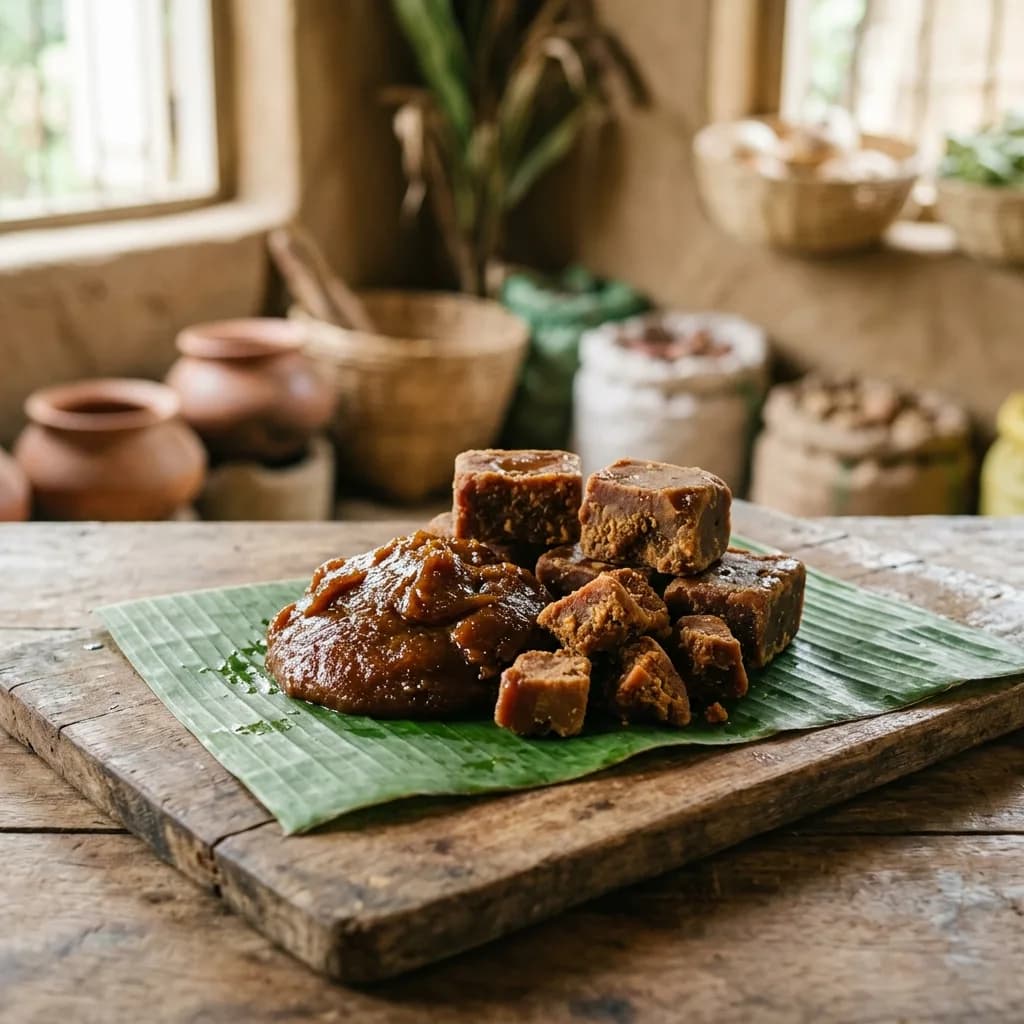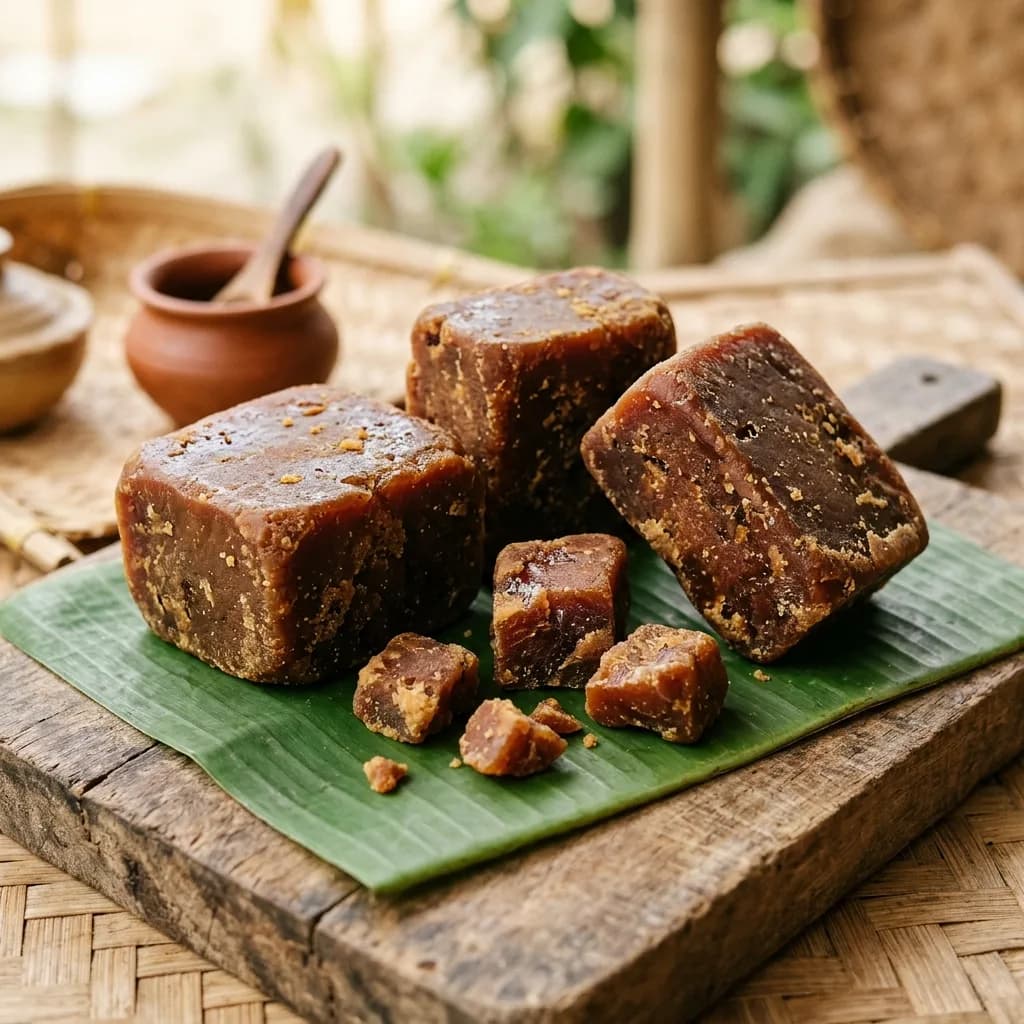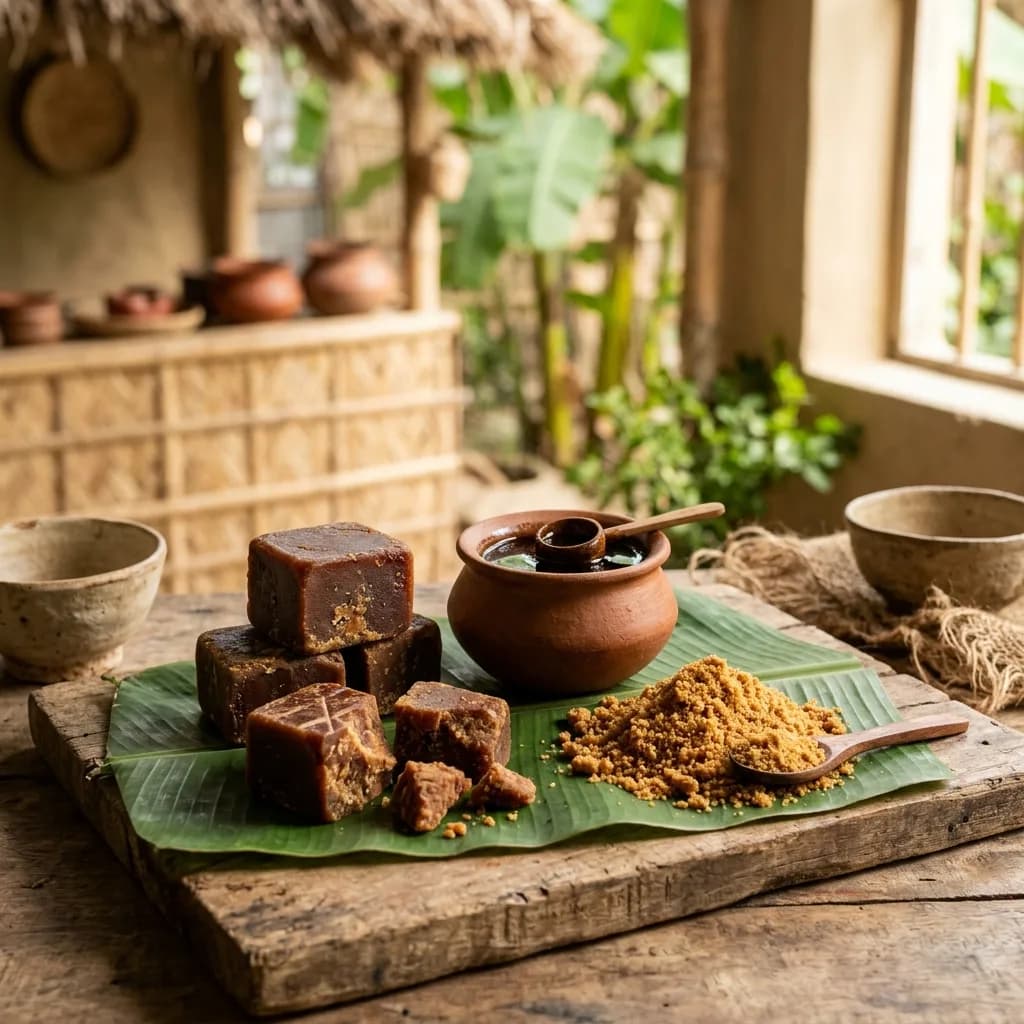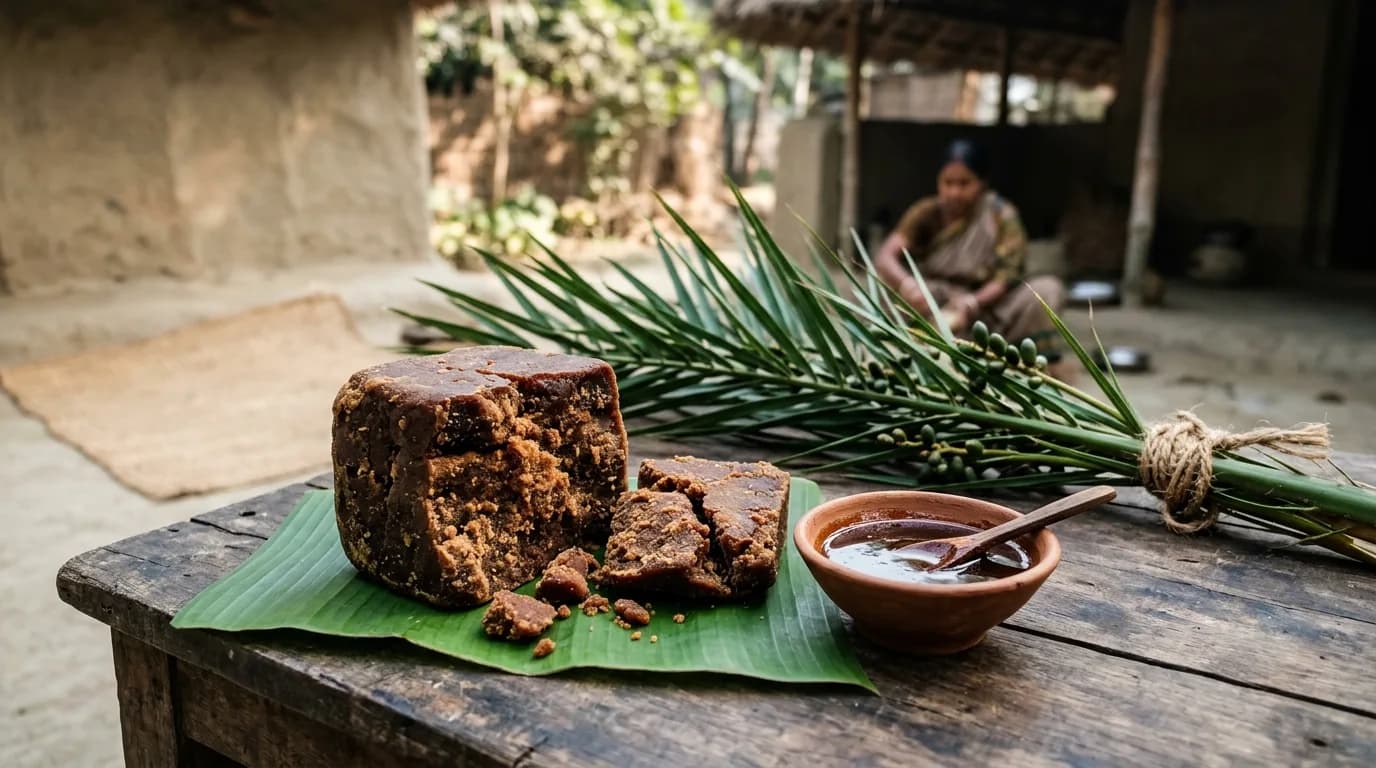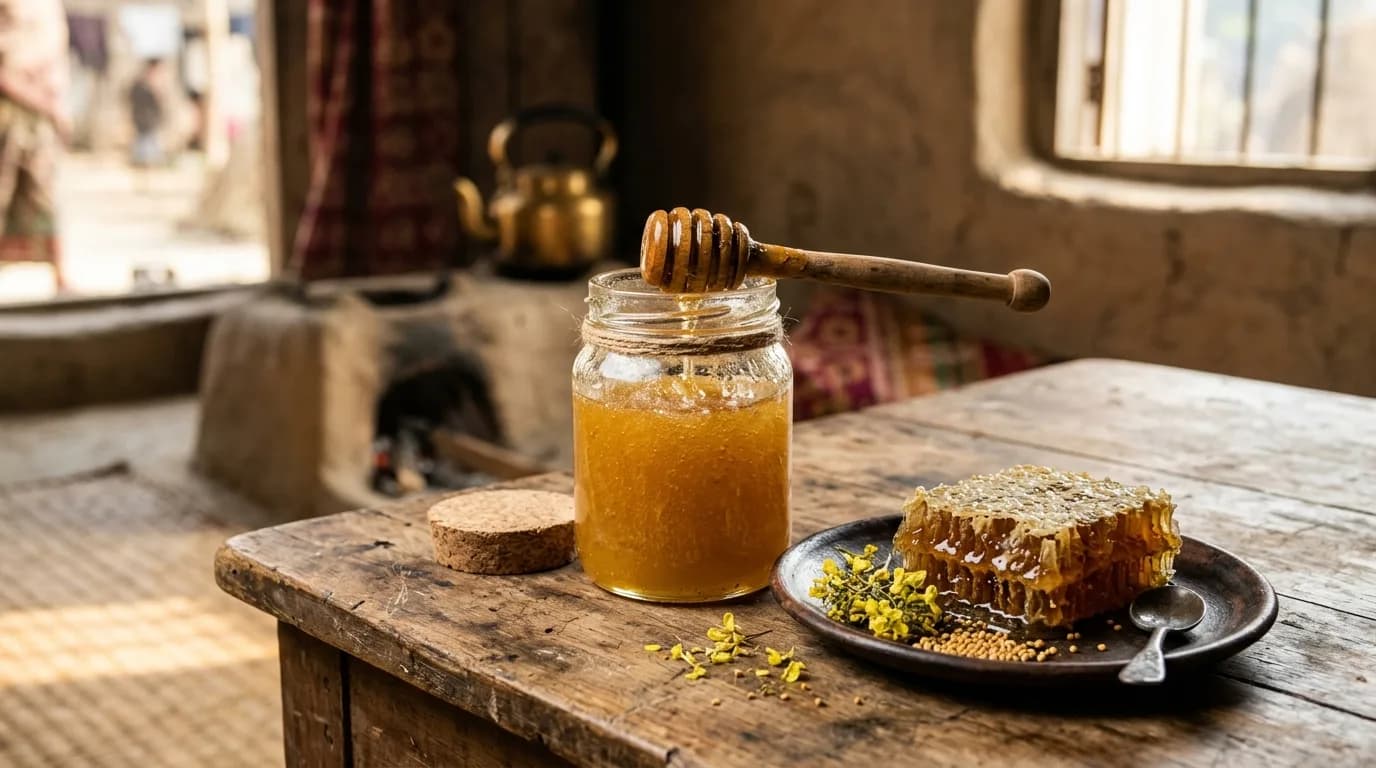
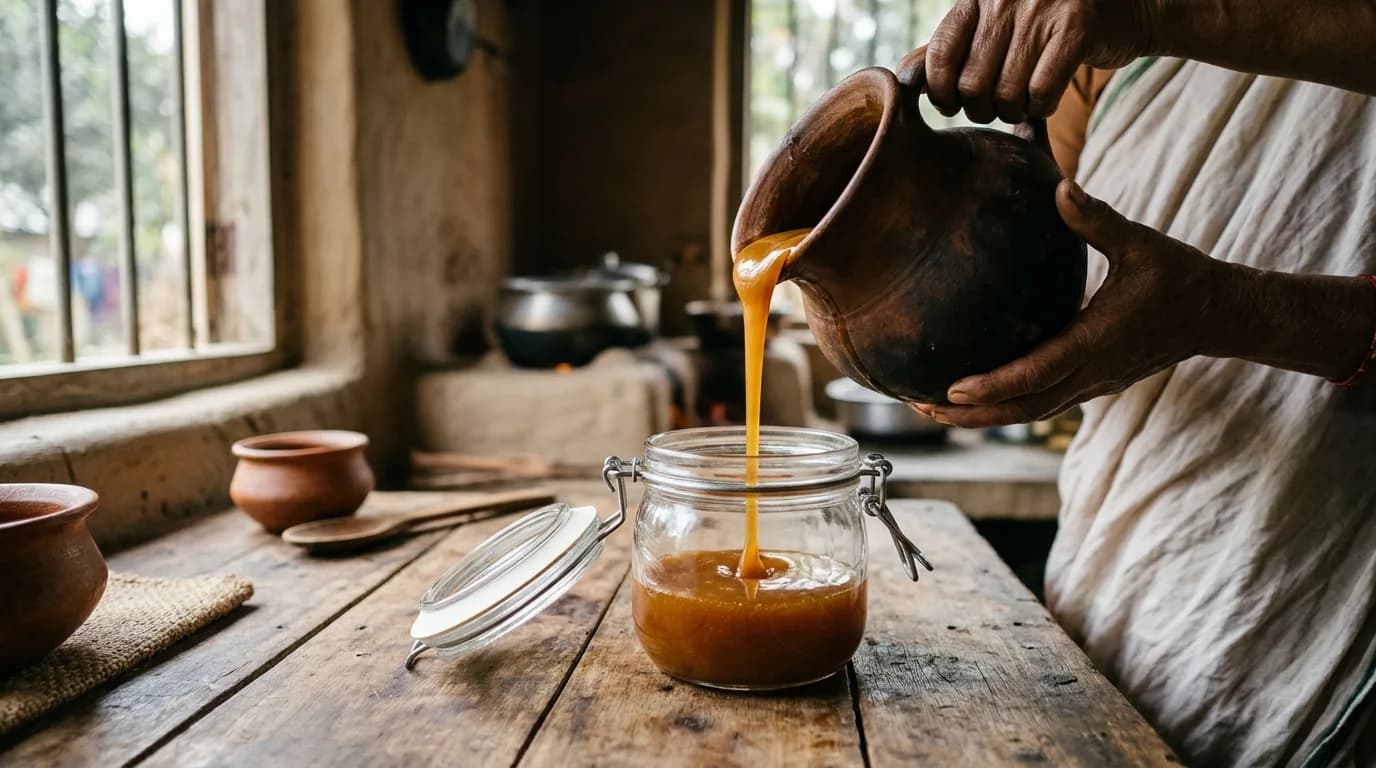
Knowing how to store nolen gur properly means you can enjoy Bengal's prized winter jaggery long after the cold months have passed[4]. Without the right care, this runny, aromatic syrup can sour, ferment, or grow mold just weeks after you bring it home.
Fresh liquid date-palm jaggery—often sold as jhola gur or nolen gur—is one of the most delicate seasonal treats made in Bangladesh and West Bengal [1, 4]. Unlike solid jaggery blocks, it holds a fair amount of water and delicate natural sugars. A few straightforward precautions at home will keep its floral caramel fragrance fresh well into summer.
Why Liquid Date-Palm Jaggery Spoils So Quickly
To keep liquid jaggery in good shape, it helps to understand how it differs from hard solid blocks (*patali*). Fresh date sap (*khejurer rosh*) runs from the tree with about 10% to 14% sugar (Brix). Gachhis gather it through cold winter nights when temperatures dip under 15°C, getting it onto the boil right at dawn [1, 4].
If the morning turns warm—creeping above 20°C—wild yeasts wake up inside the clay collection pots. That sap begins fermenting into a sour, fizzy liquid before it ever reaches the boiling pan. Jaggery made from partially fermented sap is unstable from the start and turns bad quickly in your kitchen.
Boiling makes the other big difference. Producers pull liquid jhola gur off the wood fire as soon as it hits 105°C to 108°C. Hard patali blocks stay on the heat until 118°C to 120°C, driving off almost every bit of free moisture. That leaves liquid gur with 15% to 20% water and plenty of simple sugars like fructose and glucose. Because it pulls moisture straight from the air, any dormant yeasts inside find plenty of water to grow.
How to Store Nolen Gur in the Pantry, Fridge, and Freezer
How you store your gur comes down to when you plan to eat it. A cool pantry, the refrigerator, and the deep freezer all work well[5]. Each buys you a different window of time, as long as your jars stay clean.
| Storage Method | Expected Shelf Life | Recommended Temperature | Best Container |
|---|---|---|---|
| Winter Ambient Pantry | 4 to 6 Weeks | 15°C to 20°C | Airtight glass jar |
| Periodic Re-boiling (Room Temp) | 2 to 3 Months | Ambient indoor temp | Sterilized glass or ceramic jar |
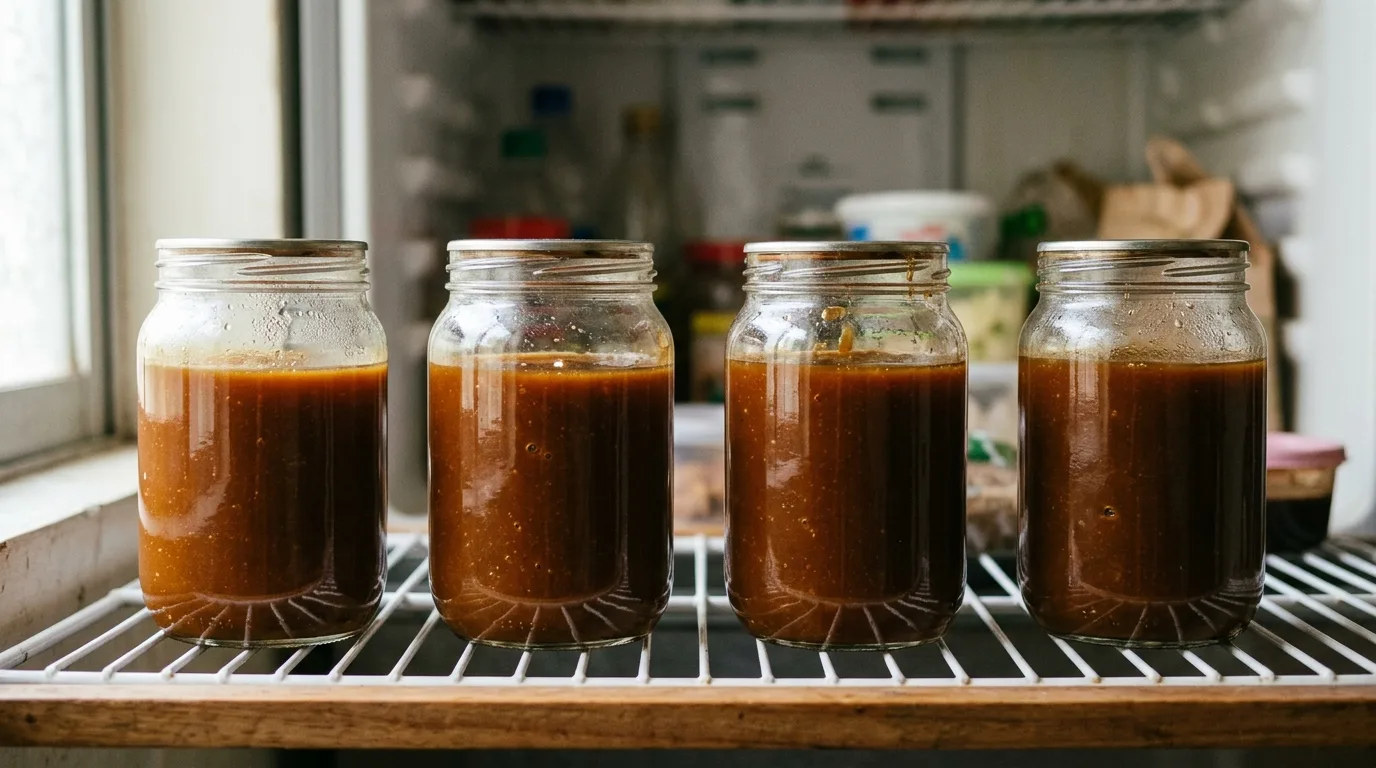
| Standard Refrigeration | 3 to 4 Months | 2°C to 4°C | Airtight food-grade glass jar |
| Deep Freezer | 10 to 12 Months | -18°C or below | Food-grade PET or glass (with headspace) |
1. Short-Term Winter Ambient Storage
In the heart of winter—from mid-November through January—the cool air does most of the work for you. Poured into an airtight, sterilized glass jar and kept in a cool, dark cupboard away from the stove, liquid gur keeps its flavor for 4 to 6 weeks. Avoid open bowls and unglazed earthen pots. Raw clay breathes, pulls in room moisture, and invites mold.
2. Domestic Refrigeration (2°C to 4°C)
Once February rolls in and afternoons warm up, room-temperature storage gets tricky. Transfer your sealed glass jars to the fridge, where the gur will stay good for 3 to 4 months[5]. Cold makes the syrup thick and honey-like. If you need it pourable, set the jar on the counter for ten minutes before using it.
3. Deep Freezing for Year-Round Use (-18°C)
For rainy-day pithas or summer cravings, the freezer is your friend[5]. Because of the high sugar content, nolen gur will not freeze rock-hard. It turns into a thick, scoopable paste like cold toffee, keeping its sweet aroma intact for 10 to 12 months at -18°C.
Always leave about 10% to 15% empty space at the top of the container. Liquids swell as they cool down, and a filled-to-the-brim jar can crack or push its lid open in the freezer.
The Traditional Re-Boiling Technique for Ambient Storage
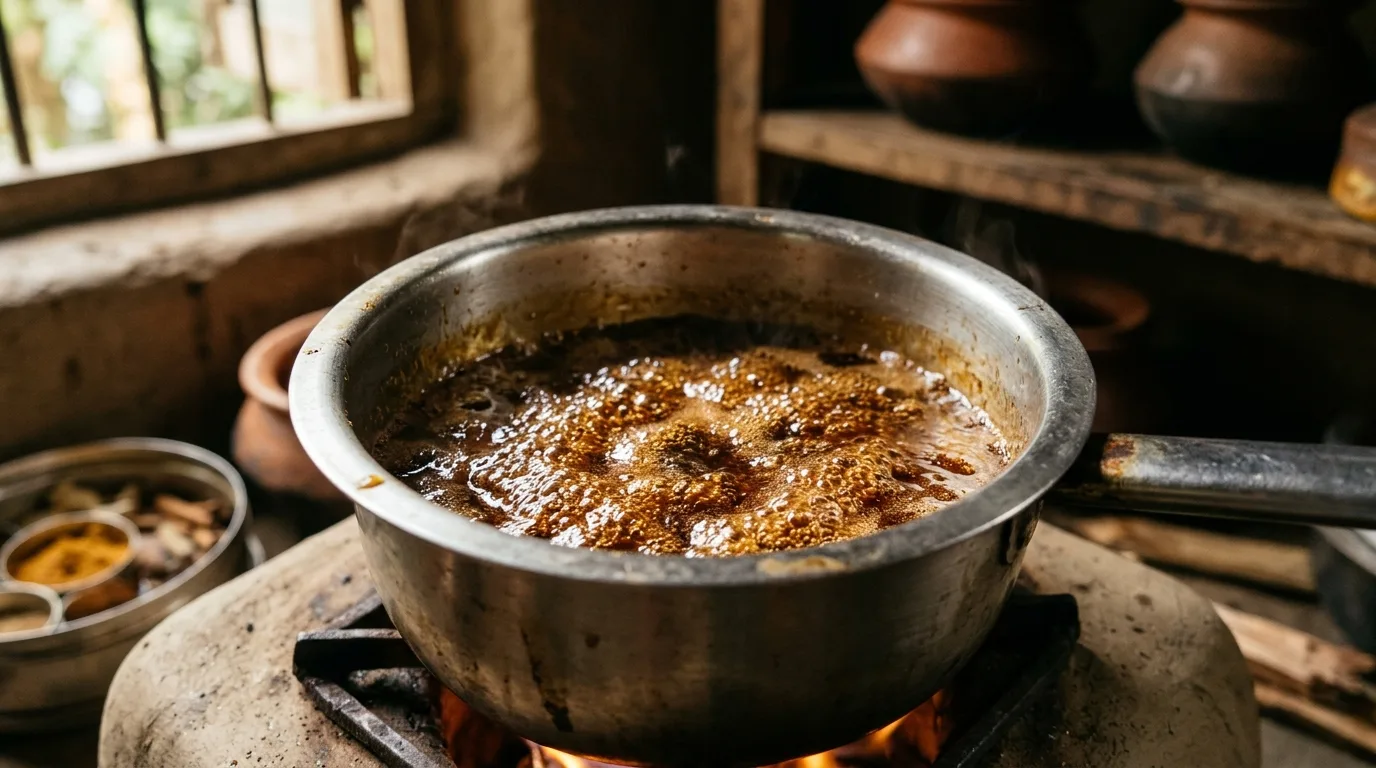
Long before home fridges were common in our villages, households kept their liquid gur through spring with a simple trick: periodic simmering. If fridge space is tight, you can do this right on your stove.
- Pour the gur into a clean, bone-dry heavy pan.
- Warm it over medium heat until it comes to a slow, rolling boil (100°C).
- Let it simmer for 2 to 3 minutes. That heat knocks out any wild yeasts on the surface.
- Take the pan off the heat and let it cool completely. Cover it with a fine mesh screen so steam vents while dust stays out.
- Pour the cooled syrup back into a clean, sun-dried glass jar and cap it tightly.
Do this every 15 to 20 days, and your gur will stay sound on the pantry shelf even as outdoor heat sets in.
Critical Storage Mistakes to Avoid
Gur rarely spoils on its own; small habits in the kitchen are usually what spoil it. A few simple rules go a long way:
- Keep wet spoons away: Even a tiny drop of tap water brings in mold spores like Aspergillus and Penicillium. Use a clean, bone-dry spoon every time.
- Never cap warm syrup: If you have just re-boiled your gur or brought home a fresh, warm batch, let it cool all the way down first. Sealing warm syrup creates condensation on the underside of the lid. Those water droplets fall back onto the gur and give fungus an easy place to start.
- Keep it out of the sun: Direct sunlight and warmth speed up oxidation, turning golden-amber gur dark and dulling its floral scent.
- Skip porous earthen pots for long keeping: Data from the Bangladesh Sugarcrop Research Institute shows that unglazed clay absorbs moisture in humid weather, causing up to 30% product loss from spoilage. Stick with clean glass jars.
Recognizing Spoilage: When Should You Discard Liquid Gur?
Raw sap does carry natural risks, including Nipah virus from bats, but the vigorous boiling during production (well over 100°C) neutralizes those pathogens completely. What you need to watch for later is kitchen mold and wild fermentation.
Check the jar before pouring. If you notice tiny gas bubbles rising continuously, a sharp beer-like smell, or a sour taste, the syrup has fermented. If you see white, grey, or green fuzz on the surface, toss the whole jar out.
Unlike a hard block of gur where you might slice off a dry surface spot, mold poisons travel quickly through liquids. Skimming the top of spoiled liquid gur will not make what is underneath safe to eat.
Enjoy Pure Seasonal Jaggery from Rajshahi
Good storage starts with pure, properly boiled gur. At Rajshahir Mango, we source authentic Premium Date Palm Liquid Jaggery (Jhola Gur) directly from trusted gachhis across the rural belts of Rajshahi, where the winter craft of sap boiling has been practiced for generations.
Whether you like traditional runny jhola gur over hot rutis or prefer firm Premium Date Palm Patali Jaggery, stocking authentic jaggery is easy. Browse the winter range in our date-palm jaggery section, order online for delivery anywhere in Bangladesh, and enjoy the true taste of village winter whenever you like.