Taking a few day trips from Rajshahi gives you an easy way to explore the quiet rural landscapes, historic brick architecture, and deep agricultural roots of Northern Bangladesh. Rajshahi city itself has lovely walks along the Padma, but the surrounding upazilas and neighboring districts show you how the Barind tract really works. Within a 50-kilometer drive, you can explore two-century-old terracotta temples, walk beneath huge mango canopies, and watch country sugar makers at work.
1. Puthia: Terracotta Splendor and Temple Aquaculture (30 km East)
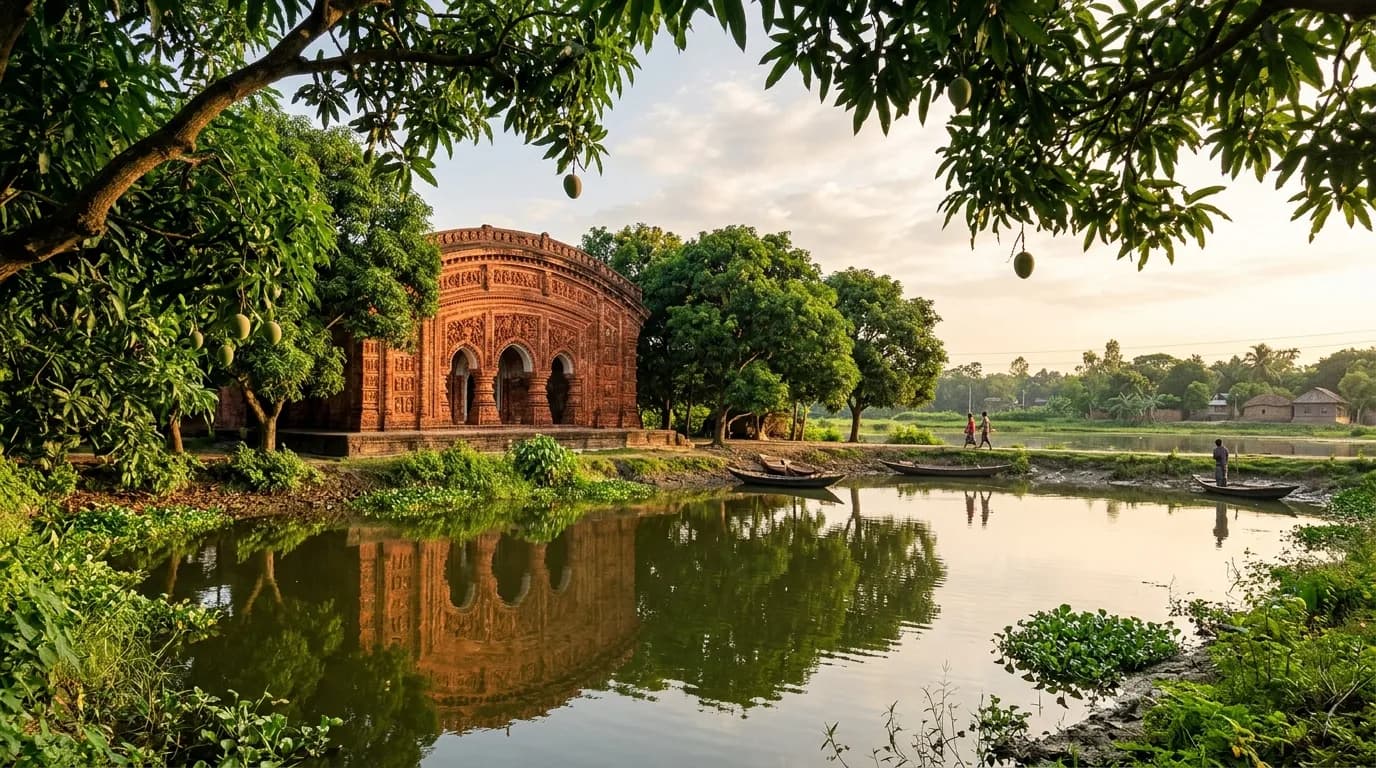
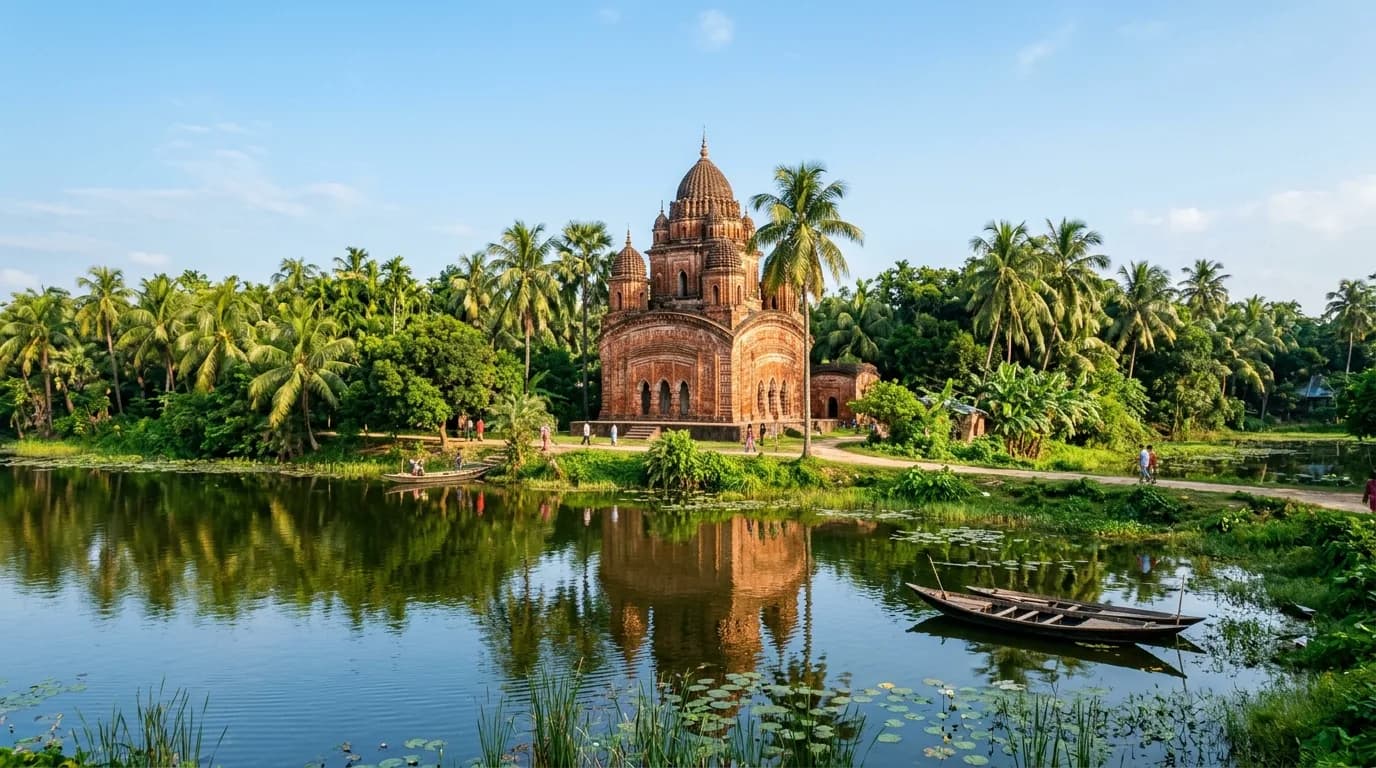
Puthia sits about 30 kilometers east of Rajshahi along the Natore highway, home to the largest cluster of historic Hindu temples in Bangladesh. The estate grew under the Puthia Raj family, who built ornate brick monuments throughout the eighteenth and nineteenth centuries. The standout structure is the Pancharatna Govinda Temple, covered in terracotta panels that illustrate scenes from the Hindu epics. Just across the lawn stands the tall Shiva Temple, its rows of miniature spires overlooking the Shiva Sagar lake.
There is plenty of working farm life around the estate, too. Sugarcane fields border the palace grounds alongside commercial banana groves producing local varieties like Amritasagar and Sabri. The massive reservoirs (dighis) originally dug by the zamindars are still active commercial fish ponds today, sustaining local families who harvest freshwater fish year-round.
Getting here is simple. Hop on any bus from Rajshahi bound for Natore or Dhaka and get off at the Puthia bus stop. From there, local battery-run easy bikes will drop you at the temple complex in under five minutes. Plan on two to three hours to wander the grounds and lakeside paths before moving on.
2. Bagha: Orchards, Terracotta Heritage, and Winter Date Palms (40 km Southeast)
About 40 kilometers southeast of Rajshahi city, Bagha is one of the most satisfying day trips from Rajshahi if you love heritage architecture and country food traditions. The historic Bagha Mosque dates back to the early sixteenth century during the Bengal Sultanate, and its carved brick plaques and floral panels are still remarkably sharp today. Just outside sits a 40-acre royal water reservoir shaded by massive, mature trees.
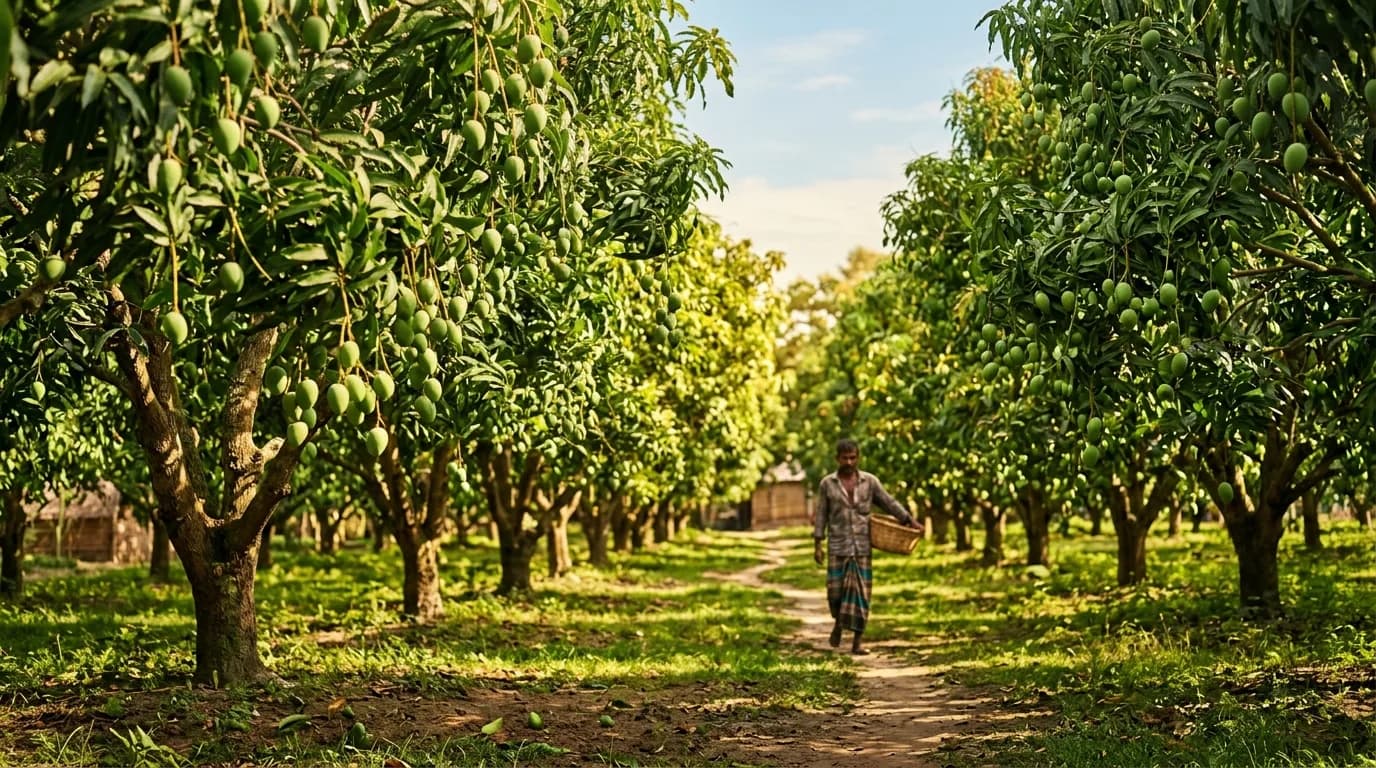
Bagha is also an important agricultural hub. In summer, the whole area turns into a continuous sea of green mango orchards. Once winter arrives, the work shifts completely to date-palm sap (khejur rosh). Skilled tree-tappers (gachhis) work the palms from mid-November through February, hanging clay pots to catch sweet sap overnight whenever temperatures dip below 15°C.
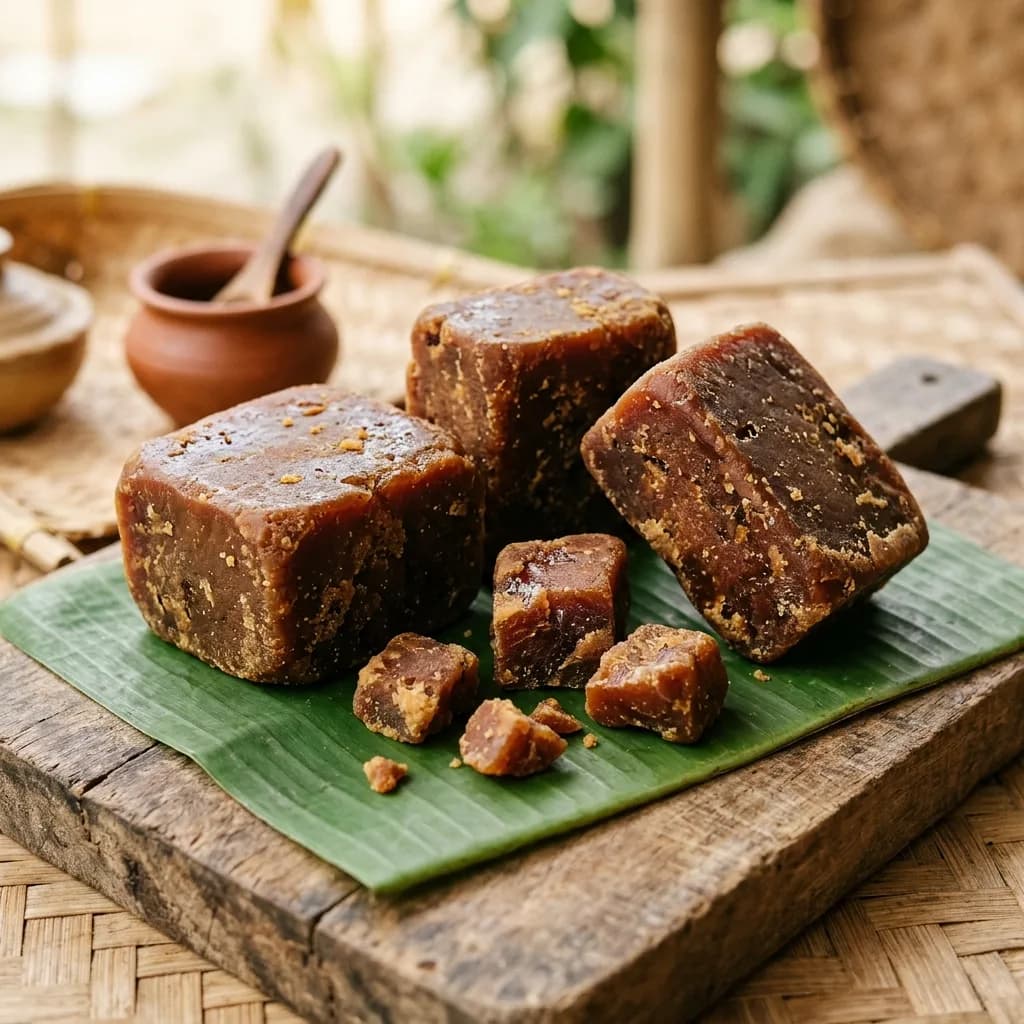
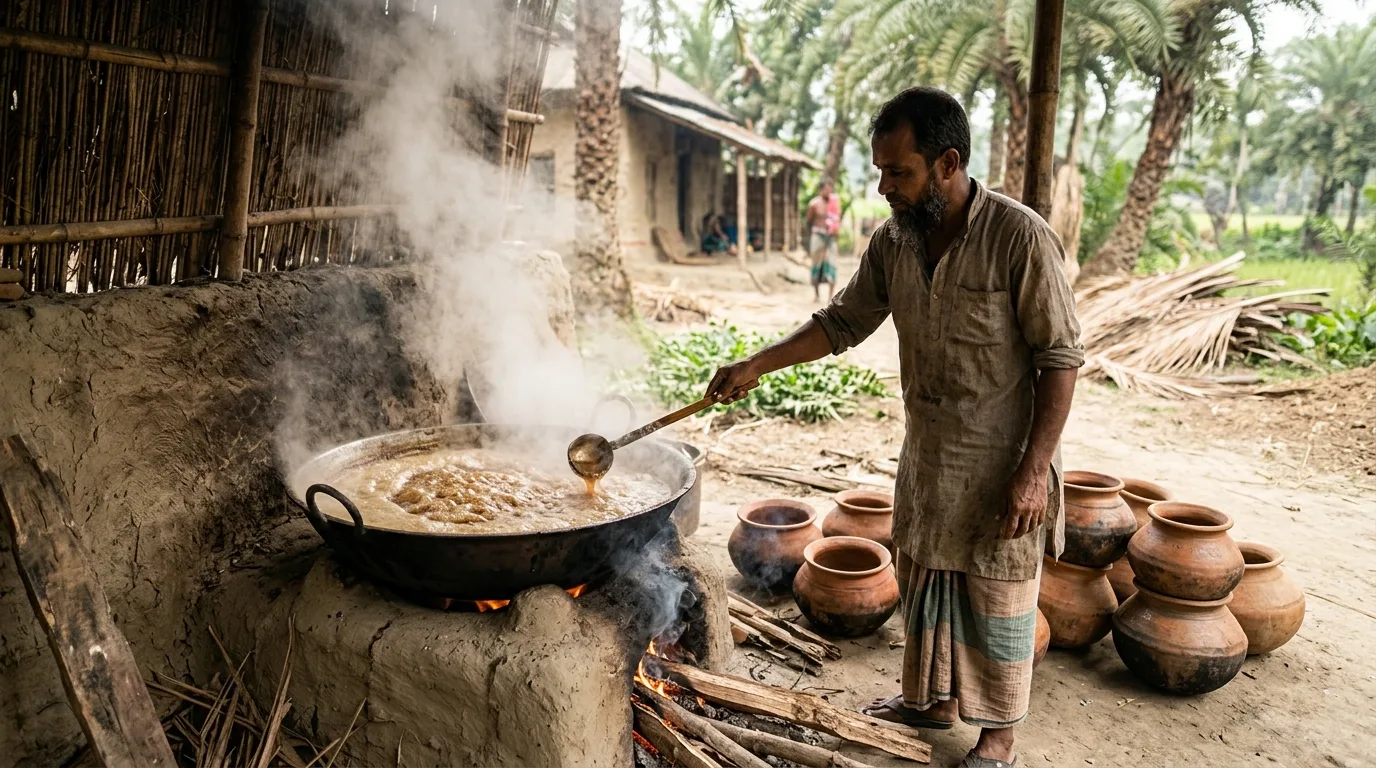
Along the roads around Bagha, you will see open-sided sheds where farmers boil fresh sap in shallow iron pans for one to three hours. Starting at around 10° to 12° Brix, the thin juice slowly cooks down into a dark amber syrup, eventually hitting the crystallization stage (patali) between 115°C and 118°C. That patient boiling gives real date palm jaggery its deep, smoky caramel note.
A safety note if you visit in winter: never drink raw date sap straight from the roadside pots. Wild sap carries a real risk of Nipah virus transmitted by fruit bats (Pteropus giganteus)[6]. Fortunately, heating sap past 70°C completely destroys the virus, so properly boiled patali and jaggery are entirely safe to enjoy[5].
3. Natore: Royal Estates, Sugar Refineries, and Real Kanchagolla (48 km East)
Continue roughly 48 kilometers east on the main highway and you reach Natore. Closely tied to Queen Bhavani (Rani Bhabani) of the Natore Raj, this historic town holds two grand estates: the Natore Rajbari with its quiet moat, and Uttara Ganabhaban, the former seat of the Dighapatia maharajas that now serves as the official northern residence for the Prime Minister.
Natore is also an active center for commercial sugarcane. The Natore Sugar Mills crushes local cane throughout the harvest from November to March, supplying unrefined sugarcane jaggery alongside white sugar.
Do not leave without trying genuine Kanchagolla, which gained official GI status as Bangladesh’s 17th Geographical Indication product in August 2023[1][2]. It is not a round, spongy ball like standard sweets. Real Kanchagolla is soft and crumbly, made by folding fresh, lightly warmed cow milk curd (chhana) directly into hot sugar syrup at a ratio between 3:1 and 4:1[1].
Because authentic Kanchagolla keeps its natural dairy moisture without deep frying, it spoils quickly. It holds up for 24 to 48 hours at room temperature (25°C to 30°C), or four to five days if you keep it refrigerated at 4°C. Watch out for cheap roadside versions that cut the curd with flour or milk powder, which ruins the delicate, melt-in-your-mouth texture.
Planning Your Day Trips from Rajshahi: Seasonal Harvest Timelines
Timing your trips around the regional farm seasons lets you see the countryside at its busiest. Here is what each area produces throughout the year:
| Destination | Distance from Rajshahi | Peak Agricultural Activity | Primary Harvest Window |
|---|---|---|---|
| Puthia | 30 km East | Sugarcane harvesting, banana cutting (Sabri), pond fishing | November – March (Sugarcane) |
| Bagha | 40 km Southeast | Mango harvesting; date-palm sap tapping and jaggery cooking | May – August (Mango); Nov – Feb (Gur) |
| Natore | 48 km East | Sugar mill crushing operations; fresh Kanchagolla dairy production | Year-round (Kanchagolla); Nov – March (Cane) |
The Rajshahi Mango Harvesting Calendar
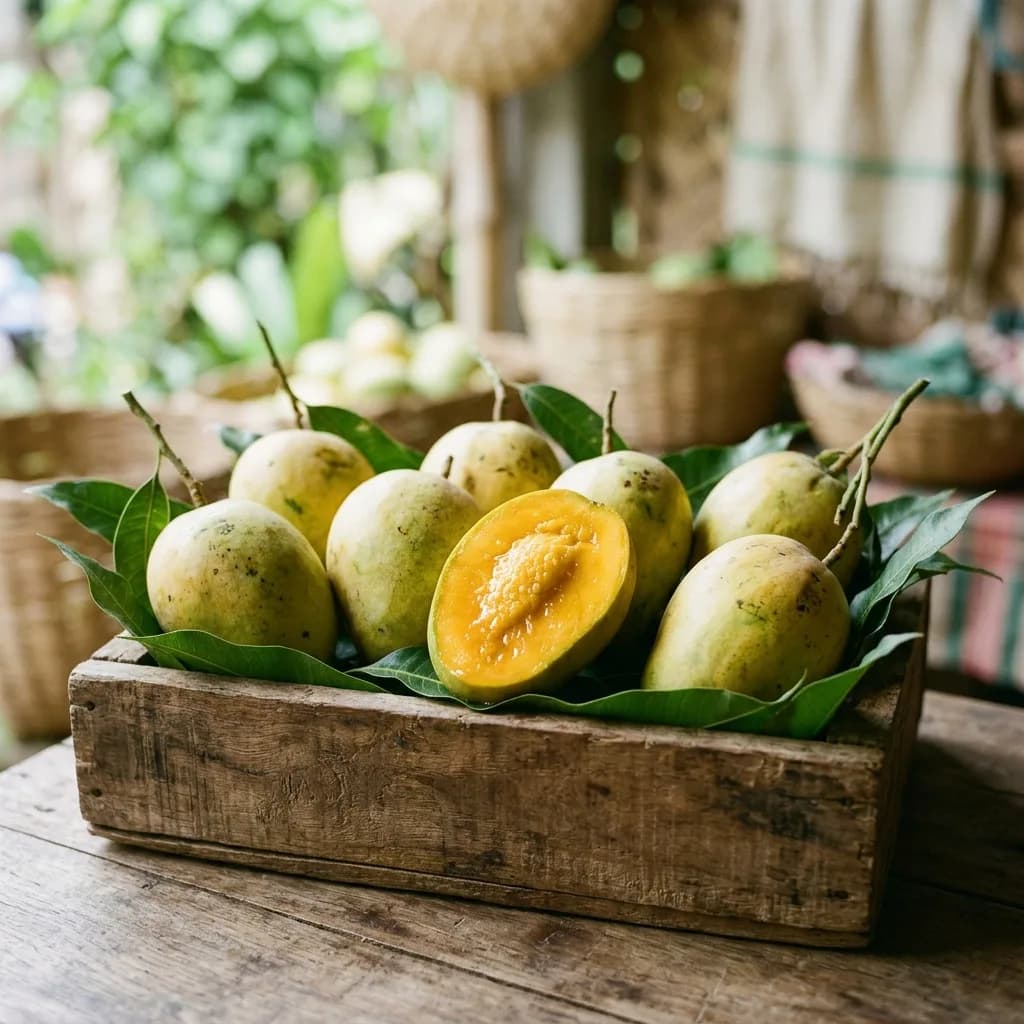
If you visit during the summer months, keep the local mango schedule in mind. To keep immature fruit off the market, the Rajshahi District Administration enforces a strict harvest calendar each season[4]. Harvesting fruit too early leaves it sour and prevents natural ripening, trapping sugar levels well below 14° Brix.
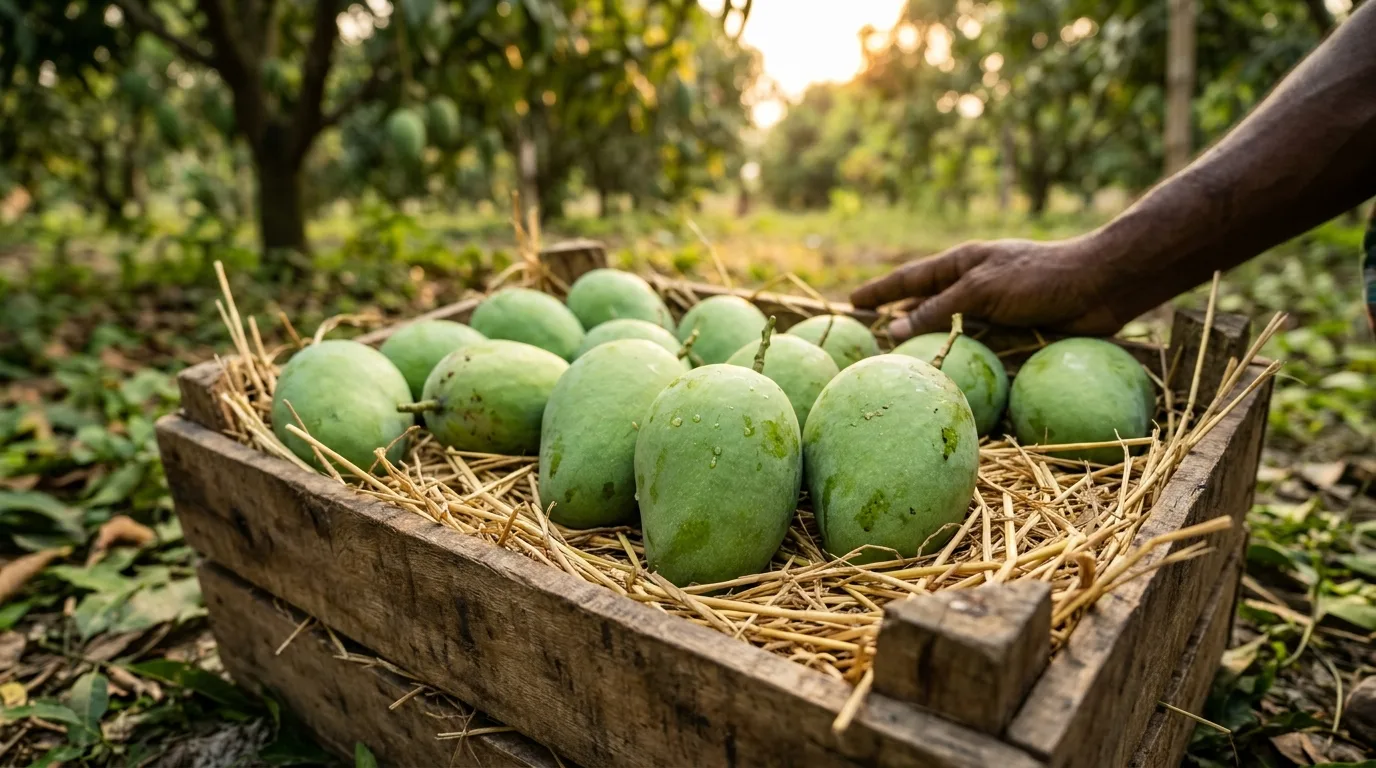
Under the district rules, local Guti varieties open the harvest on May 15[4]. Major table varieties follow in order: Gopalbhog begins around May 22, Khirsapat (Himsagar) on May 30, and fragrant Langra on June 10[4]. Late-season favorites like Fazli and Amrapali start around June 15, and hardy Ashwina finishes the season starting July 10[4]. Proper commercial orchards wash harvested fruit in hot water (52°C–55°C for 5 to 10 minutes), clean water treatment that keeps fruit flies and fungal spores off the skin without any need for carbide or artificial ripeners.
Practical Travel Tips for Exploring the Region
Getting around Rajshahi division is straightforward with a little preparation:
- Transportation: Renting a private sedan or microbus out of Rajshahi city is the easiest way to combine Puthia and Natore in one run. If you prefer public transport, buses run down the Rajshahi-Natore highway every few minutes from the Railway Station and Shiroil bus terminals.
- Timing: Leave early, around 8:00 AM, so you beat both the highway traffic and the midday heat.
- Weather: Wear light cotton and bring drinking water during the hot summer. Winter mornings can be foggy and brisk, so a warm layer helps.
- Verify Details: Museum hours, entry fees, and bus frequencies change occasionally. Check the current schedule at your hotel desk before heading out.
Spending a day visiting these towns gives you a real feel for the soil, rivers, and growers that keep Northern Bengal fed. If you want to enjoy the best of our harvest without hauling heavy bags home on the bus, we can take care of it for you. At Rajshahir Mango, we have grown clean, tree-ripened, formalin-free fruit in our family orchards since 2013. When summer arrives, we box fresh table mangoes in sturdy 12 kg and 24 kg crates and deliver nationwide across Bangladesh. You can also order authentic date-palm gur, cane molasses, and raw honey straight from our online store all winter long.