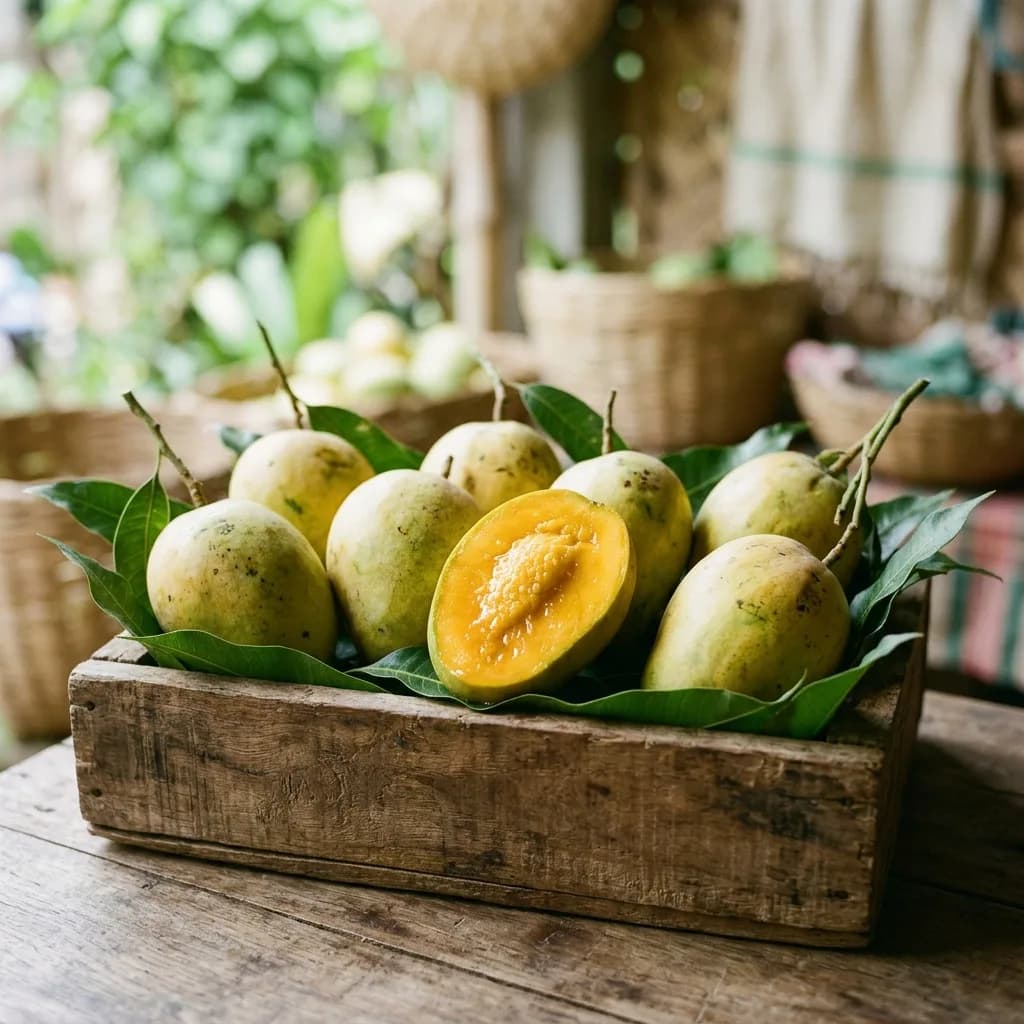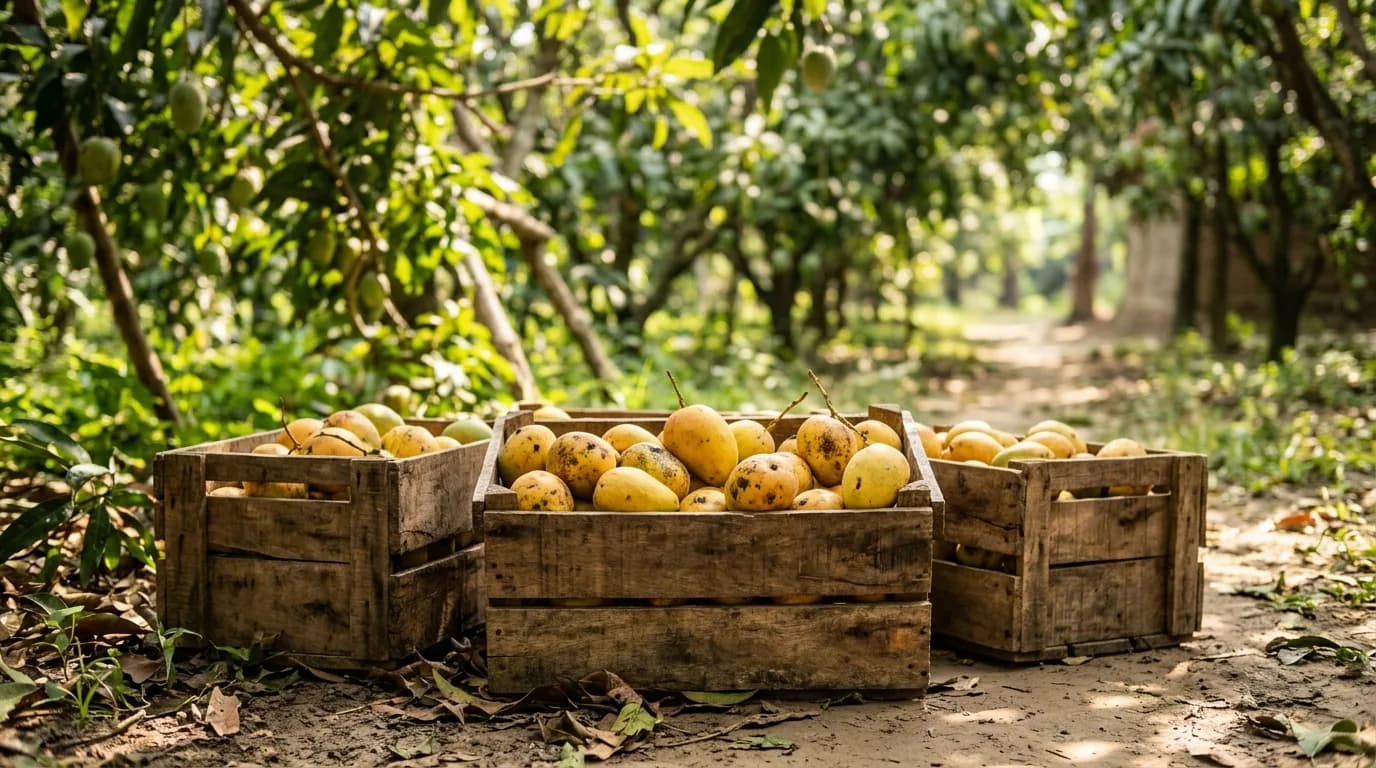

Knowing how to freeze mango pulp at home lets you keep that pure summer sweetness around well into winter and spring. When the harvest peaks across Bangladesh between May and August, putting up the extra fruit means your kitchen always has real mango ready for desserts, drinks, and breakfast bowls.
Simply spooning pureed mango straight into the freezer rarely works out well. You usually end up with pale, icy, watery mush once it thaws[3]. But if you work clean, pick the right varieties, and balance the fruit's natural acidity, the puree will keep its bright color and orchard aroma for 10 to 12 months with no chemicals at all[5],[6]. Here is the method we rely on here in Rajshahi.
Choosing the Best Mango Varieties for Puree
Different mangoes freeze differently. For a thick, spoonable puree, you need low-fiber fruit packed with natural sugars and firm flesh. Mid-to-late-season harvests picked at full maturity give you the deepest color and the least amount of loose water[1].
We find three varieties consistently deliver the best results:
- Amrapali: Ready from mid-June into July, the Amrapali mango gives you the highest pulp-to-stone ratio, deep orange carotenoid color, and an intense sweetness that stands up remarkably well in the freezer.
- Khirsapat / Himsagar: Harvested from late May through June, fresh Himsagar mango pulp has almost no fiber. It blends into a silky, velvety puree with a very clean aroma.
- Haribhanga: In season through June and July, its dense, fiberless meat holds its body nicely and separates very little after thawing.
Skip watery or stringy fruit like Ashwina or early-season Fazli. Their extra moisture freezes into rough ice crystals, leaving you with thin, split juice when thawed[1]. Look for fruit that is truly table-ripe and yields softly to gentle thumb pressure—roughly 16 to 22° Brix. Avoid sour, underripe fruit, and stay clear of overripe mangoes that have started smelling fermented[4].
Sanitation and Zero-Water Preparation
Clean prep work makes or breaks how well your pulp lasts in the freezer. Any dirt or microbes sitting on the skin can transfer right onto the flesh as you cut, leading to spoilage down the road[1].
Start by soaking whole, unpeeled mangoes in clean tap water for 15 to 20 minutes. Wash the skins well with your hands or a soft brush to clear away dust, sap, and surface bacteria. Let them air-dry or wipe them down with clean kitchen towels.
Use a clean knife or peeler to strip off the skin, trimming away any bruised spots. Cut the golden flesh cleanly off the stone and drop the slices straight into your blender jar.
One golden rule: never add water to the blender. Extra water thins out the sugars, breaks down cell structure, forms coarse ice needles as it freezes, and turns your puree watery once thawed[3]. Ripe Himsagar or Amrapali will break down into a rich, thick liquid on its own in 45 to 60 seconds.
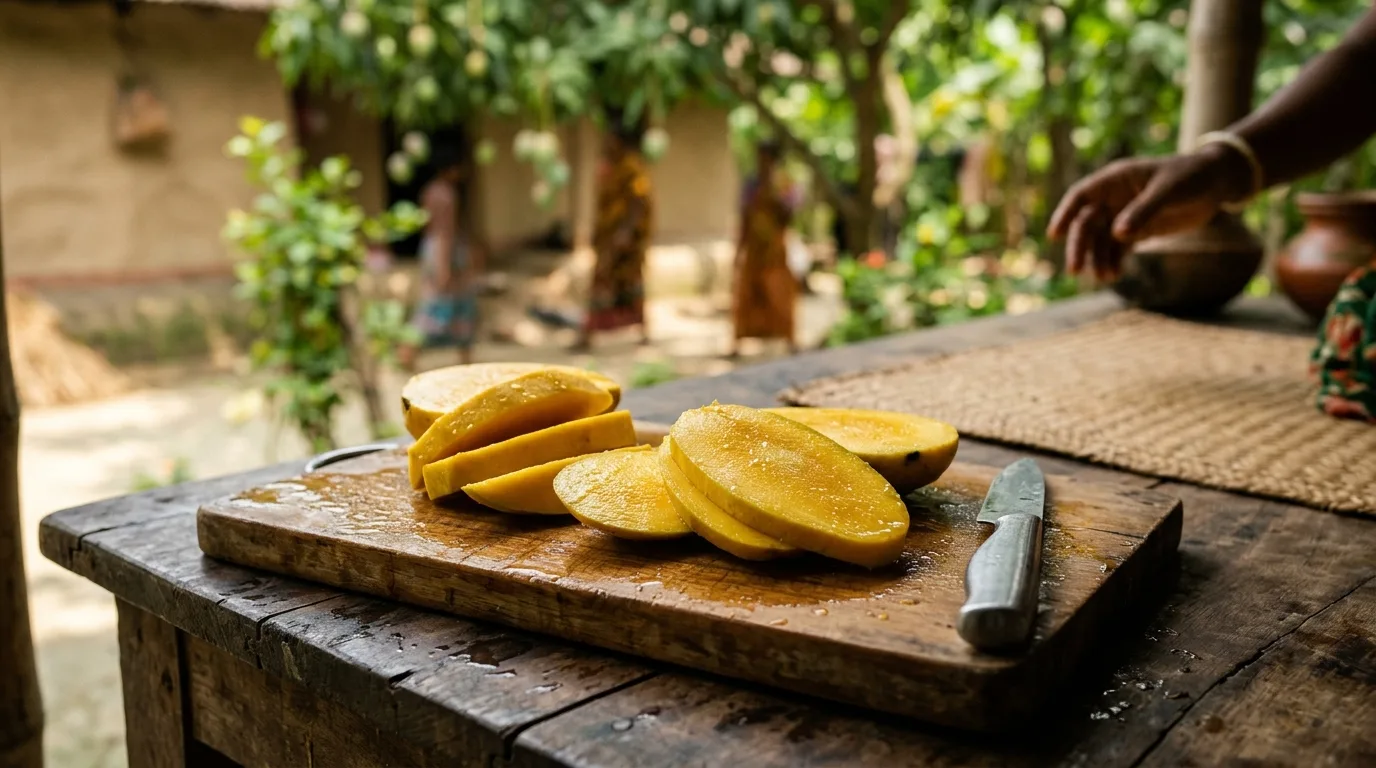
How to Freeze Mango Pulp at Home with Natural Stabilizers
Once your fruit is blended smooth, you need to protect it against browning and loss of body. Fresh mango contains enzymes, especially polyphenol oxidase (PPO), that cause oxidation and muddy the flavor over time[4]. You can stabilize the puree either with a raw acid mix or a quick, gentle heating step.
Option 1: The Raw Cold-Pack Method (Quick and Natural)
For standard home use, a little kitchen acid and sugar protects the puree without changing its fresh, raw flavor[2].
- Acidification: Stir in 1 teaspoon (roughly 5 mL) of strained fresh lemon juice or 1 gram of citric acid for every 1 kilogram of blended pulp[1],[2]. That keeps the pH under 4.0, which stops browning and locks in color.
- Cryoprotection: Add 1 to 2 tablespoons (15 to 30 grams) of granulated sugar per kilogram of pulp[2],[5]. Sugar binds free water, which keeps sharp ice crystals from forming and shields the delicate fruit aroma in long cold storage.
Fold the puree gently with a clean spatula until the sugar dissolves completely.
Option 2: The Gentle Heat-Inactivation Method (Longest Storage)
If you want the pulp to keep its peak quality for a full year, a short heating step is your safest bet against enzyme activity[4]. Pour the puree into a heavy-bottomed stainless steel pan. Set it over medium heat, stirring steadily, until it reaches 75°C to 80°C (167°F to 176°F). Hold it there for 2 to 3 minutes, then pull it off the burner immediately[4].
Set the hot pan into a large bowl of ice water so the puree cools down fast. Chilling it quickly preserves that fresh fruit taste and stops it from tasting cooked.
Packaging and Deep Freezer Guidelines
Good packaging is what keeps puree fresh rather than ruined by freezer burn. Flimsy grocery polythene lets air through and picks up odors from the freezer, leaving your fruit tasting flat and stale[2].
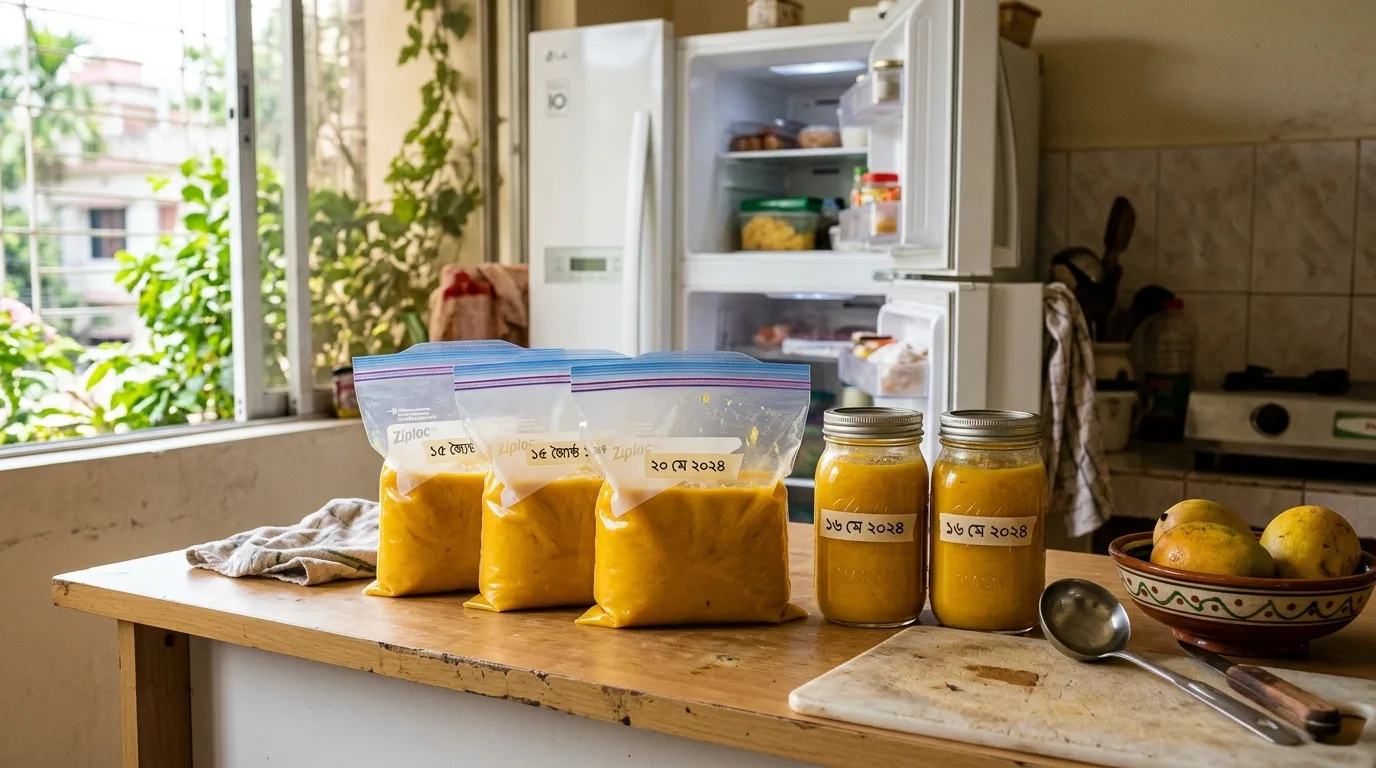
Pick heavy-duty, food-grade freezer zip bags or sturdy, airtight BPA-free plastic tubs made for freezing[2]. Keep these points in mind as you pack:
| Packaging Step | Standard Practice | Why It Matters |
|---|---|---|
| Portion Sizing | 250 g to 500 g pouches | Allows single-use usage; eliminates waste and prevents refreezing. |
| Headspace | 1.5 to 2.5 cm (½ to 1 inch) | Mango pulp expands as water solidifies; prevents split lids or burst bags[2]. |
| Air Removal | Press out excess air before sealing | Prevents oxidation, surface drying, and freezer burn[2]. |
| Storage Temperature | -18°C (0°F) or colder | Arrests microbial activity and preserves nutritional carotenoids[6]. |
| Labeling | Variety name and packaging date | Ensures first-in, first-out rotation across the 10–12 month window[5]. |
Another handy trick is pouring puree into clean silicone ice cube trays. Once frozen solid, pop the cubes into a heavy zip bag so you can grab just a cube or two for your morning smoothie.
Safe Thawing Practices and Common Mistakes
How you thaw the pulp matters just as much as how you freeze it. Never leave a frozen container out on the kitchen counter. Quick thawing in warm, humid air breaks down the fruit cells, makes the liquid separate, and invites bacteria[3].
The right way is slow thawing in the fridge at or below 4°C (40°F) for 6 to 8 hours, or overnight[3]. In a hurry? Keep the bag sealed tight and float it in a bowl of cold tap water, swapping out the water every 15 minutes until the pulp softens.
Do not refreeze thawed puree[3]. Freezing expands water molecules, which tears tiny cell walls. Thawing lets that moisture seep out. If you freeze it a second time, you get bigger ice needles, a dull, watery sludge, and real food safety concerns[3]. Always pack portions small enough to finish within 24 to 48 hours of thawing.
Bring Orchard Freshness to Your Table
Freezing your own fruit means you know exactly what your family is eating: pure, natural mango free of added colors or chemical preservatives. At Rajshahir Mango, we have cared for our own Rajshahi orchards since 2013, harvesting naturally tree-ripened, formalin-free fruit[1]. Browse through our seasonal crates in our fresh mango collection or read more about our farming practices to choose the right fruit for your kitchen.