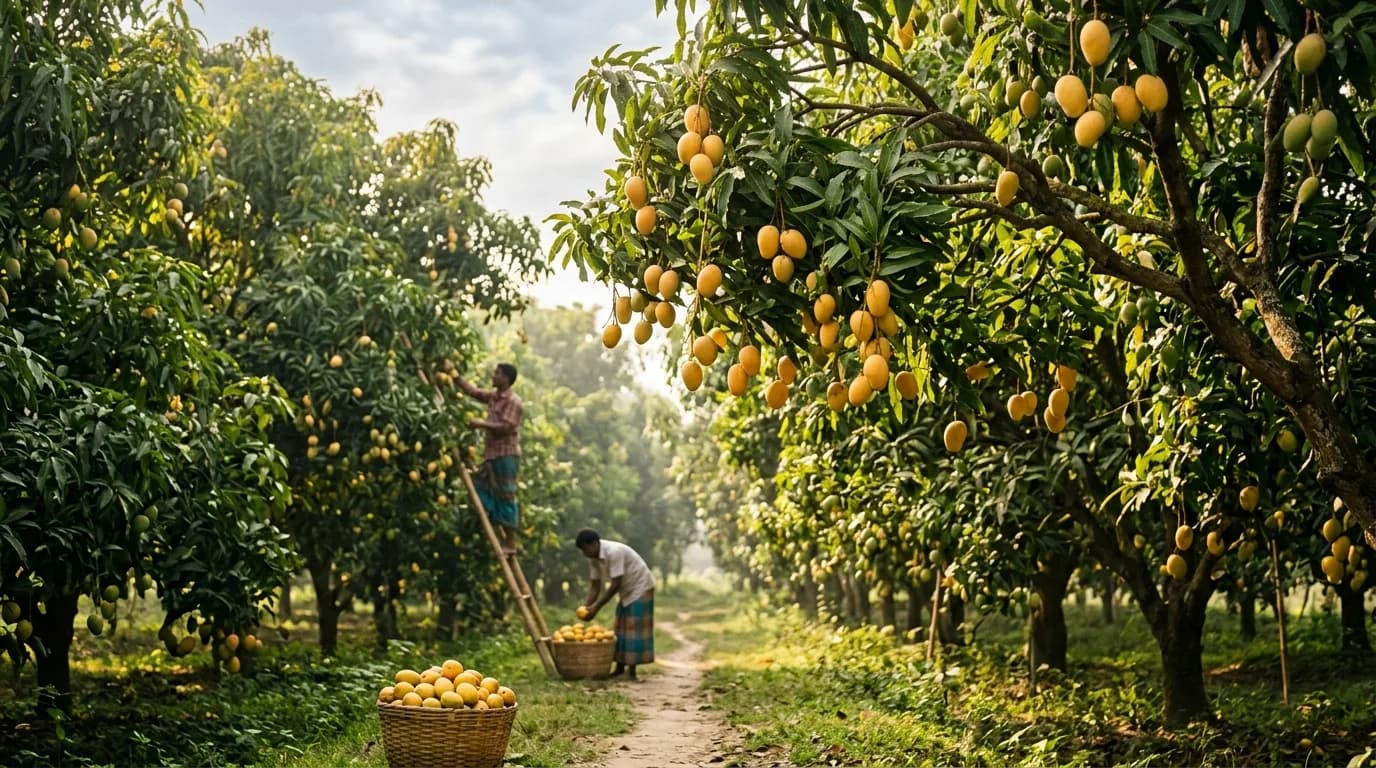
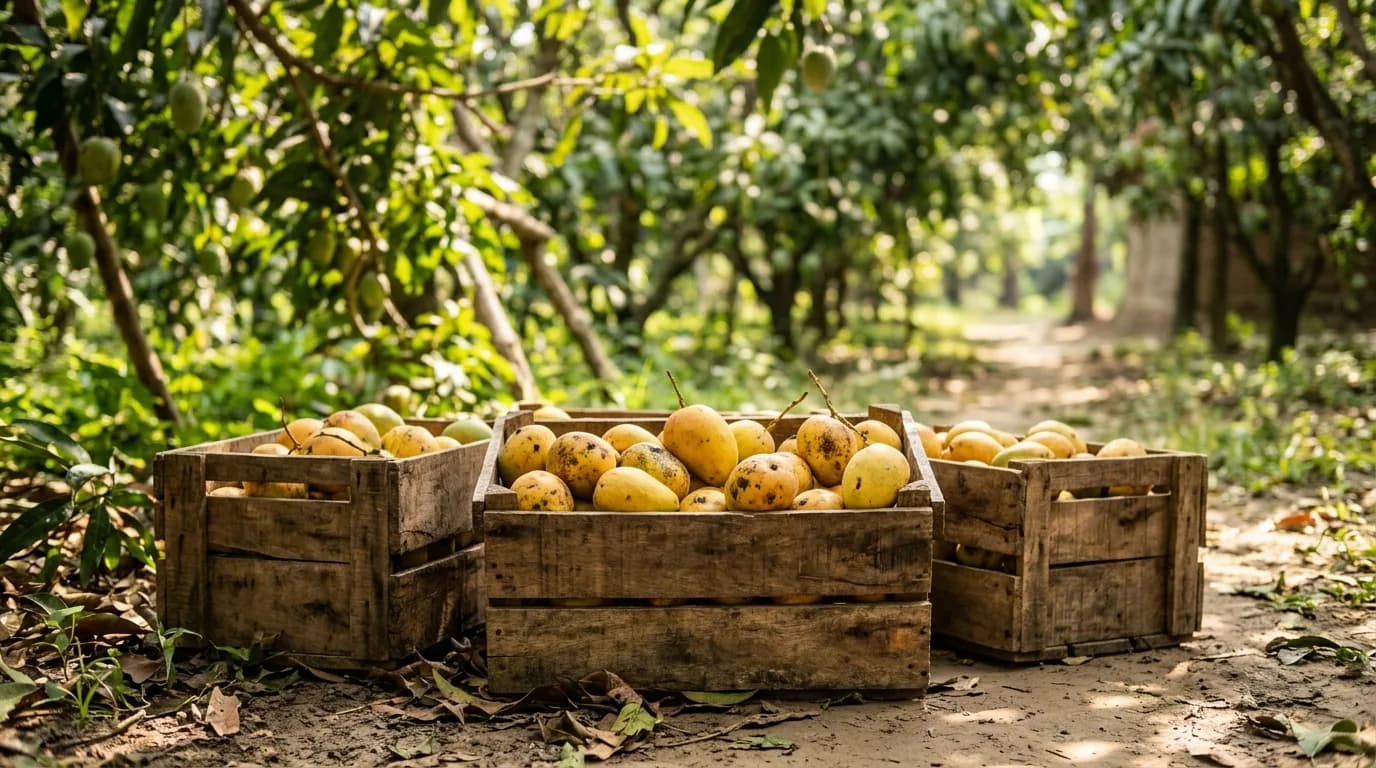
Every summer, mango lovers across Bangladesh wait for the first harvest from the orchards of Rajshahi. Keeping an eye on the official rajshahi mango harvesting calendar is the surest way to get naturally matured fruit rather than premature mangoes forced ripe with chemicals[3].
Different cultivars need different amounts of sunshine and heat before they're ready to pick, which is why harvests roll out in stages[4]. Here is how the season unfolds from mid-May through late July, along with what maturity means for flavor, sweetness, and shelf life.
Why the Rajshahi Mango Harvesting Calendar Exists
Each year, the Rajshahi District Administration and the Department of Agricultural Extension (DAE) set a phased harvesting schedule[1],[3]. It isn't just red tape. The timetable stops growers and traders from plucking immature fruit early in the season—a common practice among unscrupulous sellers who use dangerous ripening chemicals to give unready mangoes artificial color[3].
When a mango is harvested before physiological maturity—before its shoulders fill out and the inner stone hardens—it simply hasn't developed the starches needed to convert into natural sugars[4]. Pick it too soon, and you end up with rubbery flesh and an unpleasant sour bite that no ripening agent can fix. Letting the fruit mature on the branch gives you the balanced sweetness and deep aroma Rajshahi mangoes are loved for.
Official Rajshahi Mango Harvesting Calendar by Variety
Mangoes do not ripen all at once. The harvest opens with local seedling varieties in mid-May and runs through late July with hardy, slow-maturing cultivars[1].
The table below outlines the harvest dates set by regional authorities, alongside typical sugar readings in degrees Brix (Total Soluble Solids):
| Variety | Official Earliest Harvest Date | Sweetness Level (° Brix) | Pulp Characteristics & Edible Ratio |
|---|---|---|---|
| Guti (Indigenous Seedlings) | May 15 | 15–18° Brix | Varies; soft, moderate fibre, tangy-sweet |
| Gopalbhog | May 20–22 | 17–20° Brix | Thin yellow skin, moderate fibre, aromatic |
| Ranipasand & Lakshmanbhog | May 25 | 16–19° Brix | Bright skin, mild fragrance, firm texture |
| Khirsapat / Himsagar | May 25–30 | 18–21° Brix | Golden fiberless pulp, 70–75% edible yield |
| Langra | June 10 | 19–21° Brix | Retains green hue, highly aromatic, soft |
| Banana Mango | June 10 | 17–19° Brix | Slender shape, mild fiber, tender flesh |
| Amrapali (BARI Aam-3) | June 15 | 21–23.5° Brix | Deep orange pulp, very sweet, rich β-carotene |
| Fazli | June 15 | 16–18° Brix | Large fruit (400–800 g), high pulp ratio (>75%) |
| BARI Aam-4 | July 5 | 18–20° Brix | Medium-large, hybrid vigor, uniform ripening |
| Ashwina | July 10 | 15–18° Brix | Firm green skin, thick flesh, balanced tang |
| Gourmati | July 15 | 24–25° Brix | Flat stone, ~90% edible flesh, exceptionally sweet |
Off-season types like Katimon and BARI Aam-11 blossom and fruit outside these windows, but the traditional seasonal varieties follow this summer schedule closely.
Early Season: Guti, Gopalbhog, and Khirsapat (Late May)
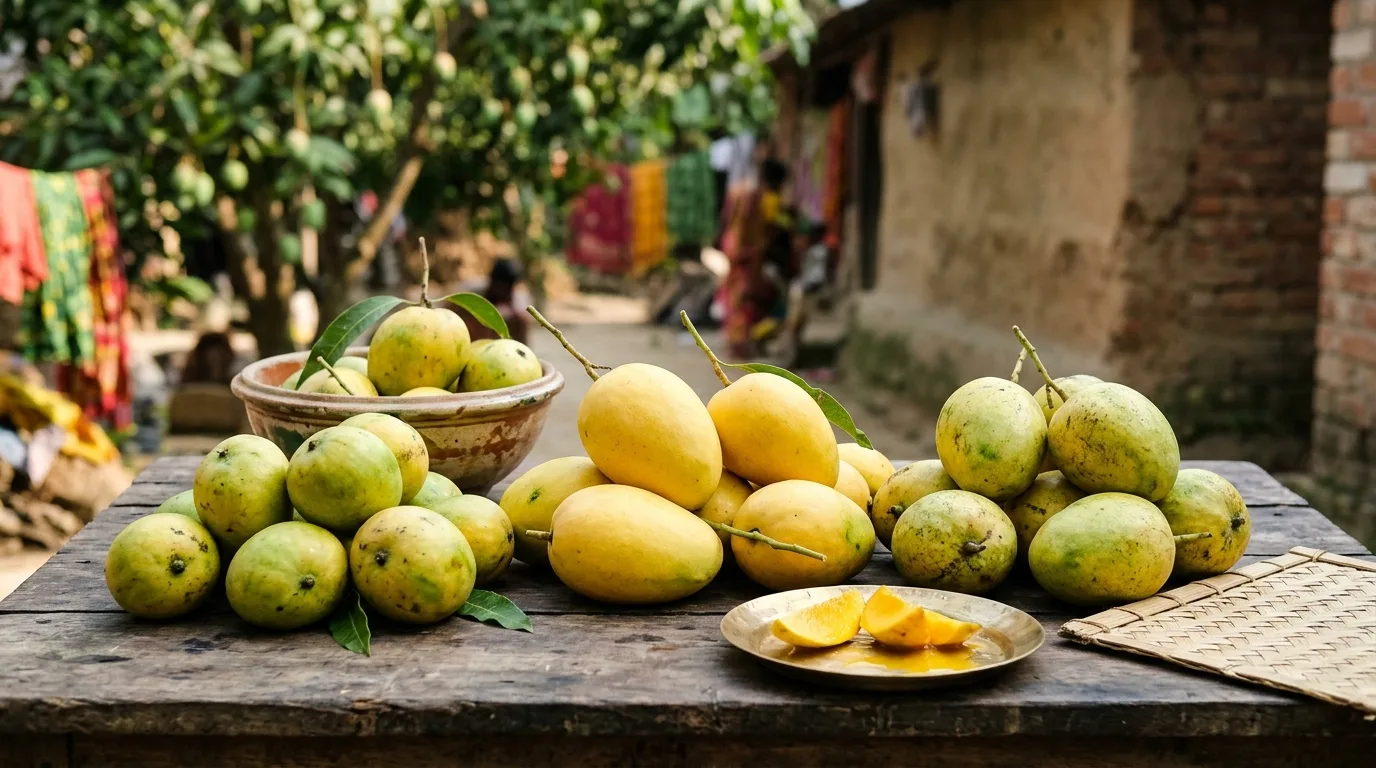
The season kicks off around May 15 with Guti, a collective name for local seedling varieties[3]. Guti mangoes come in all shapes and sizes, giving early buyers a lively mix of sweet and sour notes. Out in the orchards, growers use this first week to check trees, test picking poles, and get packing sheds in order.
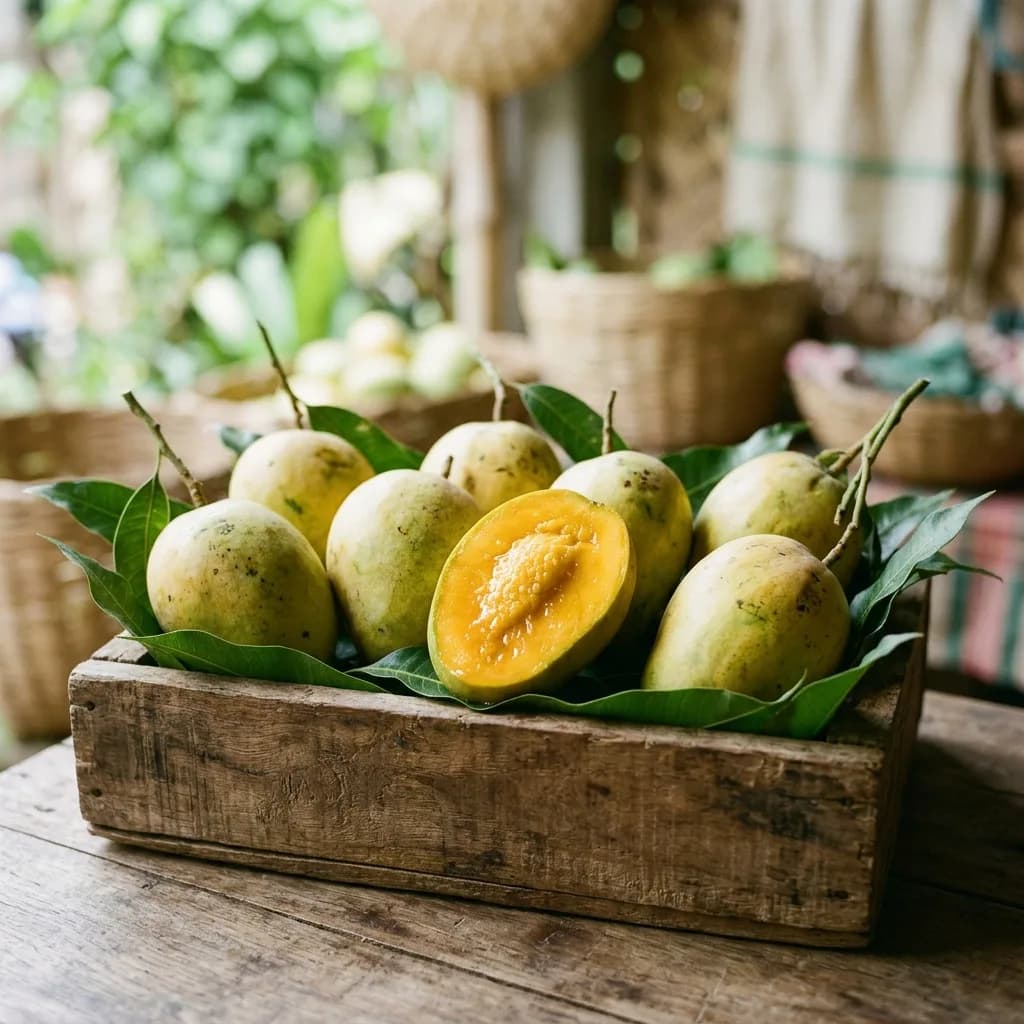
Around May 20 to 22, Gopalbhog mango arrives as the first premium grafted cultivar. It turns a gentle golden-yellow when ripe, with sweetness sitting between 17 and 20° Brix. The pulp has a touch of soft fiber, making it a firm favorite for table slicing.
Between May 25 and May 30, orchards begin picking Khirsapat, often considered the prize of the early harvest. Widely known in the market as Himsagar mango, it carries a deep fragrance and smooth, fiberless saffron pulp. With 70 to 75 percent edible flesh, Khirsapat is the benchmark Bengali summer mango.
Mid-Season Peaks: Langra, Amrapali, and Fazli (June)
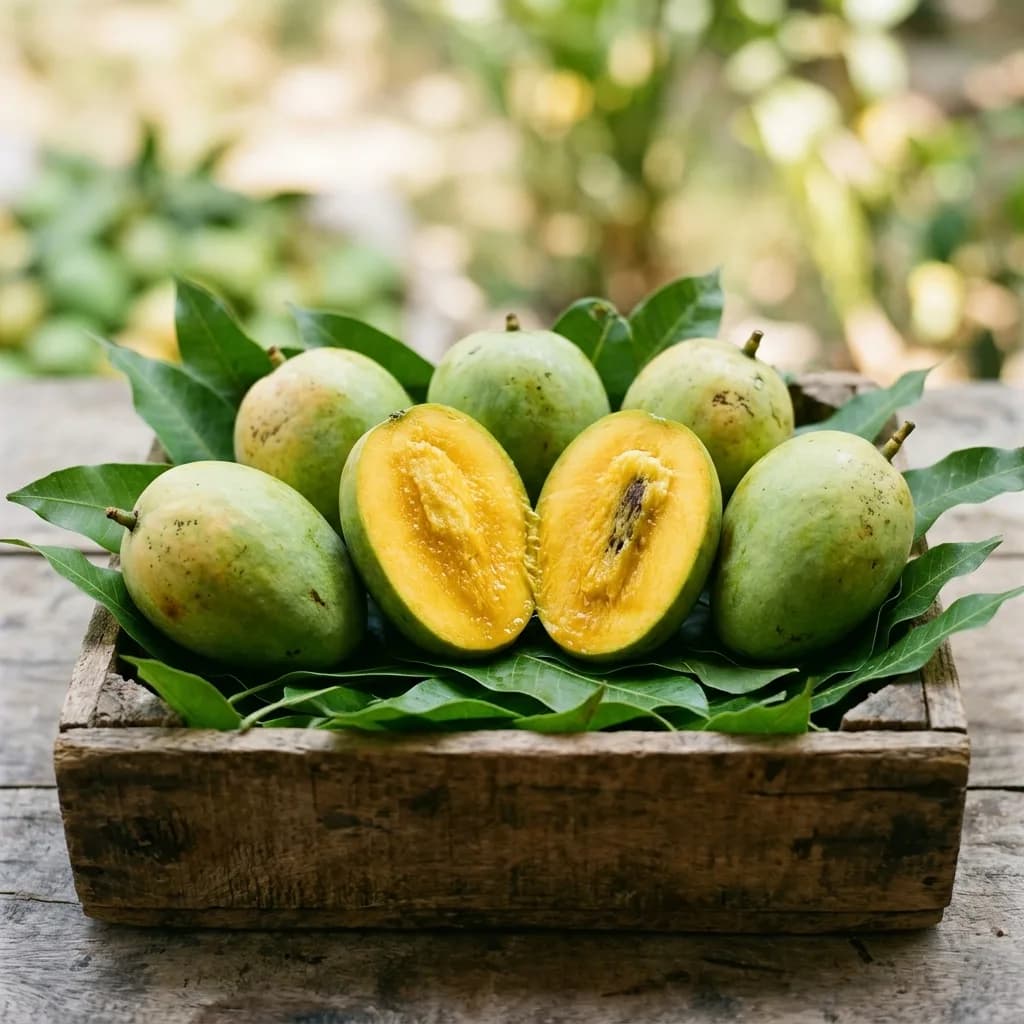
Harvest volumes peak in June, starting with Langra and Banana Mango around June 10[1]. The Langra mango is unmistakable: its skin stays pale green even when fully ripe. Underneath, the pulp is soft, fragrant, and balances sweetness with a distinct tang at 19 to 21° Brix.
By June 15, harvesting opens for Amrapali (BARI Aam-3) and Fazli[1]. Amrapali remains a huge favorite across Bangladesh for its intense sugar levels, often reaching 21–23.5° Brix[6]. Its deep orange flesh is packed with beta-carotene, though the thin peel gives it a shorter shelf life than late-season fruit.
Sharing that mid-June start is Fazli, the heavyweight of Rajshahi orchards[1]. Individual fruits usually weigh between 400 and 800 grams. With an edible yield above 75 percent and a refreshing 16–18° Brix profile, a good Fazli works just as well sliced fresh as it does in homemade pickles and chutneys.
Late Harvest and Handling: Ashwina, Gourmati, and Post-Harvest Care
When monsoon showers arrive in July, the late-ripening varieties take their turn. BARI Aam-4 begins around July 5, followed by the firm, tangy Ashwina on July 10[1]. Ashwina has a solid, fibrous bite that appeals to anyone who prefers a zesty kick over heavy sweetness.
The season wraps up around July 15 with Gourmati[1]. A modern introduction to Rajshahi horticulture, Gourmati registers an impressive 24–25° Brix. Because its inner stone is remarkably flat and thin, roughly 90 percent of the fruit is usable flesh, ending the core summer harvest on a rich note.
Scientific Handling and Food Safety
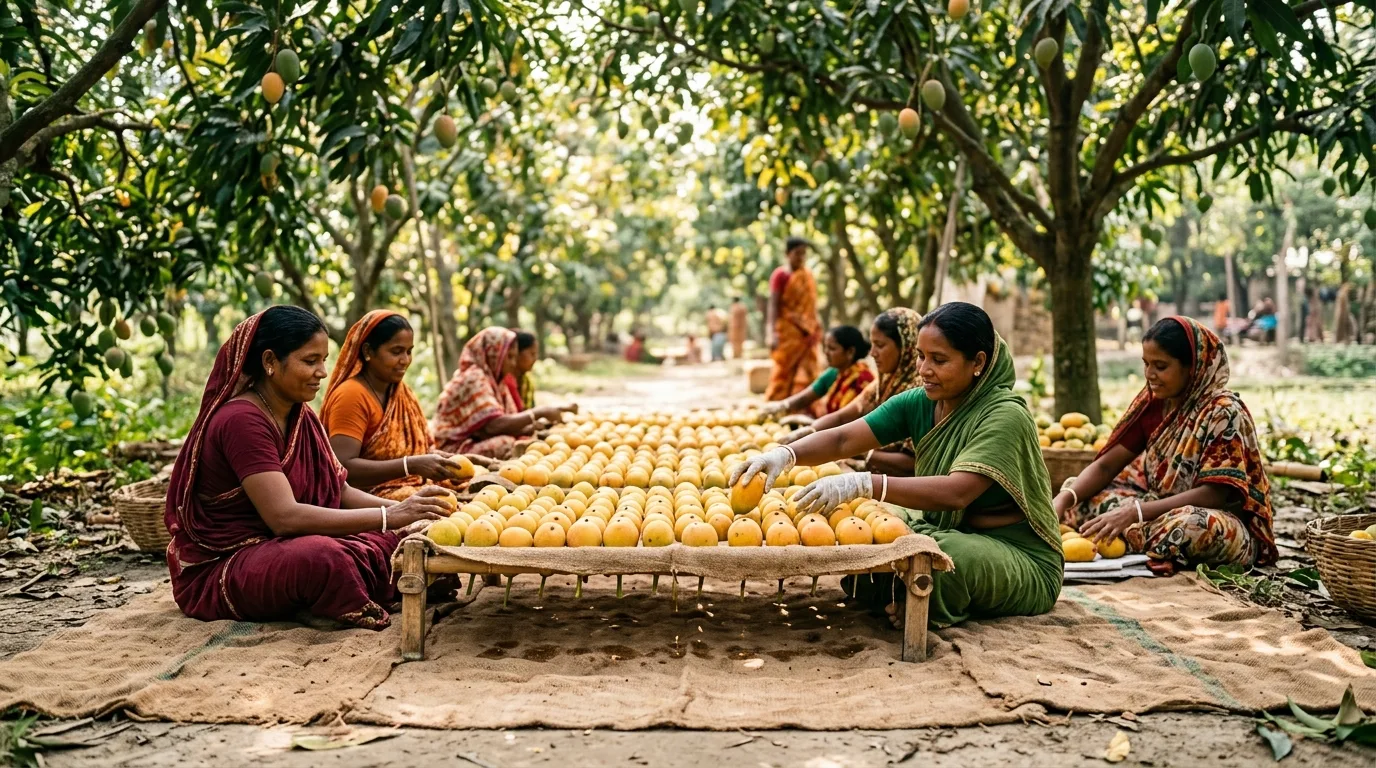
Picking at the right time is only the first step; proper post-harvest handling matters just as much. Pickers leave a 2 to 3 cm stem on every fruit so acidic sap doesn't spray across the skin. The harvested mangoes sit stem-down for 10 to 15 minutes to drain completely, preventing sap burns that can turn into fungal rot later.
To manage anthracnose (Colletotrichum) and fruit fly larvae without synthetic sprays, fruit goes through Hot Water Treatment (BARI-developed HWT) at 55 °C (±1 °C) for 5 minutes, extending shelf life by 8 to 10 days[5]. At home, keep unripened fruit out of refrigerators below 12–13 °C; cold temperatures cause grey sunken patches and stop the ripening process. Let your mangoes ripen naturally at room temperature, around 25–30 °C.
Plan Your Seasonal Orders with Orchard-Direct Fruit
Using the rajshahi mango harvesting calendar takes the guesswork out of buying, so you catch each variety at its flavorful best. Ordering straight from honest growers guarantees you receive fruit that ripened properly on the tree.
At Rajshahir Mango, our family-run orchards have grown pure fruit since 2013. We follow natural maturity dates to the letter, with zero calcium carbide or chemical baths. Check our selection of fresh Rajshahi mangoes packed in sturdy 12 kg and 24 kg crates, delivered across Bangladesh with cash on delivery, card, bKash, and Nagad options.