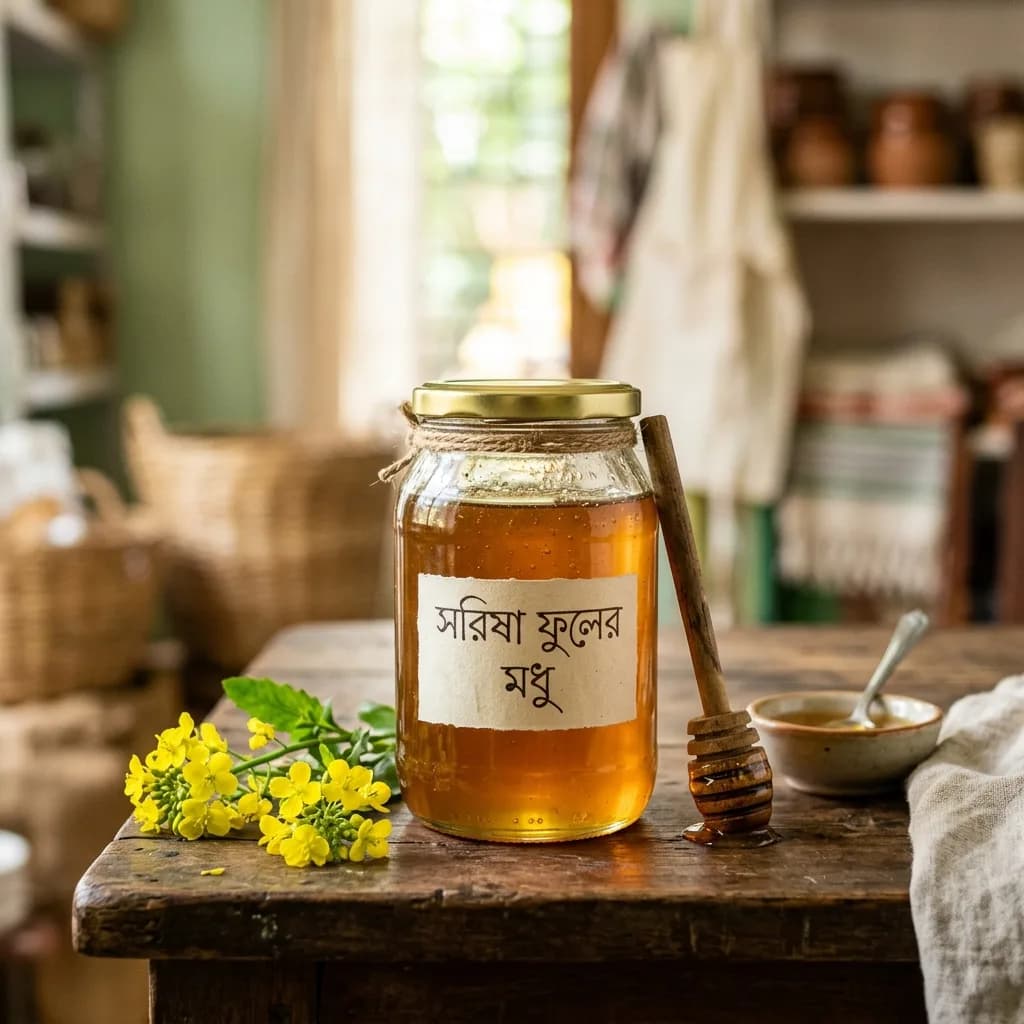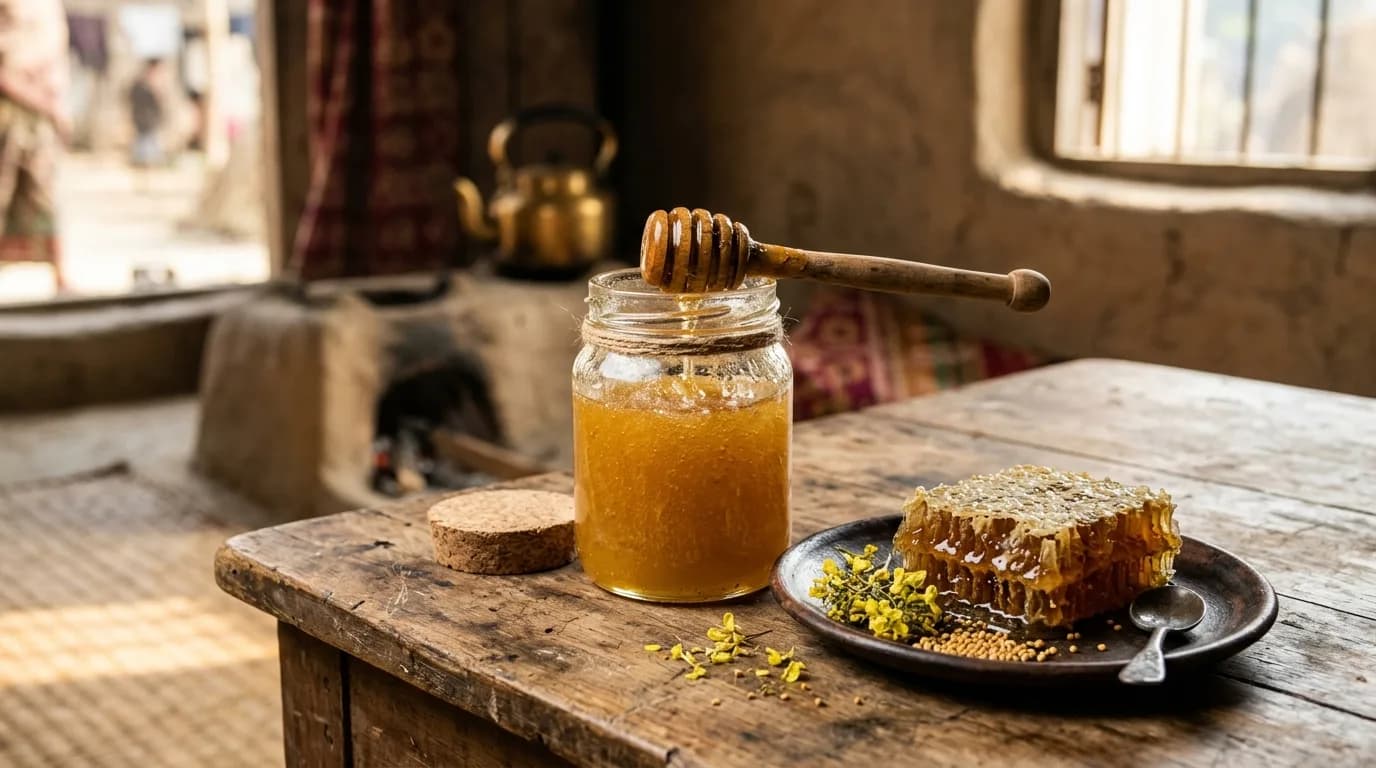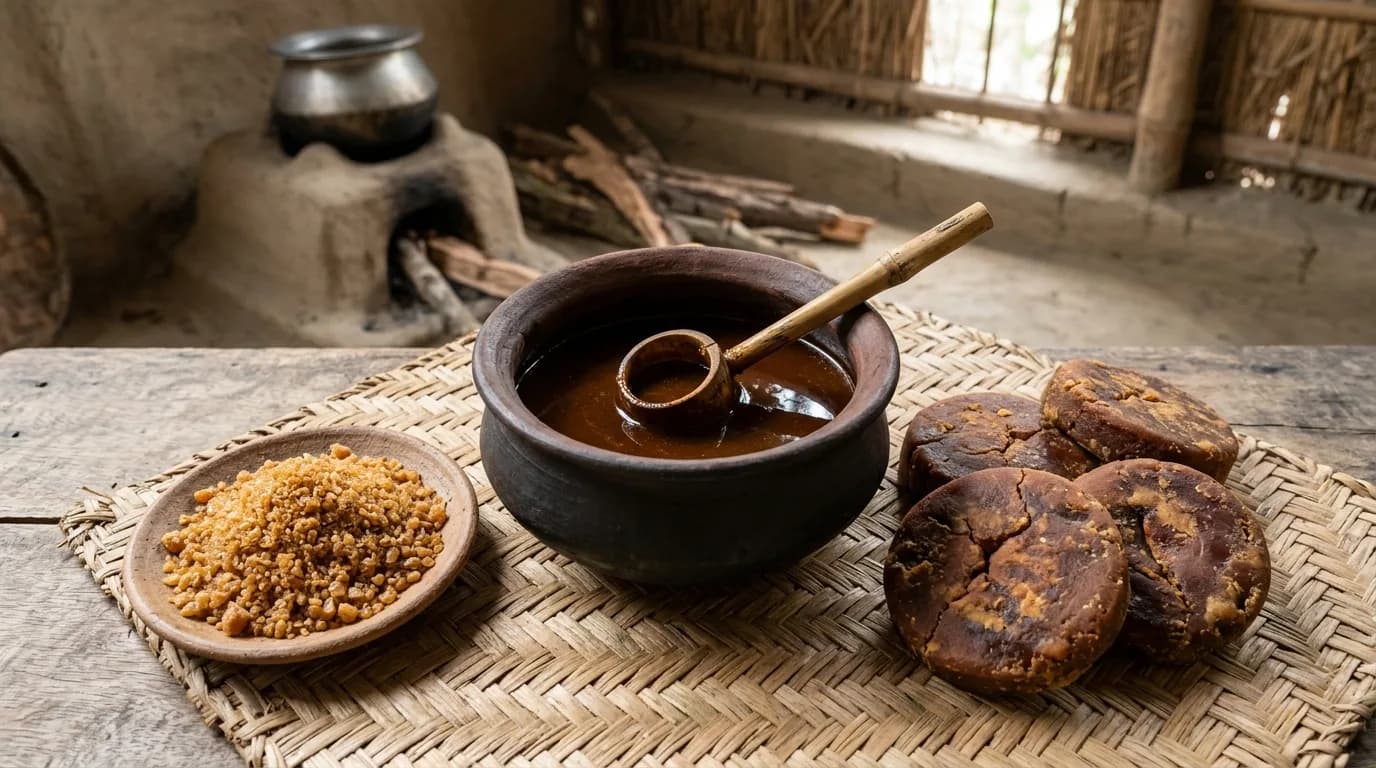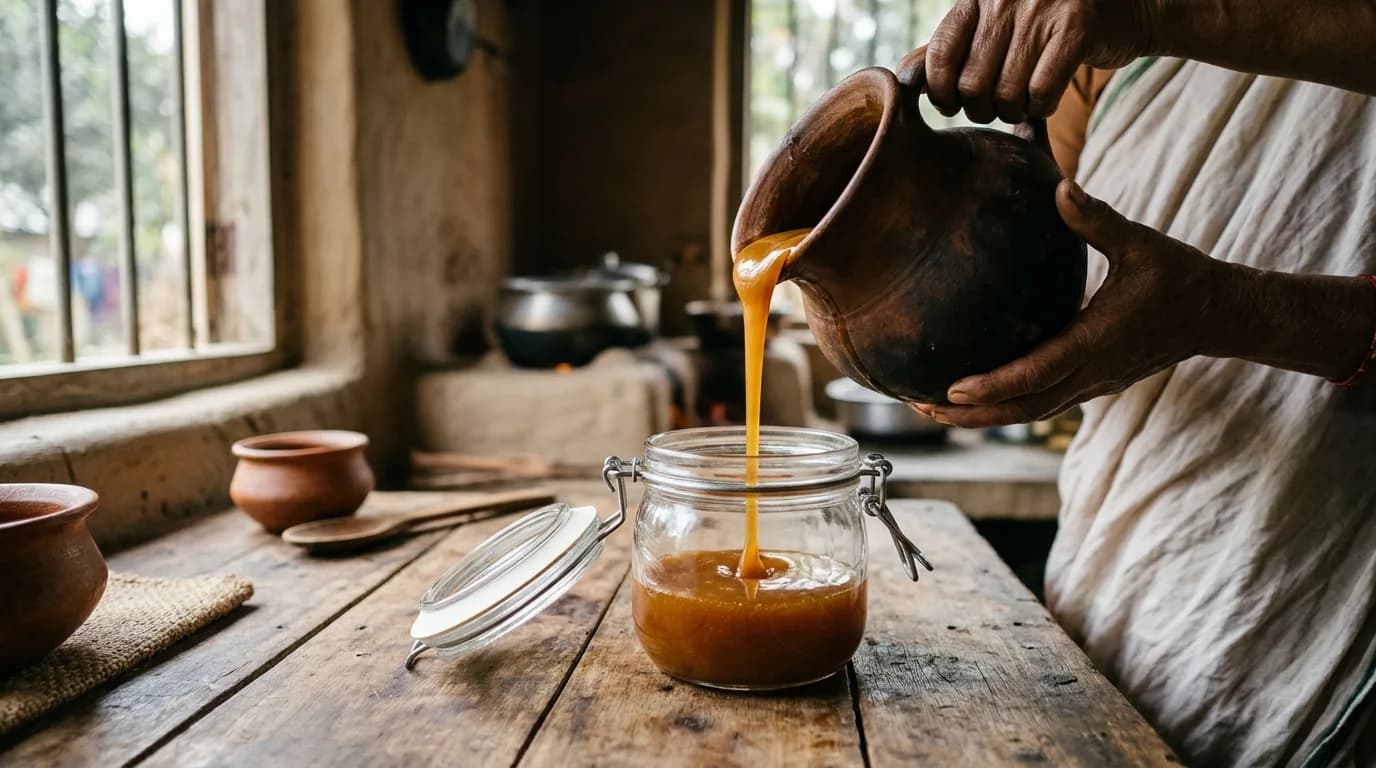
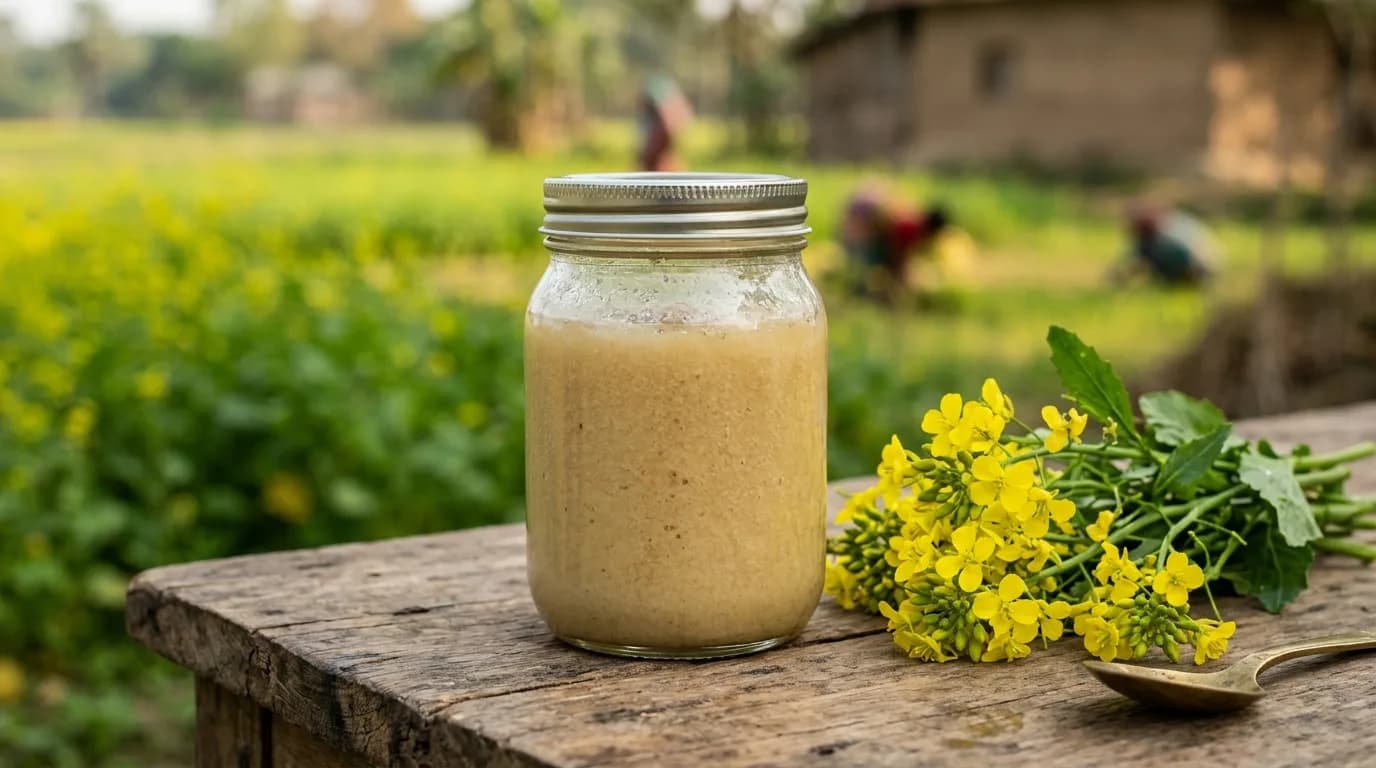
Getting to know authentic mustard honey characteristics bangladesh buyers face each winter makes it much easier to appreciate this seasonal raw honey. When bright yellow mustard fields bloom across the northern districts, beekeepers bring in a harvest that often catches first-time buyers off guard with its pale shade, mild scent, and remarkably fast crystallization.
Raw mustard honey sets into a creamy, butter-like paste within days of coming out of the comb. Because of this, folks who haven't handled raw varietal honey often assume someone mixed sugar syrup into the jar. Understanding how this winter honey behaves, why it sets firm, and what real purity looks like saves you from second-guessing a perfectly good harvest[1].
Seasonal Harvest and Regional Origins in Bangladesh
Bangladesh's mustard honey season is short, tight, and completely at the mercy of winter weather[1]. Running from late November through late January—the Bengali months of Agrahayan and Poush—it offers a narrow window where vast mustard acreage flowers all at once, giving bees an immense supply of nectar.
Migratory beekeepers move their European honeybee (Apis mellifera) colonies across key farming belts to catch this single-flower nectar flow[3]. The main production areas include:
- The Chalan Beel Belt: Especially Sirajganj (Tarash and Ullapara upazilas), where endless stretches of yellow mustard support massive seasonal apiary camps[1],[4].
- Central Districts: Tangail and Manikganj, both well known for extensive acreage and active beekeepers' groups[3].
- Northern & Southern Riverine Belts: Pabna, Natore, and Faridpur, where rich silt land produces heavy mustard blooms year after year.
With the foraging season lasting just six to eight weeks, beekeepers have to extract and strain the honey promptly before sealing it in food-grade drums[2]. Timing matters: if heavy winter fog or sudden cold spells keep bees pinned inside their boxes, yields drop overnight[1].
Core Physical Mustard Honey Characteristics Bangladesh Buyers Should Know
Mustard honey acts quite differently from multifloral, Sundarban, or litchi honey. Knowing its natural quirks will keep you from worrying once the thermometer drops.
Color and Visual Transformation
Fresh from the comb, raw mustard honey has a warm, clear amber to light golden color. That liquid state doesn't last long in a typical Bangladesh winter. Once room temperatures dip into the 12°C to 18°C range, it sets into an opaque, creamy white or warm beige paste.
Texture and Granulation
The quickest way to spot authentic mustard honey characteristics bangladesh tables see is that rapid, smooth granulation. Fake or sugar-fed honey tends to drop gritty, uneven crystals to the bottom of the jar. Pure mustard honey, on the other hand, sets evenly from top to bottom. It develops fine micro-crystals, giving it the spreadable, silky body of soft butter or warm ghee.
The Chemistry Behind Natural Crystallization
This quick change isn't a defect; it's basic sugar chemistry. Mustard nectar is packed with glucose, usually sitting between 36% and 38%[5]. Its fructose-to-glucose (F/G) ratio is low as well, often dropping under 1.1[5]. Since glucose doesn't stay dissolved in water as easily as fructose does, it separates out, latching onto tiny suspended pollen grains to build fine glucose hydrate crystals[5]. Chilly winter air simply speeds up the process.
Aroma and Palate Profile
Don't expect the pungent bite of mustard seeds or raw mustard oil here. Pure mustard blossom honey has a gentle, warm floral scent with just a faint hint of green plant aroma. Taste-wise, it's mild and clean, without the lingering sourness or sharp tang you get from wild forest varieties.
Quality Standards and BDS 887 Specifications
Checking purity comes down to measurable testing criteria. In Bangladesh, the benchmarks set by the Bangladesh Standards and Testing Institution (BSTI BDS 887) and Codex Alimentarius define what genuine honey should look like in the lab.
| Quality Parameter | BSTI BDS 887 Benchmark | Practical Significance |
|---|---|---|
| Harvest Ripeness | 75%–80% capped comb cells | Ensures bees have fully dehydrated nectar and added natural enzymes |
| Moisture Content | Maximum 20.0% by mass | Prevents wild osmophilic yeasts from causing sour fermentation[6] |
| Total Reducing Sugars | Minimum 65.0% | Confirms authentic floral carbohydrate composition |
| Apparent Sucrose | Maximum 5.0% | Distinguishes real honey from sugar-cane or corn-syrup additives |
| HMF (Hydroxymethylfurfural) | Maximum 80 mg/kg | Verifies honey has not undergone damaging high-heat processing |
Responsible beekeepers wait until the bees cap at least 75% of the honeycomb with wax before spinning the frames in an extractor. Pulling unripe honey too early leaves the moisture above 22%, which makes the batch ferment and turn sour on the shelf[6].
Safe Winter Kitchen Uses and Daily Routines
Because crystallized mustard honey sets thick, it fits easily into a Bengali winter kitchen. It stays put on a spoon, meaning no sticky drips running down the sides of the jar.
1. Natural Table Spread for Breakfast
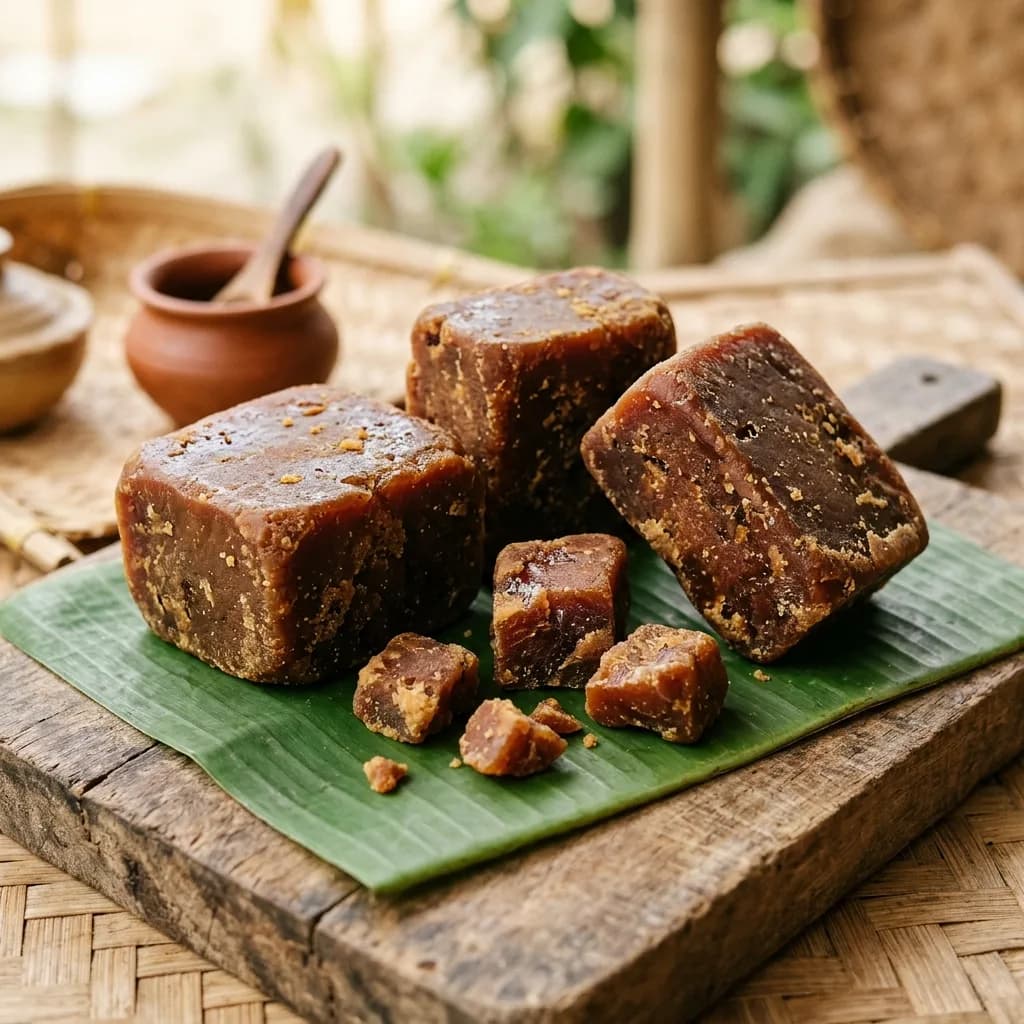
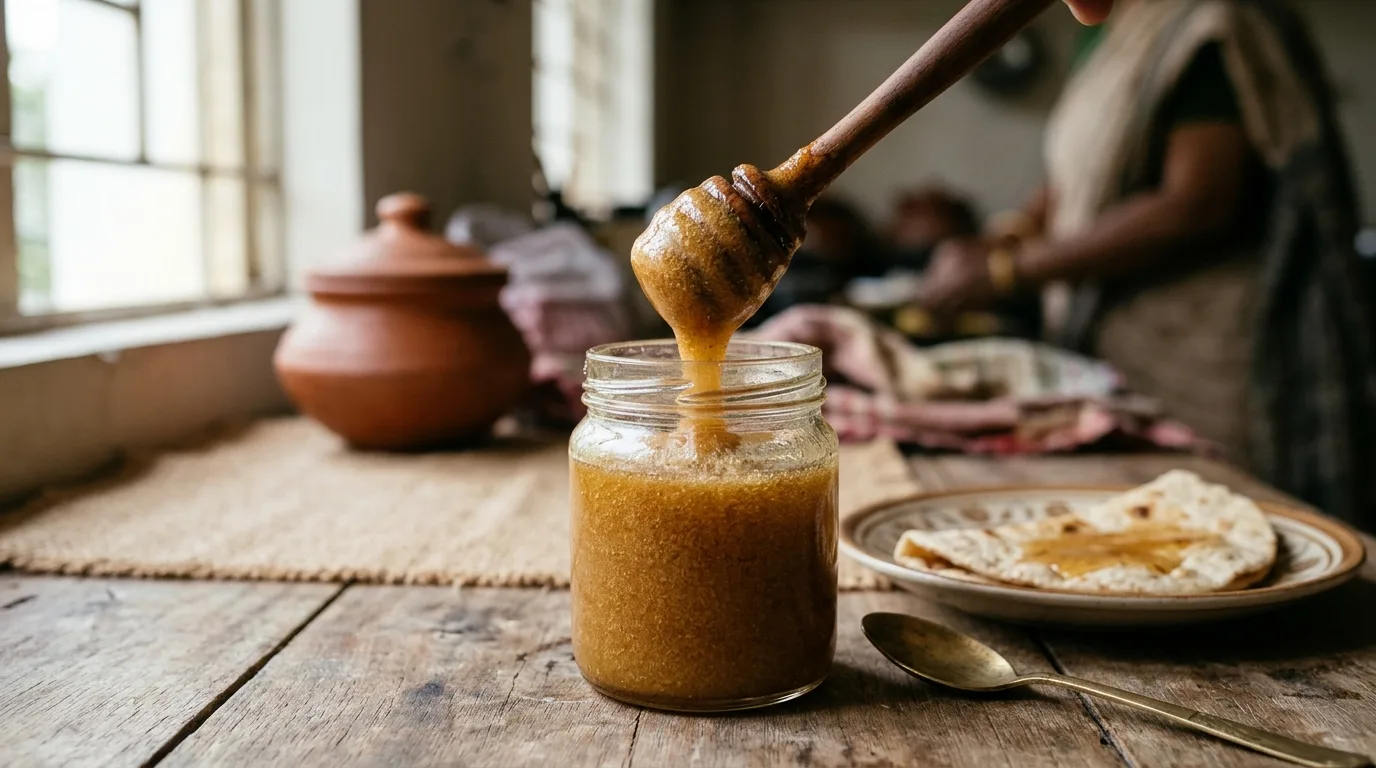
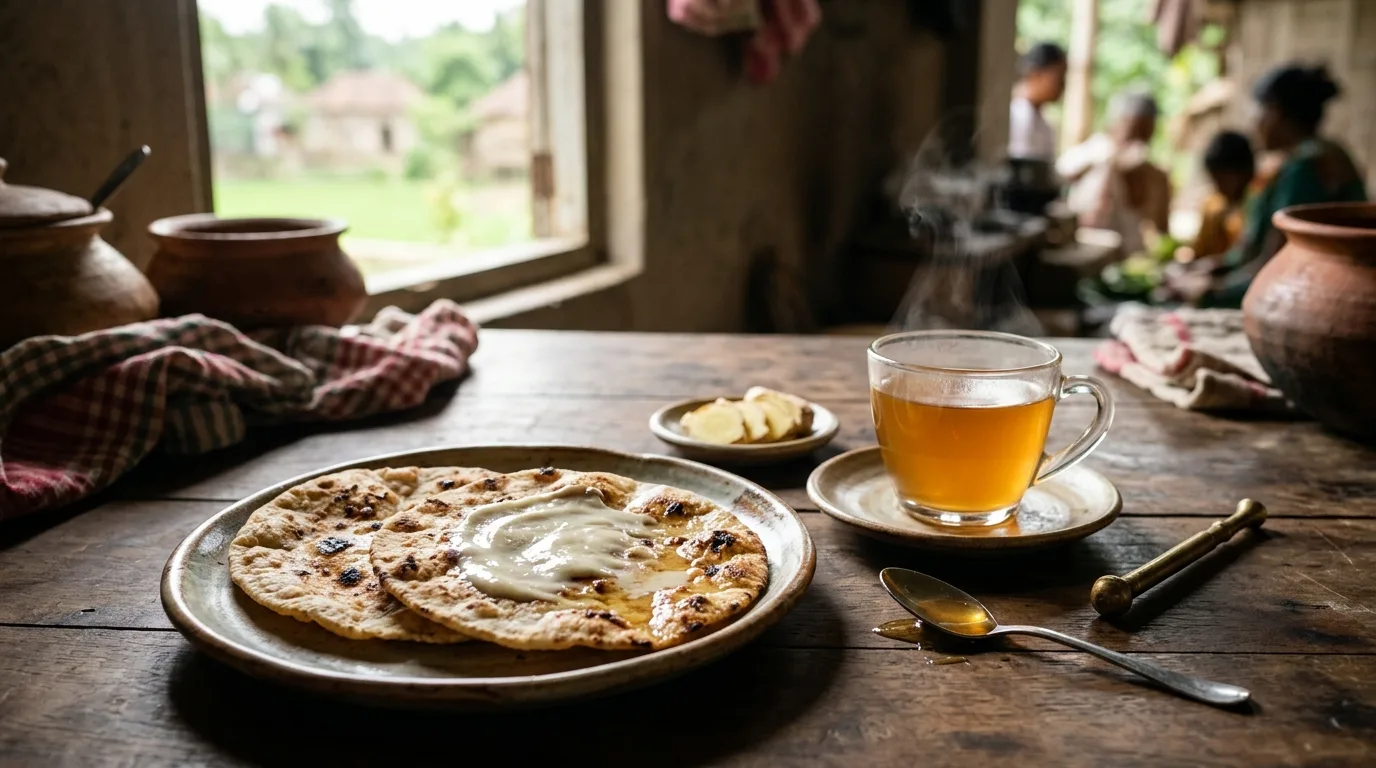
Spread crystallized Mustard Flower Honey straight onto hot whole-wheat ruti, parathas, or toast instead of processed jams. The heat of the bread melts the fine crystals right away into a rich glaze. It also pairs wonderfully with winter rice cakes like bhapa pitha and warm chitoi pitha when you want a lighter alternative to authentic date palm jaggery.
2. Soothing Lukewarm Infusions
Winter mornings in Bengal often bring scratchy throats and dry coughs. Stir a teaspoon or two of mustard honey into lukewarm water—kept under 40°C—along with a little fresh ginger juice or pressed tulsi extract. The dense honey coats the throat and eases dryness on cold mornings.
3. The Golden Off-Heat Cooking Rule
Don't cook, boil, or bake raw honey over direct heat. Temperatures past 45°C destroy delicate enzymes like diastase and invertase while rapidly driving up HMF levels. When sweetening tea, warm milk, or morning oats, let the food cool to an easy drinking temperature before stirring the honey in.
Important Food Safety and Infant Health Advice
Never give honey—raw, filtered, or pasteurized—to a baby under one year old. Honey can harbor spores of Clostridium botulinum. An infant's developing digestive tract can't handle these spores, which can lead to infant botulism. For older children and adults, it remains a safe, wholesome food.
Proper Storage and Decrystallization Practices
Good storage habits keep raw honey fresh and stable long after the winter ends. A few simple rules are all you need:
- Keep Containers Airtight: Honey pulls moisture straight out of humid air. Keep it sealed in food-grade glass or thick PET jars. Left open on a damp shelf, it will draw in water over time and run the risk of souring.
- Store at Room Temperature: Put the jar in a dry, shaded cupboard between 20°C and 25°C. Keep it out of the fridge; extreme cold only makes solid honey stone-hard and frustrating to scoop.
- Gentle Decrystallization: If you need runny liquid honey for drinks, don't microwave it. Loosen the jar lid and sit it in a warm water bath kept below 40°C to 45°C. Stir gently until the glucose crystals break down and turn back into clear liquid.
At Rajshahir Mango, we work alongside dependable beekeepers to bring pure, unadulterated regional staples to homes across Bangladesh. If you're stocking up on seasonal date-palm jaggery or looking for pure, unheated honey, take a look at our honey collection to get authentic winter harvests delivered right to your door.