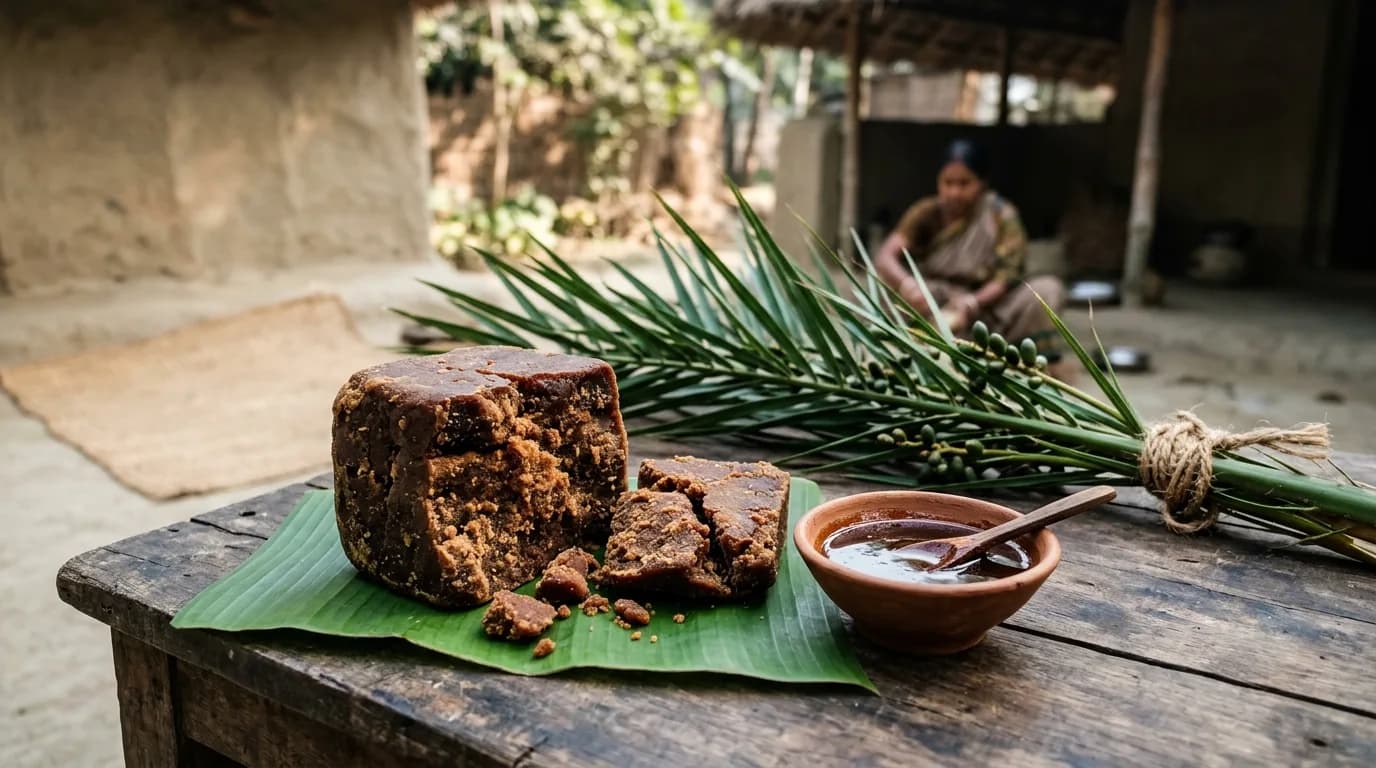
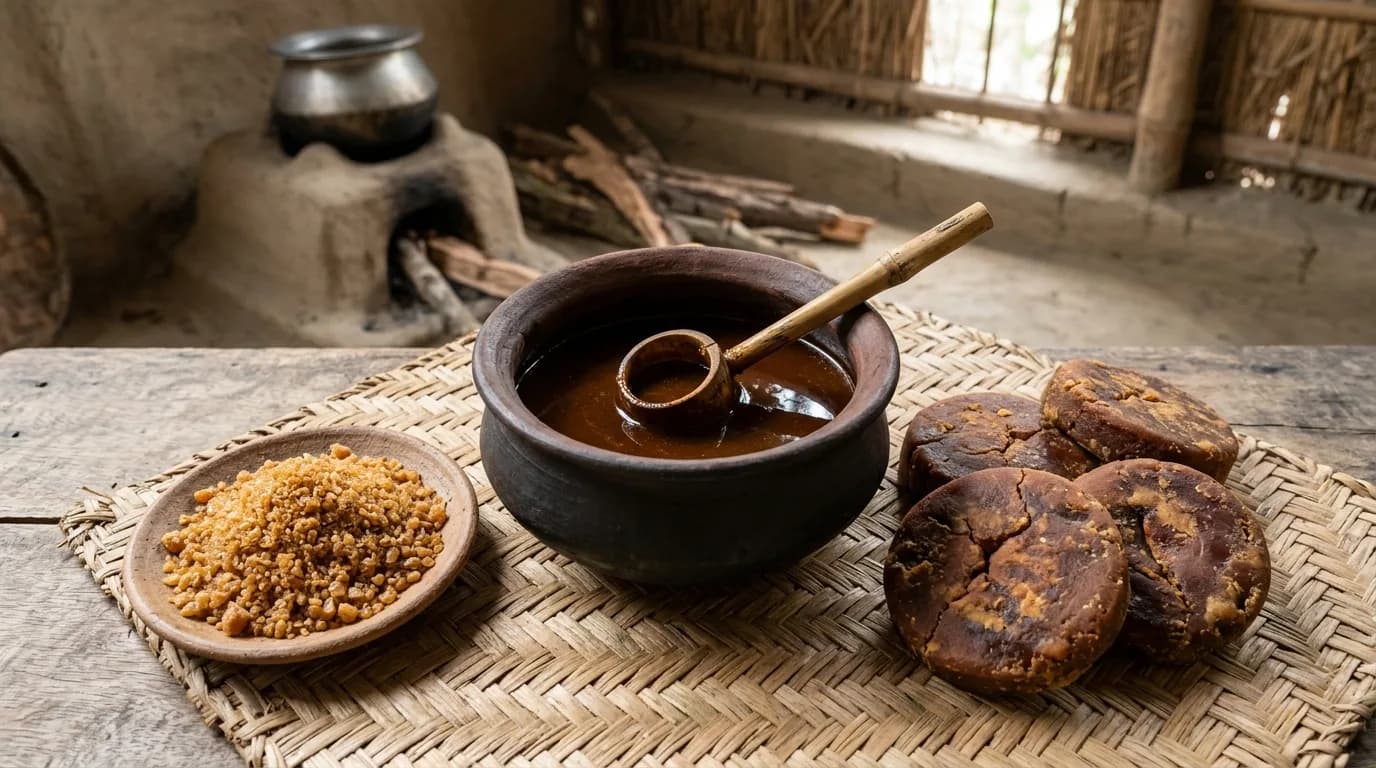
Winter in Bengal isn't complete without date palm jaggery, and knowing the different types of khejur gur and their uses can turn an ordinary kitchen into a true seasonal hearth. From misty mornings in Rajshahi and Jessore to dinner tables in Dhaka, good gur brings a smoky fragrance and rich caramel note that nothing else matches[4]. Still, plenty of home cooks run into trouble: a pot of payesh suddenly separates, or a batch of pitha turns dry and chalky on the plate.
Picking between runny jhola, grainy dana, and firm patali isn't just about taste. Each has its own moisture level, boiling temperature, and sugar grain that changes how it acts over the fire. Grab the wrong one and your dough goes limp, fresh milk curdles on contact, or your sweets turn stale in days. Here is how each type works and how to pair them for dependable results every time.
The Winter Harvest: How Date Palm Sap Transforms
Tapping date palm sap (khejur rosh) starts in mid-November and runs through late February, matching the Bengali months of Agrahayan to Falgun[5]. The finest sap flows during the coldest stretch of Poush and Magh, when nighttime temperatures drop to between 10°C and 18°C. Cold nights are crucial. If the air stays warm, wild yeasts start fermenting the sap right in the earthen pot hanging from the tree, souring it before dawn.
Turning that fresh rosh into jaggery takes steady heat management over clay fire-pits fueled by dry fallen leaves and wood. Gachi artisans boil the sap down in wide iron pans through clear stages of thickness. The math shows just how much water boils off: forty kilograms (one maund) of fresh sap gives you roughly 9 kilograms of runny jhola gur, 8 kilograms of granular dana gur, or just 6 kilograms of hard, molded patali gur[4].
Understanding the Types of Khejur Gur and Their Uses
To cook well with winter gur, you need to know how each cut behaves with heat, moisture, and aroma.
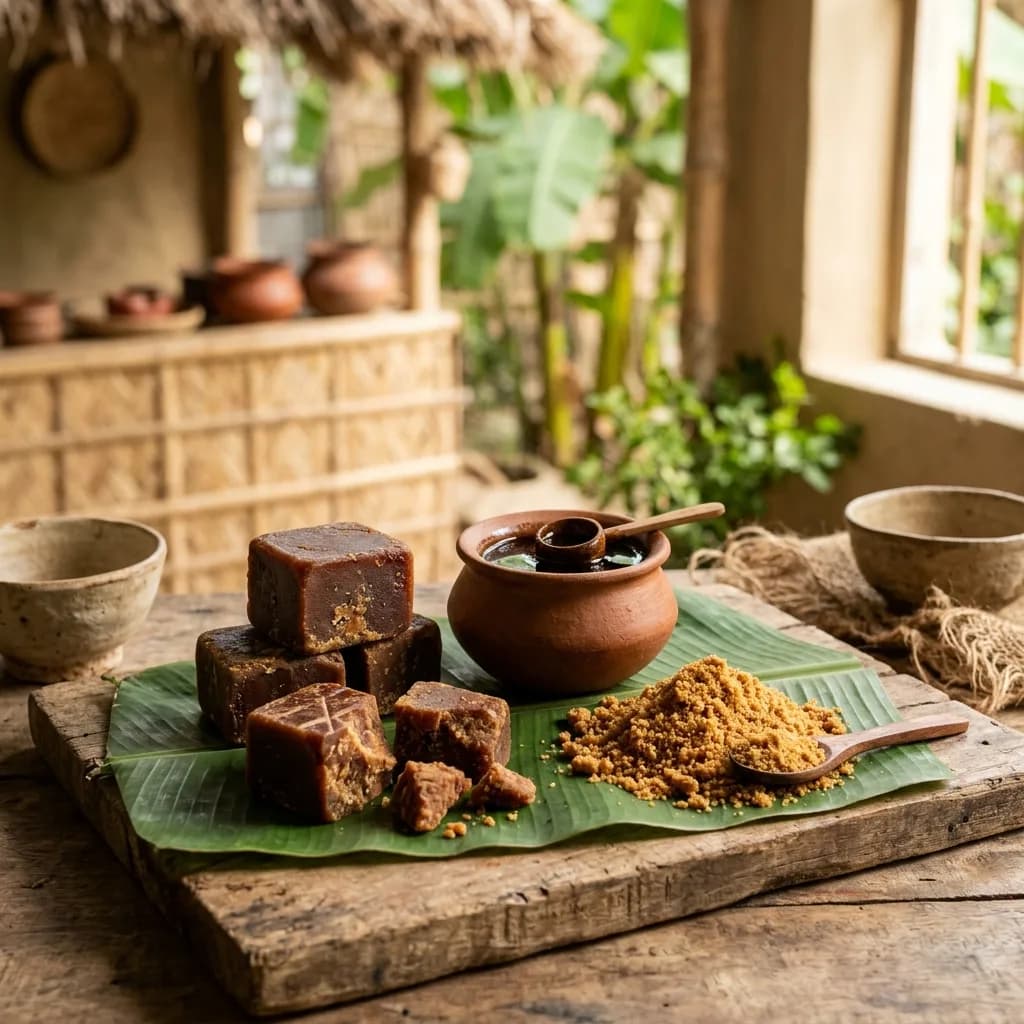
1. Jhola Gur (Nolen Gur Syrup)
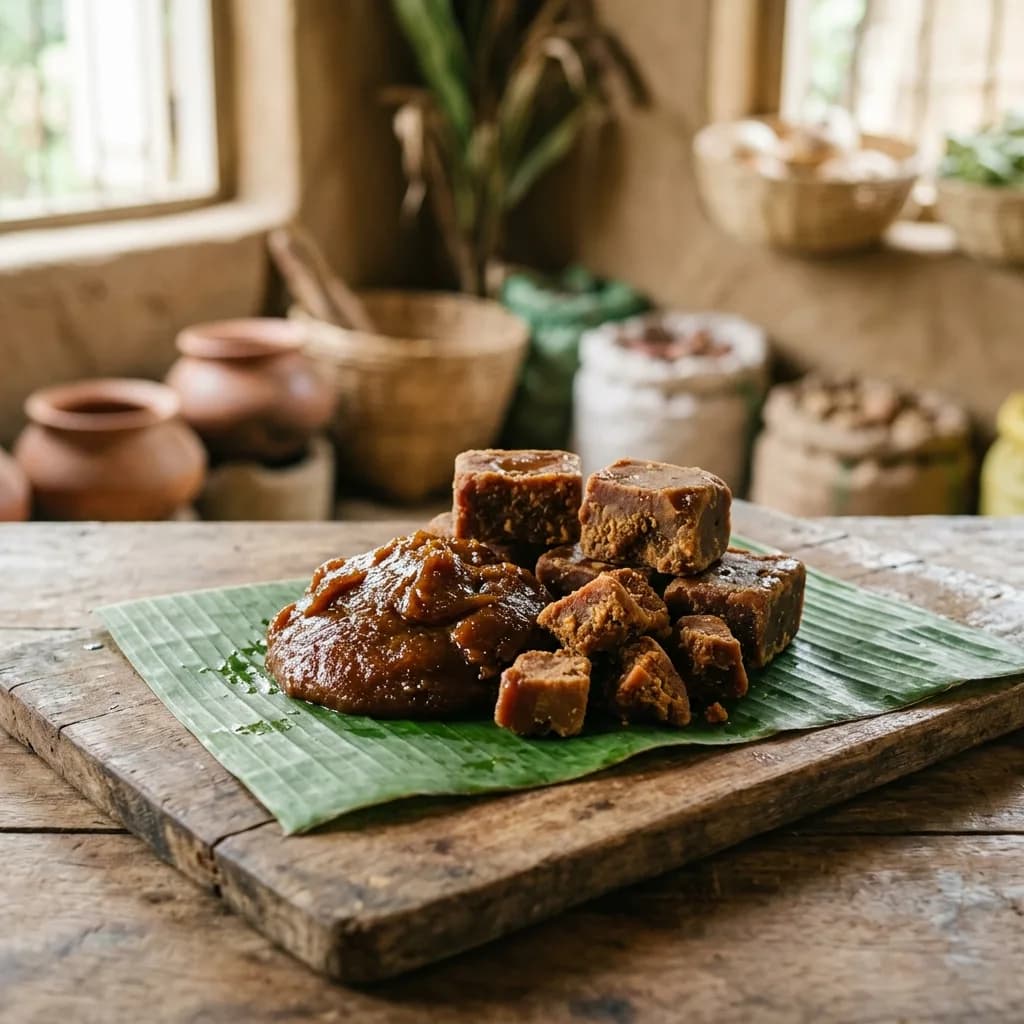
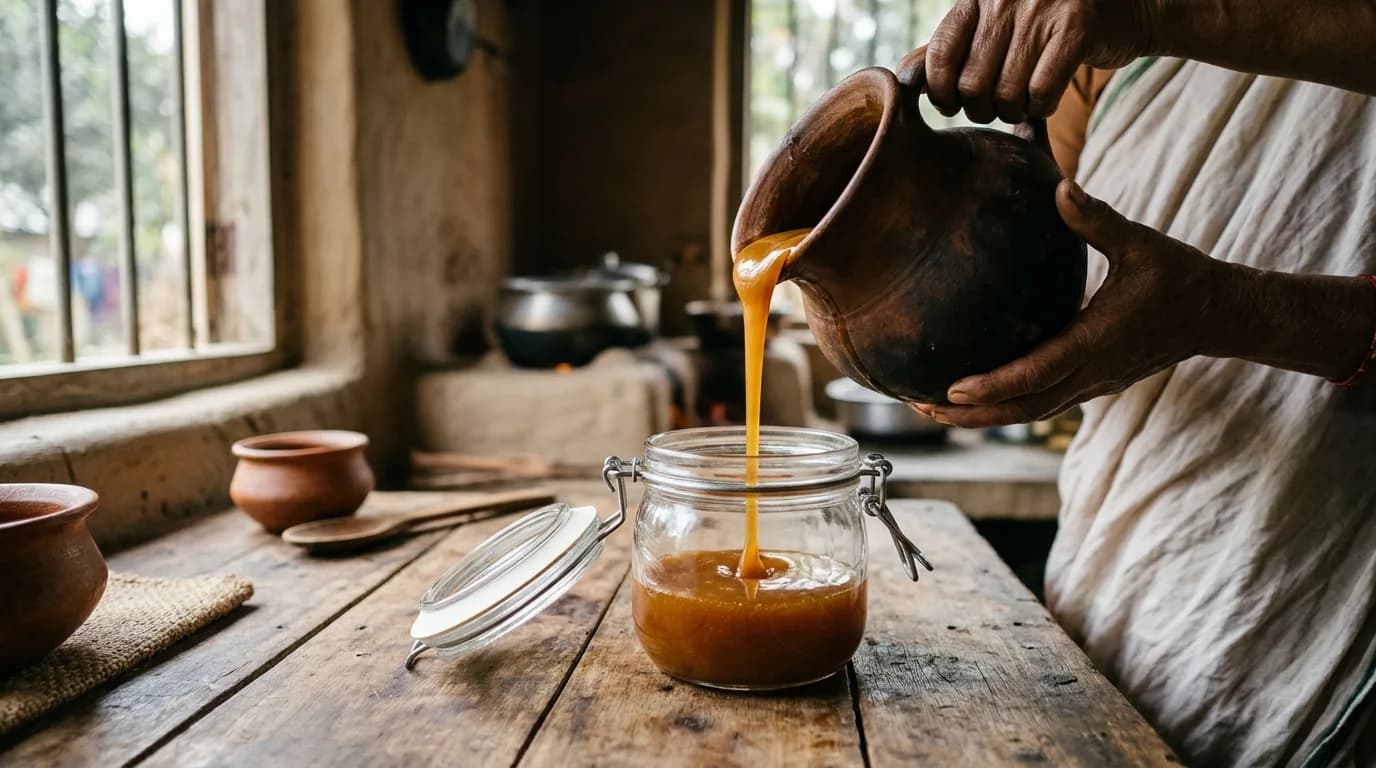
Jhola gur—often sold as liquid nolen gur—comes off the fire first. The maker pulls it once the boiling syrup reaches 110°C to 114°C, where the sugar settles around 70° to 75° Brix. Because it spends less time bubbling, jhola holds on to the delicate, floral aromas of fresh sap, along with a high moisture level between 15% and 22%.
It pours like warm honey straight from the clay handi. You don't have to grate or melt it first. That makes it ideal when you want strong aroma and quick sweetness drizzled over hot pitha or folded into cool batters.
2. Dana Gur (Granular Jaggery)
Dana gur sits right in the sweet spot between syrup and cake. The sap boils a little further, up to a striking temperature of 115°C to 118°C, before being moved to shallow cooling pans. That's when the artisan steps in with flat wooden paddles, beating the hot syrup back and forth. This aeration triggers fine micro-crystals, creating soft, sandy grains that melt on the tongue without any rough grit.
Dana carries moderate moisture—rich and fragrant, but without the excess runniness of jhola. It gives fillings real body and holds up inside confections without turning watery.
3. Patali Gur (Solid Cakes)
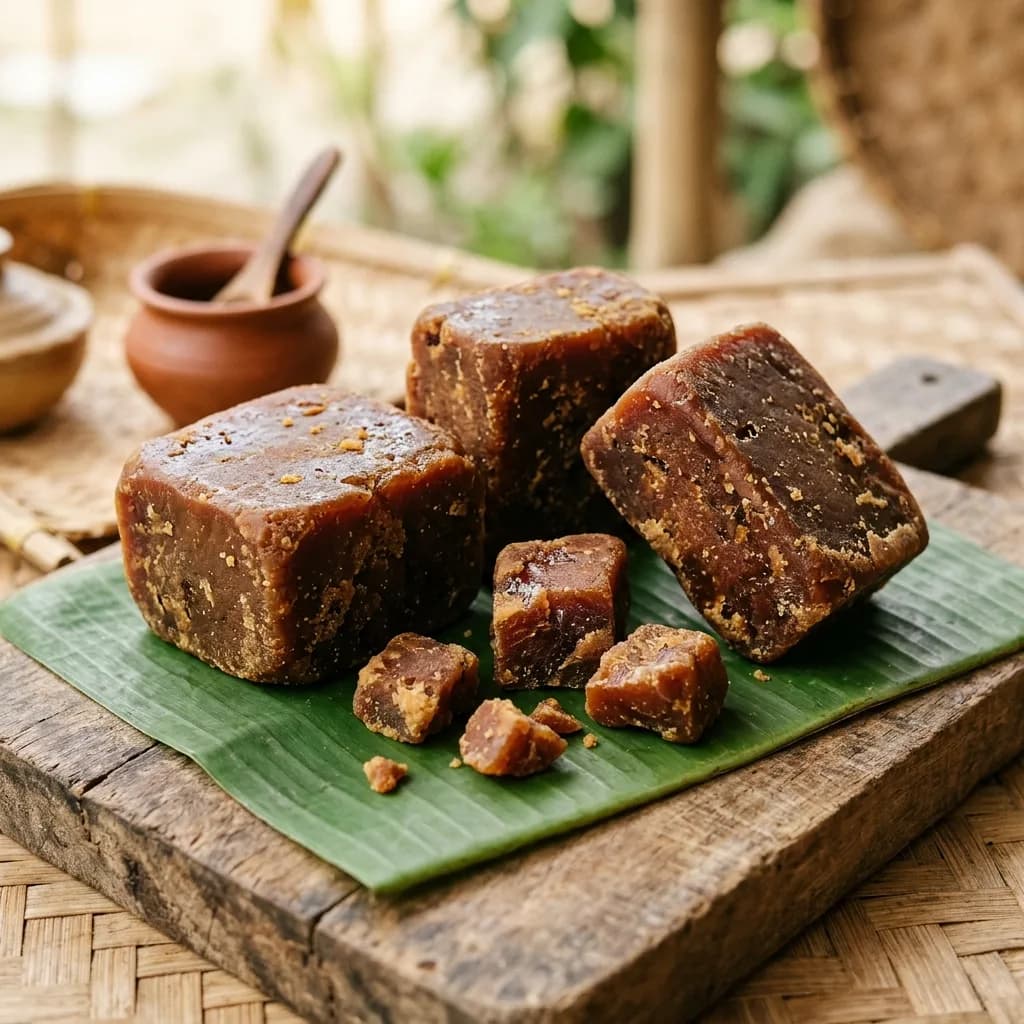
Patali gur is the driest and longest-lasting style of the bunch. The sap stays on the fire past 118°C and up to 122°C, pushing sugar levels above 80° Brix and dropping water content below 10%. Once it turns thick and ropy, it goes straight into molds made of split bamboo, clay cups, or carved wood to cool into dense cakes.
With hardly any water left inside, good patali grates cleanly into flours or melts steadily into simmering milk without thinning your recipe.
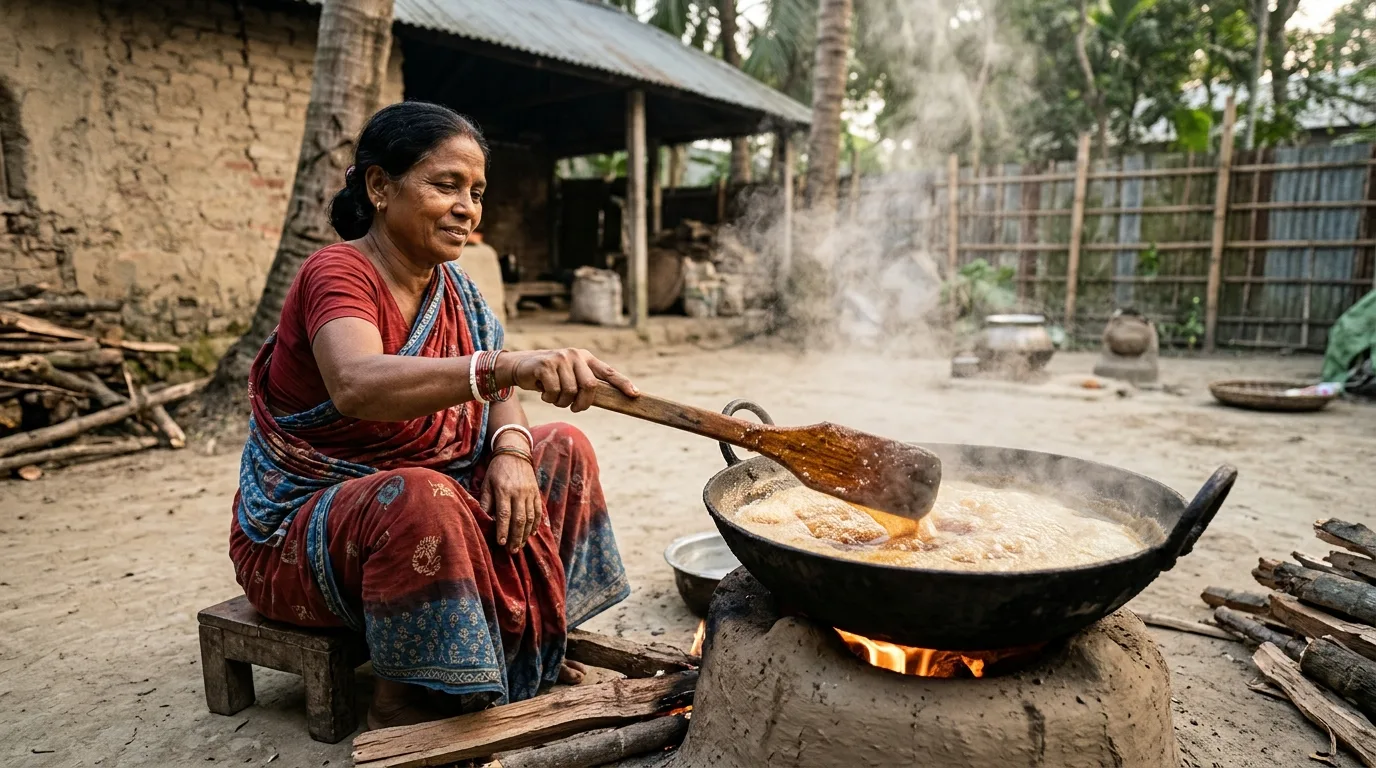
Technical Comparison: Moisture, Texture, and Shelf Life
These numbers explain why each variety behaves differently in storage and on the stove.
| Variety | Moisture Content | Striking Temperature | Best Storage Method | Shelf Life |
|---|---|---|---|---|
| Jhola Gur | 15%–22% | 110°C–114°C | Refrigerated in glass jars | 3–6 weeks room temp; 4–6 months chilled |
| Dana Gur | 10%–15% | 115°C–118°C | Airtight container in cool pantry | 2–3 months |
| Patali Gur | <10% | 118°C–122°C | Dry, moisture-free container | 6–12 months |
Culinary Pairing: Which Gur for Which Dish?
Using the wrong gur in a recipe is usually why things go sideways. Jhola makes firm doughs sloppy, and hard patali won't blend evenly into delicate sweets without heat. These pairings show what works best in our experience.
Best Uses for Jhola Gur
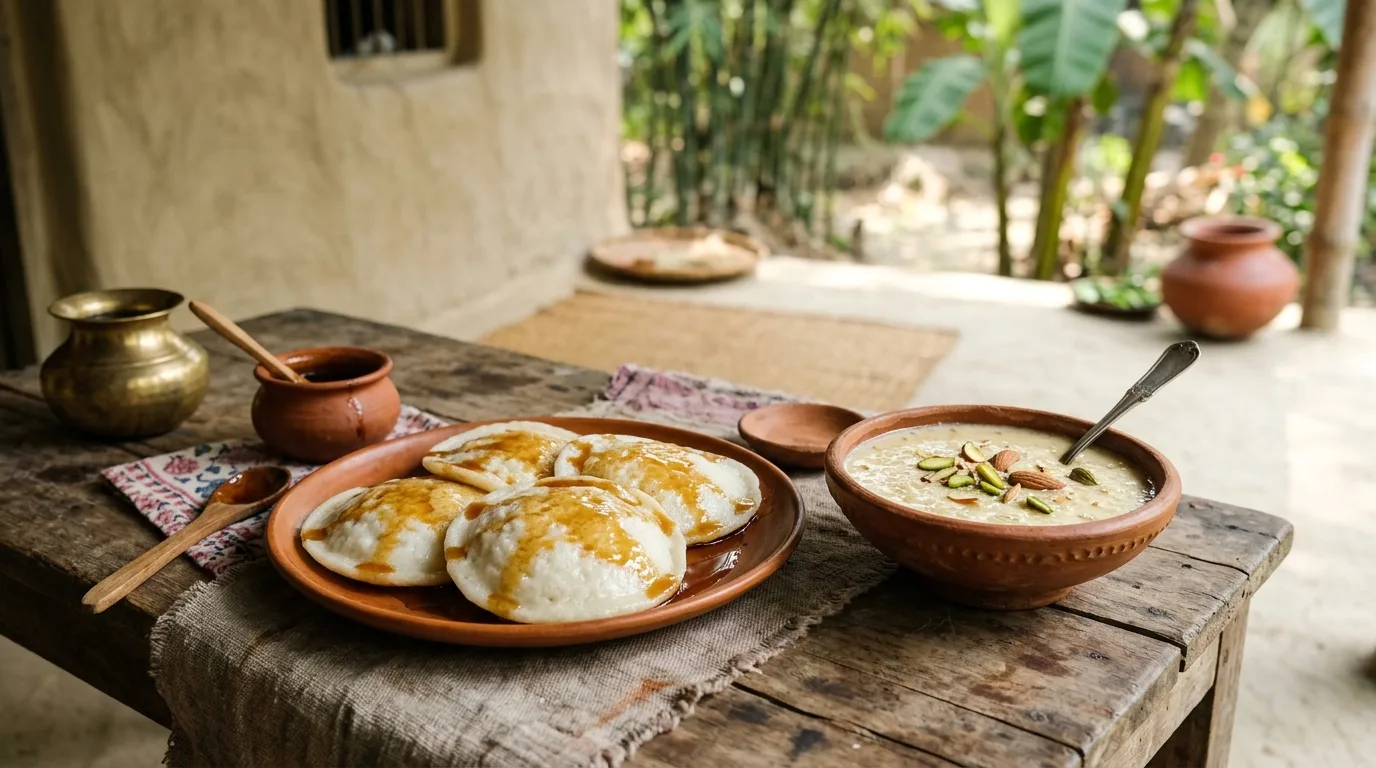
- Chitoi Pitha Dipping: The porous pockets of a steaming chitoi soak up runny Premium Date Palm Liquid Jaggery (Jhola Gur) right away. It's the quintessential winter breakfast.
- Steamed Vapa Drizzle: Spooning warm jhola over fresh vapa pitha adds moisture right into the dry rice crumb.
- Finishing Touch for Payesh: Stir jhola into warm milk payesh just before dishing it out. You get the raw fragrance without cooking off the delicate aromatics.
- Winter Tea and Coffee: Jhola melts instantly into hot drinks without leaving a pile of undissolved sugar at the bottom.
Best Uses for Dana Gur
- Nolen Gurer Sandesh: The tiny grains in dana blend into fresh chhana cleanly, adding sweetness and structure without releasing extra water that ruins the sweet.
- Chhanar Payesh: Dana leaves small, rich pockets of caramelized flavor scattered through the thickened milk.
- Patishapta Coconut Fillings: Cooked with grated coconut or kheer, dana gur binds the filling tight so it doesn't leak out the sides when you roll the crepes.
Best Uses for Patali Gur
- Core Filling for Vapa Pitha: Tucking grated Premium Date Palm Patali Jaggery and coconut into the center of rice flour lets it melt slowly during steaming. It stays thick and doesn't run out the bottom.
- Dudh Chitoi Broth: Solid patali holds up to simmering in milk and water, building a deep golden syrup that softens soaked chitoi overnight.
- Puli Pitha and Moya: Drier sweets like narkel puli and muri moya need the firm setting power and low moisture of boiled patali to stay crisp and hold their shape for days.
- Year-Round Pantry Storage: If you want real winter flavor once the rainy season hits, stocking dense patali cakes is your safest bet.
Cooking Precautions: Curdling and Food Safety
Cooking with date palm jaggery brings two headaches: split milk and adulterated goods. Khejur gur carries natural organic acids and invert sugars. Drop it straight into a pot of rolling, boiling milk, and those acids drop the pH instantly. Your creamy kheer splits into curds and thin whey.
The fix is simple. Simmer your milk down until thick, shut off the stove, and let the pot cool for a few minutes to around 70°C. In a cup, melt your grated patali or jhola with a couple of tablespoons of warm water or warm boiled milk. Stir that syrup slowly into the rested milk. No sudden shock, no curdling, and the payesh stays silky.
Raw sap also needs careful handling because of Nipah virus risks from fruit bats. Boiling clears that risk entirely. Bringing sap past 70°C for 15 minutes kills the pathogen, and traditional jaggery cooking goes well past 110°C, so finished gur is safe to eat.
What you do need to watch out for is adulteration in wholesale markets. Pure date palm gur is naturally deep amber or reddish-brown. If you see blocks that look chalky white, pale beige, or bright yellow, someone added sodium hydrosulfite (hydrose) or bulk cane sugar to stretch the batch. Authentic jaggery meets clear moisture and purity standards like BDS 1784, without bleaching powders or shortcuts.
Selecting Pure Jaggery for Your Winter Table
Good winter cooking comes down to honest ingredients made the old way. Whether you need the smooth pour of fresh jhola, the bite of dana, or durable patali cakes for the store cupboard, real unrefined jaggery makes all the difference in traditional sweets.
To taste the harvest from trusted regional growers, take a look at our date palm jaggery collection. If you make several styles of pitha through the season, the Jaggery Combo Pack 5 kg gives you patali, liquid jhola, and granular dana together in one box, packed and delivered straight to your door anywhere in Bangladesh.