When winter sets in across Bengal, morning air carries the unmistakable aroma of simmering date palm sap and fresh pitha. For non-resident Bangladeshis living abroad, deciding to send winter food gift to family in bangladesh is one of the simplest, most grounding ways to look after ageing parents. A parcel of genuine winter food brings back the quiet comfort of shared breakfasts and cold mornings at home.
Sending fresh food across the country from overseas isn't straightforward, though. Seasonal staples like runny date palm jaggery (jhola gur), cold-pressed mustard oil, and raw honey are fragile, spoil quickly, and get faked often. Ordering on a whim from random Facebook pages usually ends with parents receiving sour syrup, rock-hard sugar blocks, or sticky, cracked bottles. Knowing what gets harvested when, and how it needs to travel, makes all the difference.
Seasonal Harvest Timing: What to Send and When
Winter gifting works best when you follow the farming calendar. Real winter staples aren't produced year-round. Their availability depends entirely on dropping temperatures and short harvest windows.
Date Palm Jaggery (Khejur Gur)
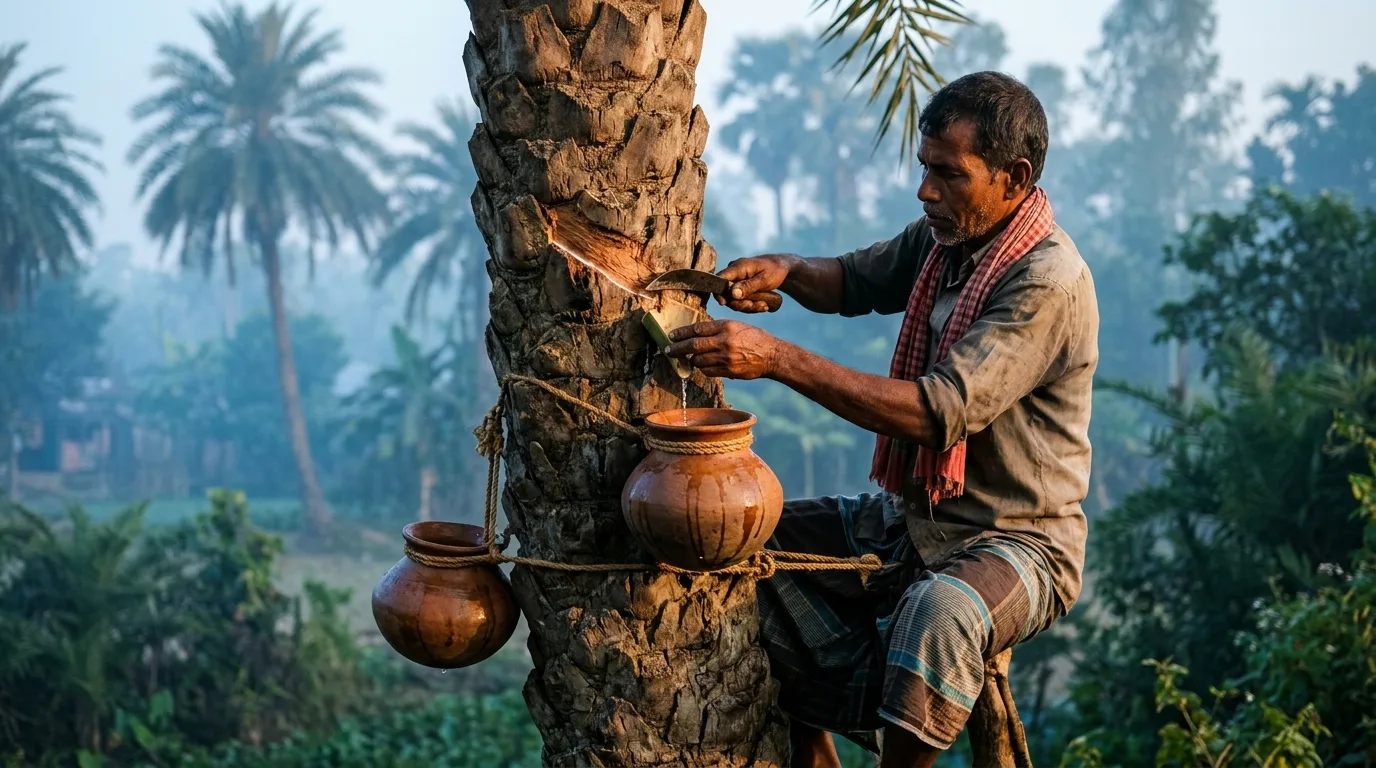
Tappers start collecting sap in mid-November (Kartik) and wrap up by late February (Falgun). The best sap comes in December and January (Poush and Magh). Night temperatures have to drop below 15°C; otherwise, the sweet sap ferments on the tree before dawn. You will generally find three traditional types:
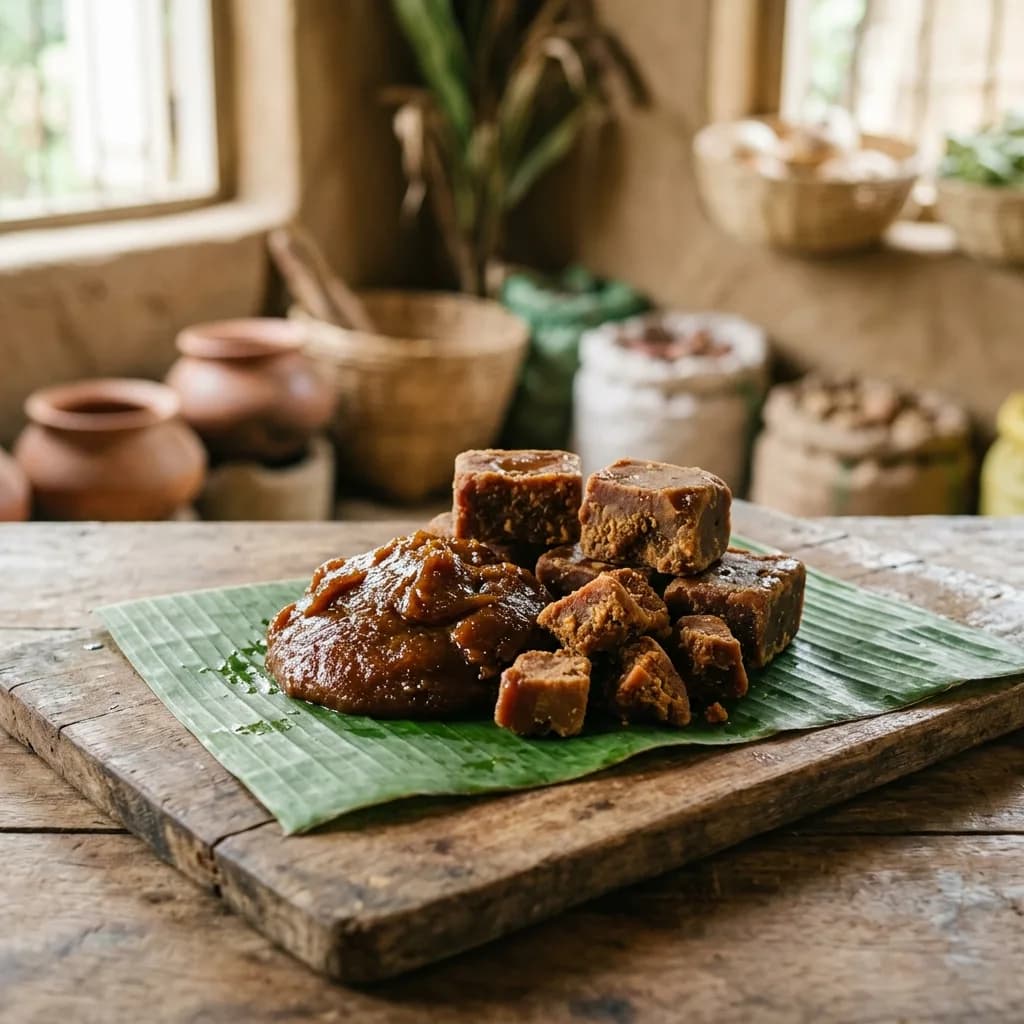
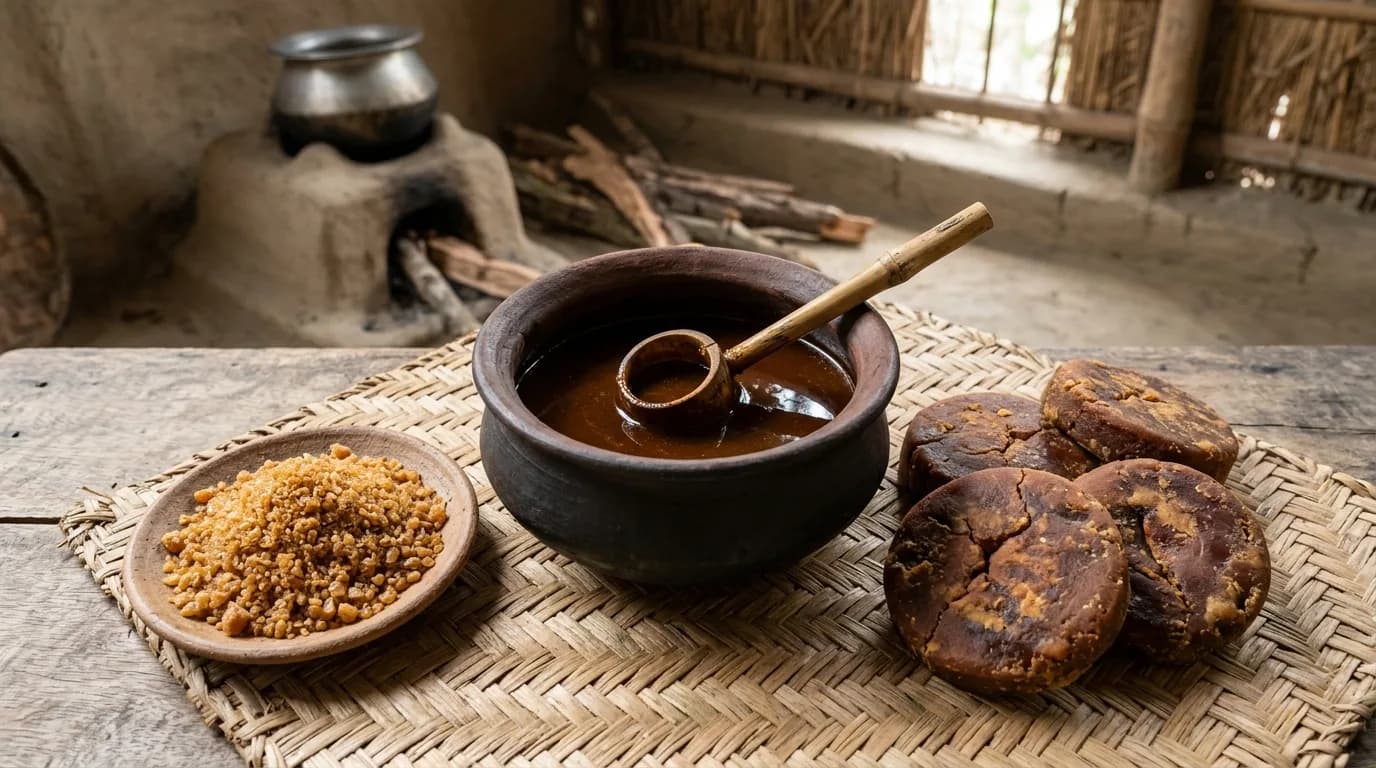
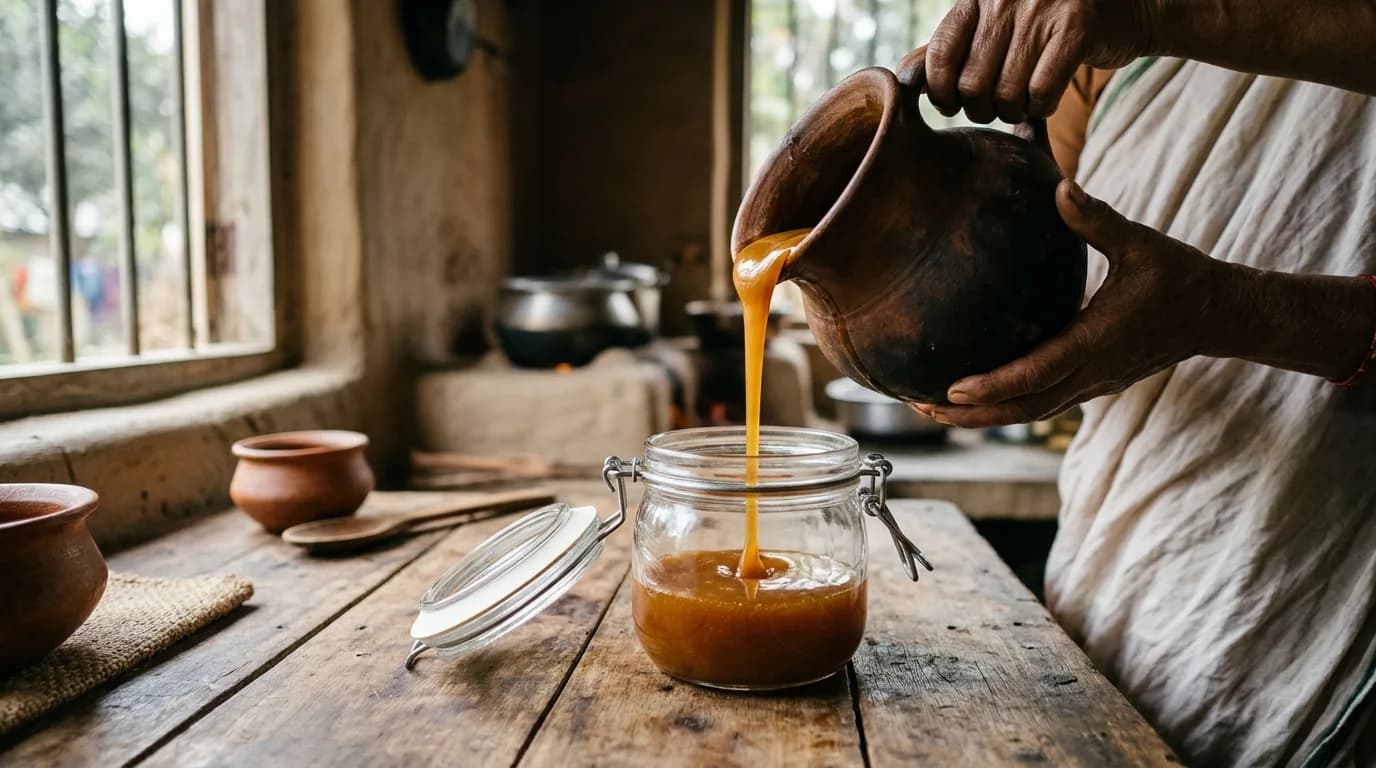
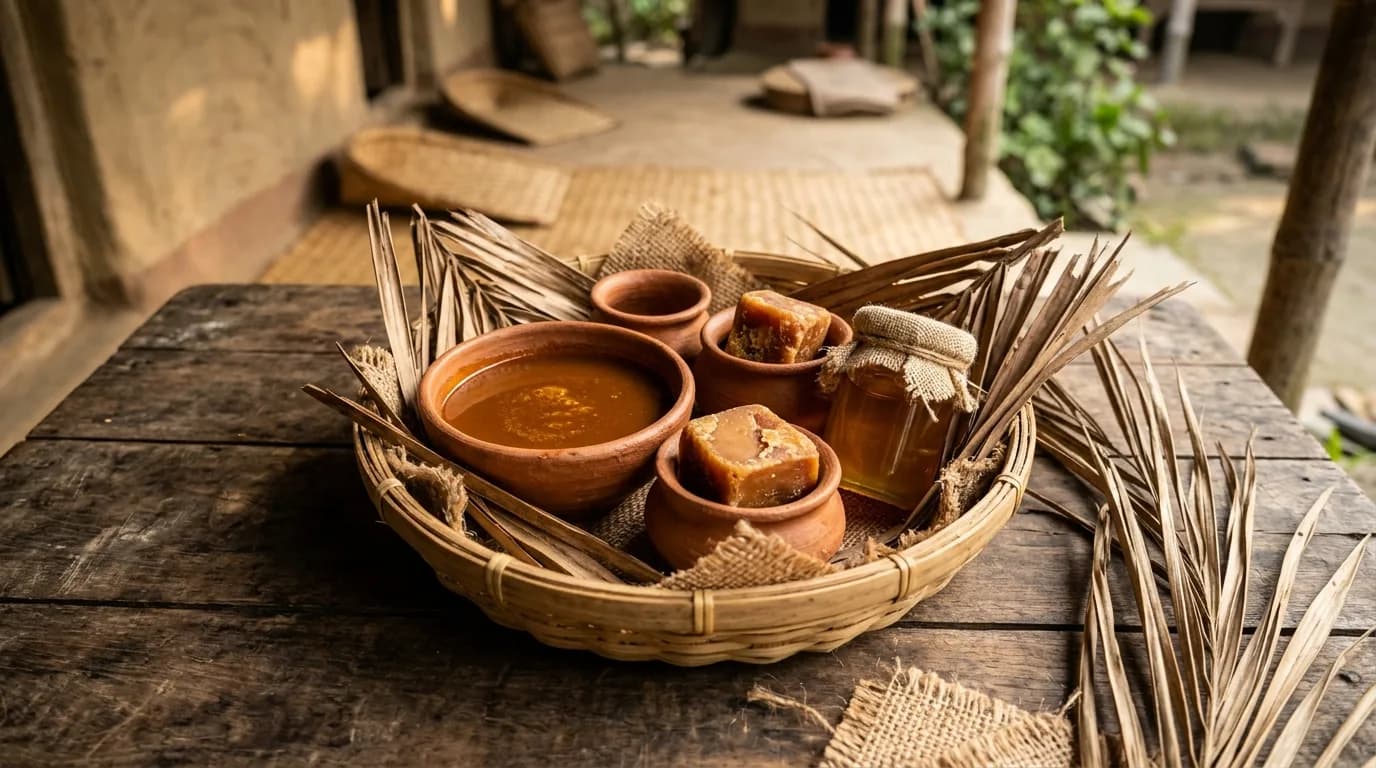
- Nolen or Jhola Gur: Early-season liquid gur made from the morning's first sap, boiled down into a fragrant, pourable syrup.
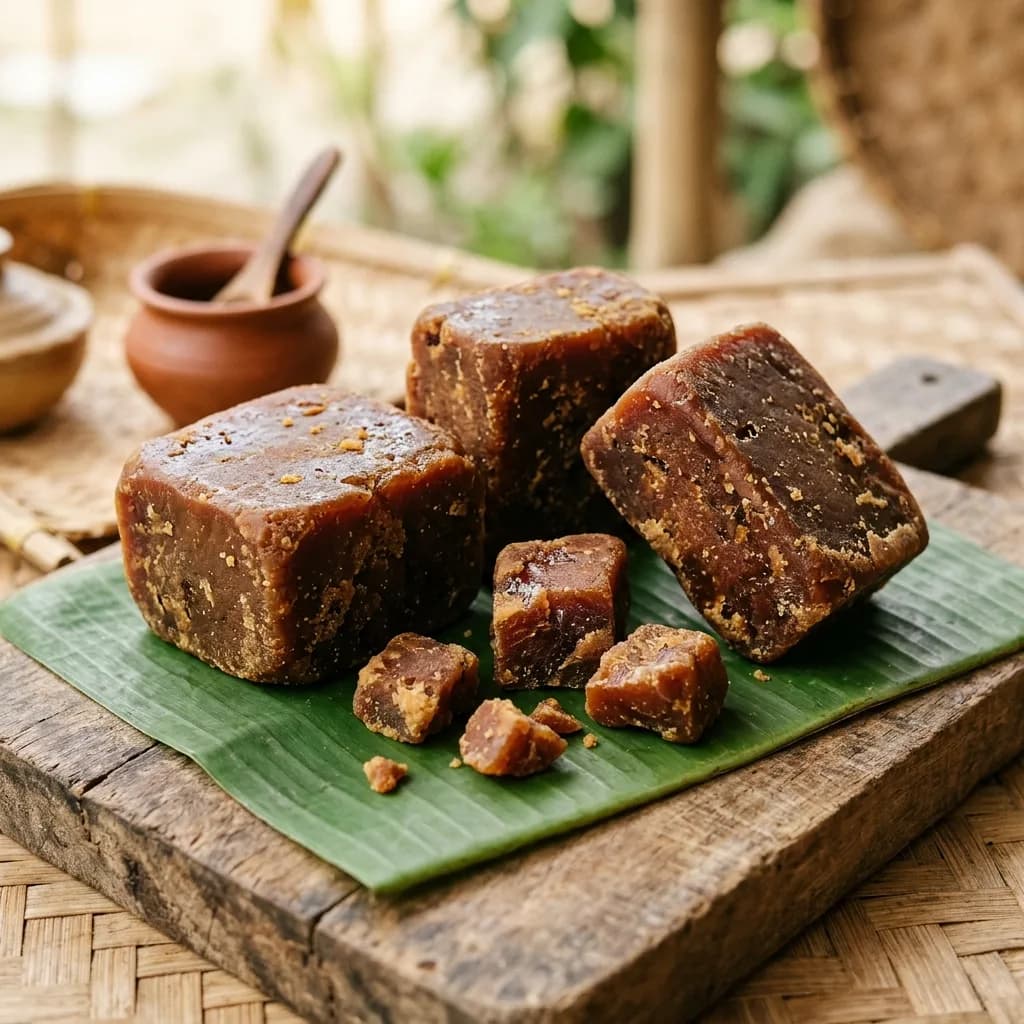
- Patali Gur: Solid cakes set in clay or wooden moulds, known for a tender, fudge-like bite and deep caramel aroma.
- Hazari Gur: A pale, hand-whipped crystalline block traditionally prepared in parts of Manikganj.
The traditional heartlands for khejur gur are Natore, Jashore, Chuadanga, and Faridpur. Getting gur from western and northern belts, including Natore and Rajshahi, connects you directly to experienced tree-tappers (gachis) who know the craft.
Aman Rice for Winter Pitha
Winter in Bangladesh revolves around the new *Aman* crop, harvested from late November through mid-December (Agrahayan). Fragrant varieties like Chinigura, Kalijira, Kataribhog, and high-yielding BRRI dhan34 are what give winter pithas—chitoi, bhapa, dudh puli—their soft texture and aroma. Adding a bag of whole grain alongside gur makes a practical, traditional gift.
Cold-Pressed Mustard Oil (Ghani-Bhanga Shorsher Tel)
Pungent winter mustard seeds like Tori-7, BARI Sarisha-14, and BARI Sarisha-18 are harvested and pressed between mid-January and February. Crushed slowly in traditional wooden mills (ghani), the oil keeps its sharp bite and natural aroma. It remains a cold-weather essential for rubbing on dry skin or tossing into winter bhortas and fish dishes.
Adulteration Risks: Protecting Your Parents from Impure Foods
The hardest part for families abroad is knowing whether what arrives at their parents' door is actually pure. Demand outstrips genuine supply every winter, so local markets get flooded with cheap counterfeits[5].
Chemical additives in commercial gur are a routine problem. Unscrupulous middlemen mix in sodium hydrosulfite (sold locally as hydrose or rangchita) to bleach dark sap into an attractive, pale yellow[5],[6]. Excess slaked lime, baking soda, and industrial dyes are also thrown into the boiling pans to fix texture and colour[5]. Bangladesh Standards and Testing Institution (BSTI) caps sulfur dioxide in edible jaggery at 70 ppm, but market testing regularly turns up levels way above that threshold[5],[6].
Then there is sugar adulteration. Many makers melt regular white cane sugar directly into date palm sap, sometimes making up more than half the mix[5]. Here is how your parents can spot the difference by sight and touch:
- Color and Clarity: Honest khejur gur runs from warm amber to dark reddish-brown. If a block looks bright yellow or unnaturally pale, it has been bleached.
- Texture and Dissolution: Authentic Premium Date Palm Patali Jaggery 2 kg yields under light thumb pressure and has a fine, melt-in-the-mouth grain. Sugar-heavy gur is glassy, hard as stone, and leaves gritty white residue when stirred in water.
- Aroma: Pure date sap gives off a mellow, smoky sweetness. Gur cut with sugar smells sharp, flat, and one-dimensional.
How to Safely Send Winter Food Gift to Family in Bangladesh
Ordering from overseas takes some planning. Courier networks across Bangladesh can be rough, and parcels sit in transit. Without proper packing, seasonal food spoils fast.
Packaging Flaws to Avoid
Avoid sellers who pour warm gur or fresh oil straight into thin, recycled plastic pouches. Heat causes chemicals like phthalates to leach right into oily or sugary foods. Always insist on food-grade PET containers or sturdy, airtight tubs.
The Fragility of Liquid Jhola Gur
Raw jhola gur naturally contains wild yeasts. If someone bottles it unpasteurized and seals it into an ordinary container for a two- or three-day courier journey, carbon dioxide builds up quickly. The plastic swells, leaks, and can blow its lid in transit[1]. When you send liquid gur, make sure it comes in sealed, heat-treated containers designed for couriers, like our Premium Date Palm Liquid Jaggery (Jhola Gur) 2 kg.
The Mistake of Sending Pre-Ground Rice Flour
Milled rice flour (atap chal kura) sounds convenient, but it goes stale fast. Without airtight vacuum sealing, milled rice flour oxidizes and turns bitter in 7 to 10 days. Send whole, cleaned aromatic paddy instead. Your parents can grind small portions at the local neighbourhood mill whenever they plan to make pitha, giving them much better flavor and texture.
Storage Guidelines to Share with Your Family
Once a package reaches your family home in Dhaka, Chattogram, or Sylhet, keeping it fresh depends on basic storage habits[1],[2]. Pass these practical notes along to your parents:
| Winter Food Item | Moisture Target | Ideal Storage Temperature | Safe Shelf Life |
|---|---|---|---|
| Liquid Gur (Jhola) | High moisture | Refrigerate at 0–4°C | 3–4 weeks refrigerated[1] |
| Solid Patali Gur | 8–10% moisture[1] | Below 20°C, RH <65% | 2–3 weeks room temp; months in fridge[1],[2] |
| Aman Aromatic Rice | ≤12% moisture | Dry room temp (airtight) | 6–12 months safe from mold |
| Mustard Oil (Ghani) | Near zero | 15–25°C in dark pantry | 6–12 months away from sunlight |
| Raw Mustard Honey | ≤18–20% moisture | 18–24°C dry cupboard | Indefinite; natural crystallizing is safe |
Solid patali jaggery is naturally hygroscopic, meaning it pulls dampness straight out of humid air[1],[2]. Left on a warm kitchen counter, it softens, turns sticky, and starts growing surface mold within a few weeks[1]. Keep it sealed in a clean tin or glass jar inside the fridge[2]. Whole aromatic rice dried down to 12 percent moisture or less stays safe from Aspergillus flavus, the mold responsible for aflatoxins.
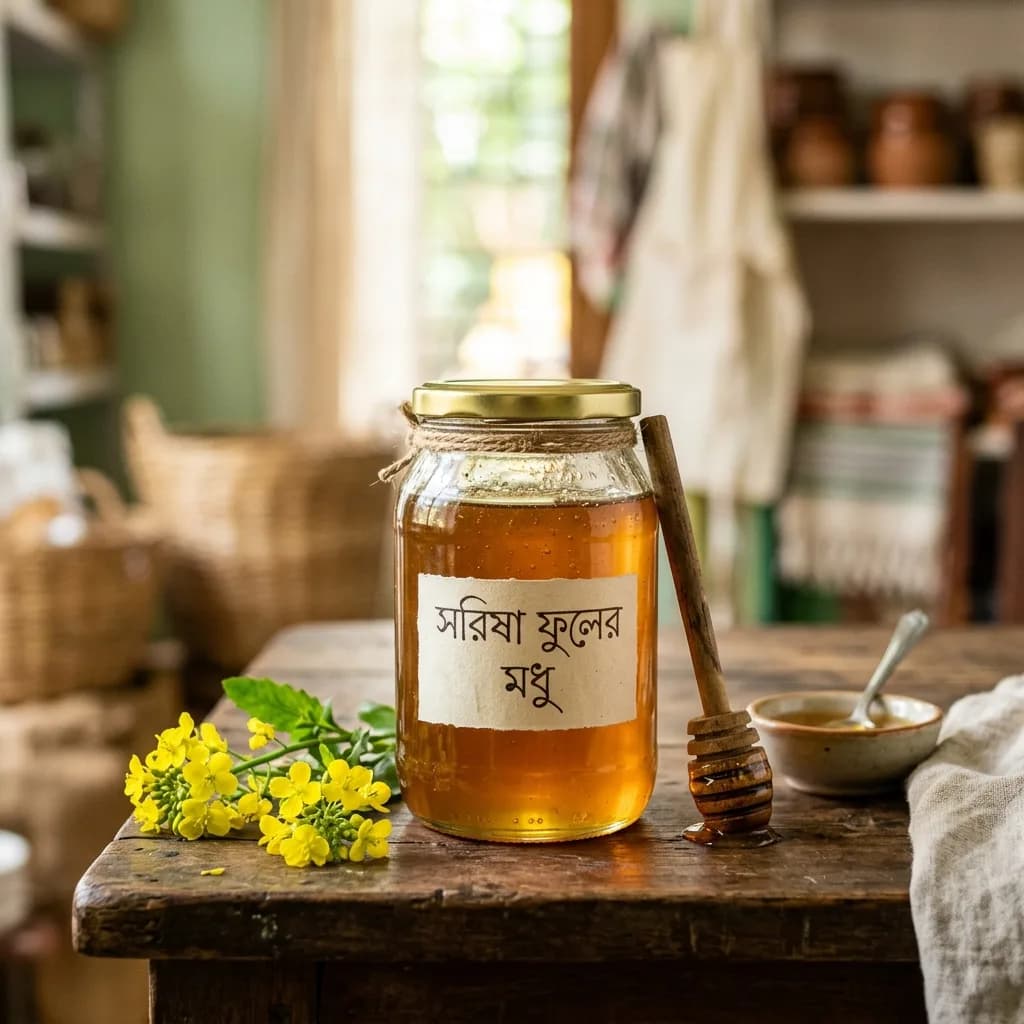
Store cold-pressed mustard oil in a dark cupboard away from direct light to keep it from going stale. And if you are sending raw honey, like winter Mustard Flower Honey, remind your parents that settling into a thick, cloudy state in cold weather is completely normal for raw honey, not a defect.
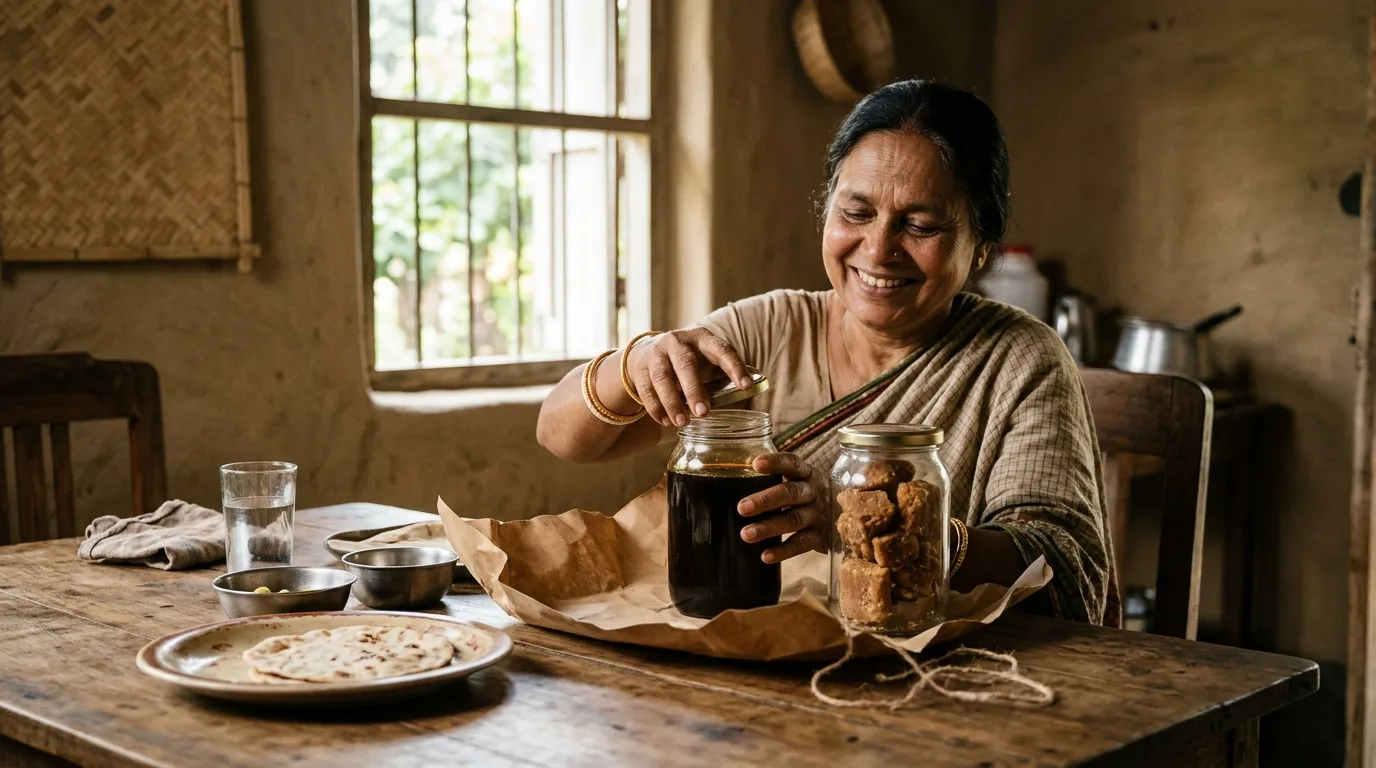
Delivering Winter Warmth to Your Family's Doorstep
Being miles away during winter pitha season is tough. Sending a box of real, unadulterated winter food helps bridge that gap, letting your parents enjoy seasonal traditions without fighting through chaotic wholesale markets.
At Rajshahir Mango, we apply the same honest standards to winter foods that we have used for our Rajshahi mangoes since 2013. We source pure date palm jaggery, clean raw honey, and cold-pressed oils, then pack them securely in food-safe containers built for domestic couriers. Take a look at our authentic jaggery collection, check out easily with international cards or mobile payment, and we will make sure your parents receive clean, genuine winter staples right at home.