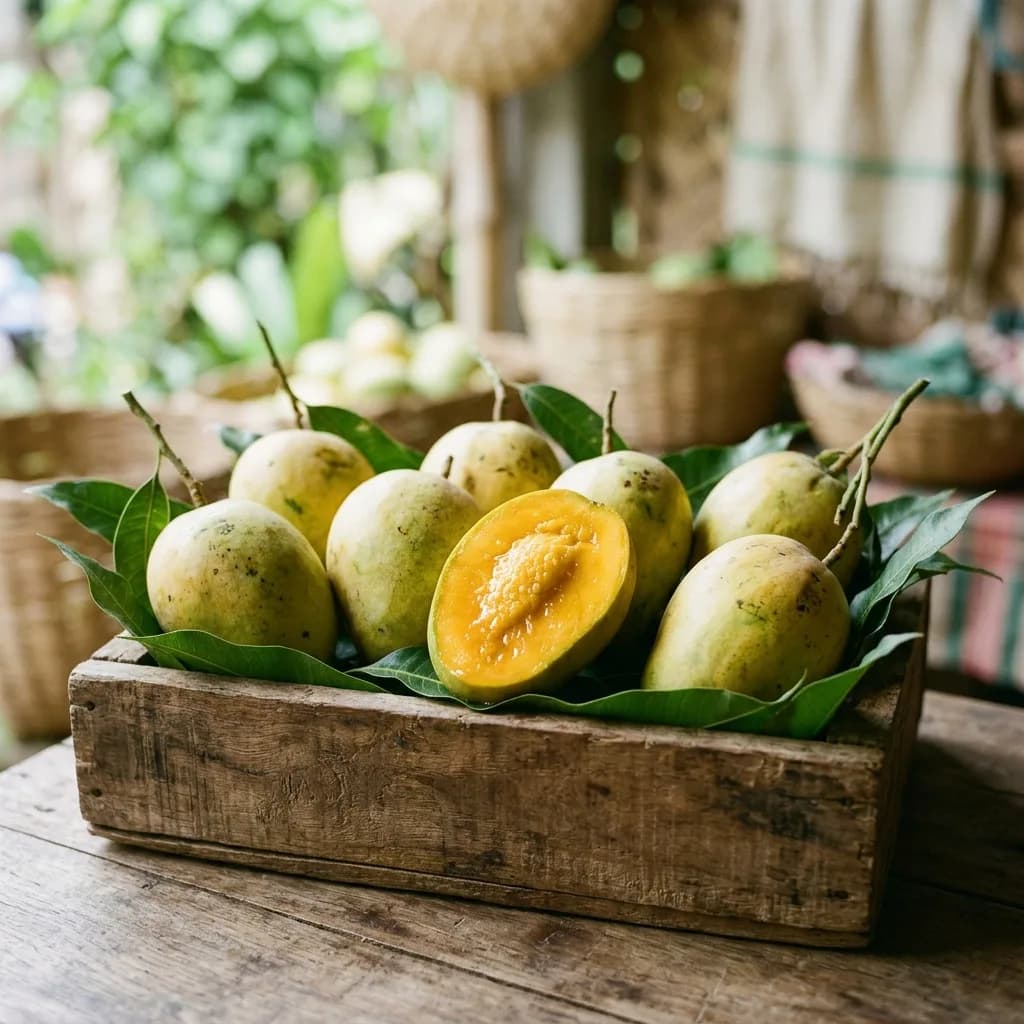
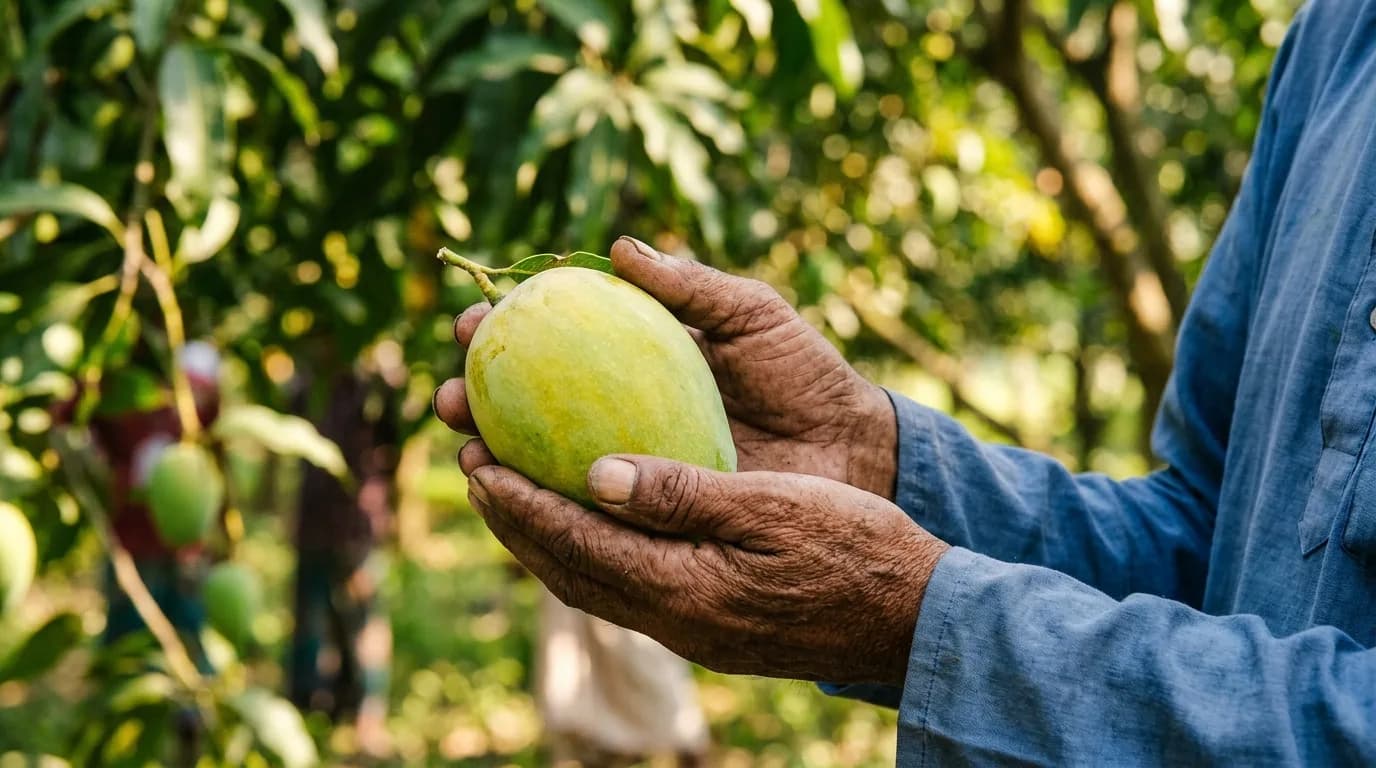
When summer hits Bangladesh, knowing how to pick a sweet mango saves you the disappointment of slicing into pale, sour fruit. Working our family orchards in Rajshahi taught us early on that looking for spotless yellow skin gets you nowhere. Real ripeness shows up through a simple sensory check—smell, touch, the plumpness of the shoulders, and the timing of the harvest.
Vendors often stack fruit under bright stall lights to catch your eye, but looks fool buyers every day. Many still assume yellow means sweet and green means raw. Once you know how a mature mango actually ripens on the branch, you can reliably bring home fruit with rich natural sweetness, deep flavour, and balanced acidity[5].
Why Peel Colour Can Deceive You
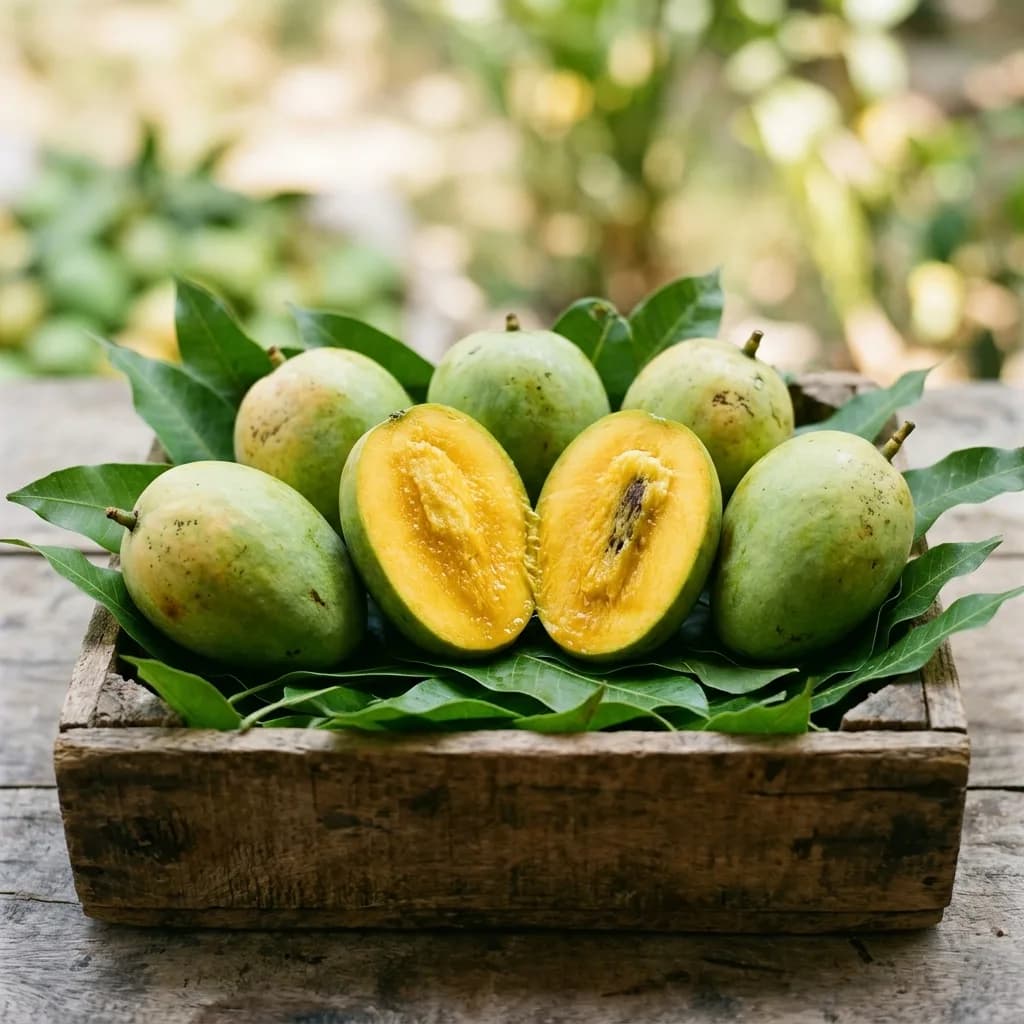
The most common myth in our local markets is that a sweet mango has to be golden yellow. In reality, peel colour comes down to variety genetics and direct sunlight, not sugar levels[5]. Some of the finest varieties in the country never turn yellow at all, even when the pulp inside is at peak sweetness.
Take two Rajshahi staples: Himsagar (Khirsapat) and Langra. Both stay predominantly green when they are fully ripe and ready to eat. If you leave a Langra or Himsagar on the kitchen counter waiting for it to turn yellow, the flesh around the stone will ferment into brown, watery mush. Judging these mangoes purely by colour means you either pass over prime fruit or pay for fruit that is already spoiling.
Amrapali, on the other hand, shifts from olive green to a gentle yellowish-green while its orange flesh matures. Fazli stays a dusty, dull green with faint pale patches at maturity. Colour tells you the variety, but it tells you very little about sweetness. If you want to master how to pick a sweet mango, trust your nose and hands instead[5],[6].
The Three Senses: How to Pick a Sweet Mango by Smell, Feel, and Shape
Experienced growers evaluate fruit through three reliable markers: stem scent, surface yield, and cheek shape. These tell you right away whether the mango converted its starches into natural sugars before it was cut from the branch[5].
1. The Stem-End Sniff Test
The stem dip is your best guide[5]. Lift the fruit and take a gentle sniff right where it broke from the twig. A tree-ripened, sweet mango gives off a clean, sweet, floral scent right at that point[6]. If there is no scent at all, it was picked too green and will struggle to sweeten properly. If you catch a sour, sharp, or fermented wine-like tang, the inside has already started breaking down, and the flesh will taste pasty or sour.
2. The Gentle Give
Never poke a mango with your fingertips, because that bruises the pulp underneath the peel. Cup the fruit in your palm instead and press softly near the shoulder with the flat pad of your thumb[5]. A ready-to-eat mango yields slightly under gentle pressure, much like a ripe peach or an avocado[5],[6]. If it feels hard as a cricket ball, it was picked before reaching physiological maturity. If your thumb sinks in easily or the peel wrinkles right away, it is already overripe inside[6].
3. Cheek Fullness and Sugar Spots
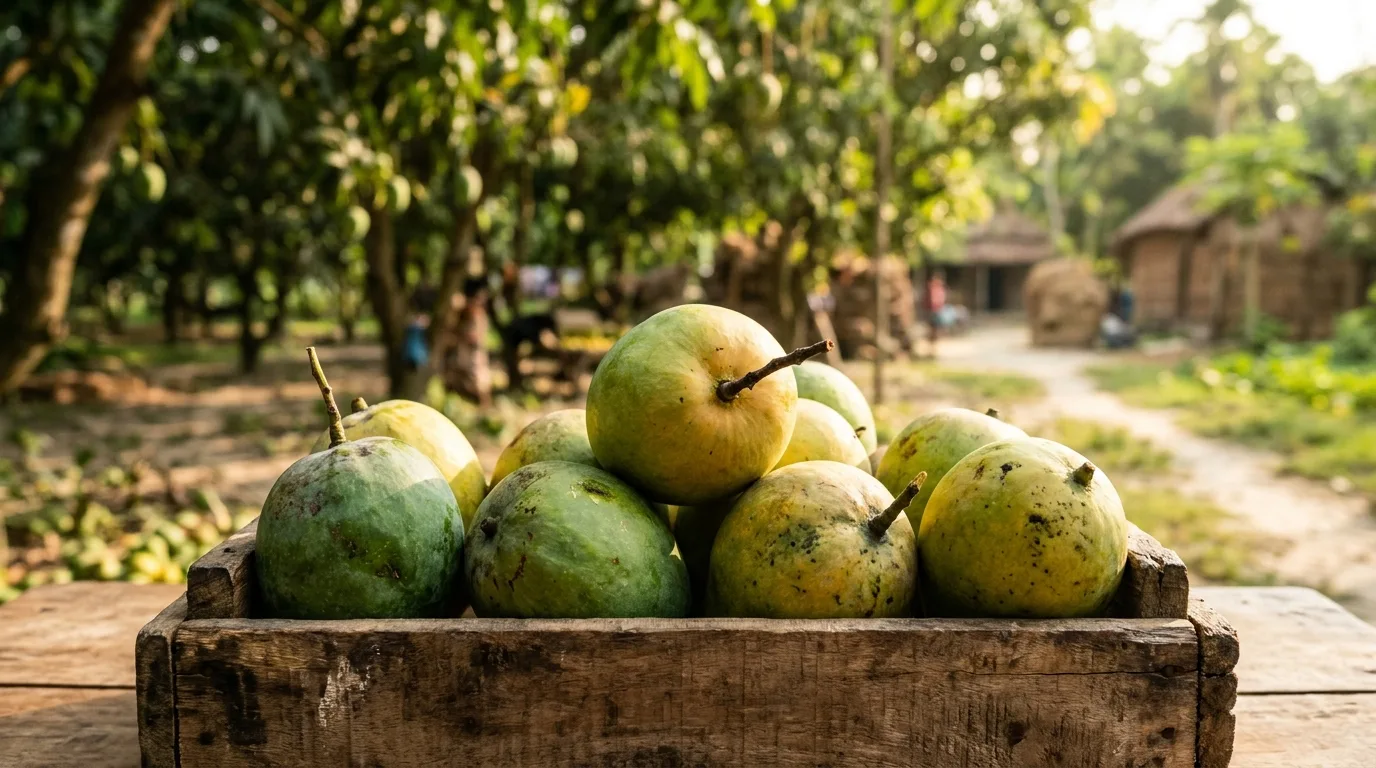
Check the silhouette. A mature mango has plump, rounded shoulders that rise up around a slightly sunken stem[6]. Flat, thin, or narrow fruit with a stem sticking straight out from a flat top was pulled from the tree too early. Look for tiny dark brown freckles across the skin, too. These lenticels stretch and turn brown as the fruit swells with sugars. They are not defects; they are honest signs of good eating[5].
Regional Harvest Calendars and Sweetness Levels
Even the sharpest sensory test will fail if you buy a variety weeks ahead of its natural season. In Rajshahi and Chapainawabganj, district administrations and the Department of Agricultural Extension (DAE) set strict harvest schedules each year to keep unripe fruit off the market[1],[4]. Mangoes harvested before their scheduled date lack the starch reserves needed to develop good flavour[1].
Southern districts like Satkhira warm up earlier in the spring, so their fruit ripens about a week or two before northern orchards in Rajshahi and Dinajpur[4]. On a refractometer, ripe commercial varieties in Bangladesh usually test between 18° and 23° Brix. Branch-ripened Amrapali regularly crosses 20° Brix.
| Variety | Official Northern Harvest Window | Ripe Peel Appearance | Typical Sweetness (Brix) |
|---|---|---|---|
| Gopalbhog | Late May (from May 22) | Golden yellow blush with pale green undertones | 18° – 20° Brix |
| Himsagar (Khirsapat) | Late May to Early June | Predominantly vibrant green; thin skin | 19° – 22° Brix |
| Langra | Mid-June (from June 10) | Smooth olive green with tiny white lenticels | 19° – 21° Brix |
| Amrapali | Mid to Late June (from June 15) | Olive green transitioning to warm yellowish-green | 20° – 23° Brix |
| Fazli | Late June to Early July | Dull pale green with muted yellow patches | 17° – 19° Brix |
| Ashwina / Gourmati | Mid-July onwards | Greenish-yellow to dull olive green | 18° – 21° Brix |
Checking the calendar ensures the mango had time to reach true physiological maturity before harvest[1],[3]. You can read more about the biology of the mango fruit and its flowering cycle to see how these summer sugars form.
Spotting Artificially Ripened Mangoes
Food safety is always on buyers' minds. Industrial chemicals like calcium carbide ($CaC_2$) are banned under the Bangladesh Food Safety Act 2013, but dishonest traders still try to force unripe fruit onto early markets. Calcium carbide releases acetylene gas, which strips the green chlorophyll out of the skin without letting internal starches turn into sugars.
Spotting artificially ripened mangoes is simple when you know what gives them away:
- Unnatural Peel Uniformity: Carbide-treated fruit shows a shockingly uniform, electric lemon-yellow skin without natural shading, speckles, or colour transitions.
- Hard Core, Pale Flesh: Slicing into a forced mango reveals pale, firm, sour pulp right around the stone instead of the deep amber tones of tree-ripened fruit.
- Complete Lack of Fragrance: Despite the loud yellow skin, there is no sweet scent at the stem. You will smell nothing, or occasionally catch a faint chemical or sulfurous whiff.
- Patchy Ripening: Naturally ripened fruit softens steadily from the inside out and from the shoulders down, showing gentle gradients in texture and hue.
Ripening and Storage at Home
If your mangoes arrive mature but still firm, keep them away from the refrigerator. Temperatures below 10°C cause chilling injury in unripened fruit, leaving you with pitted skins, dull grey discolouration, and pulp that never sweetens properly.
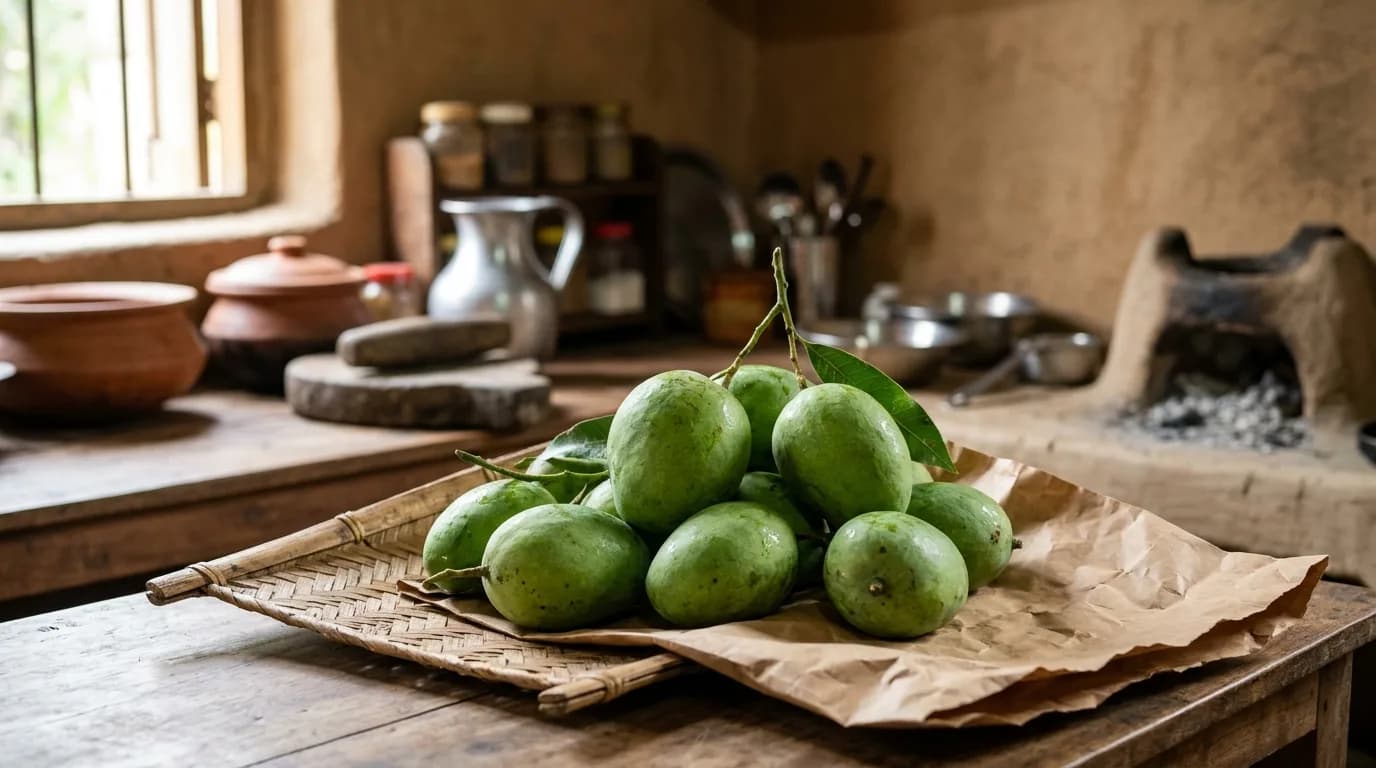
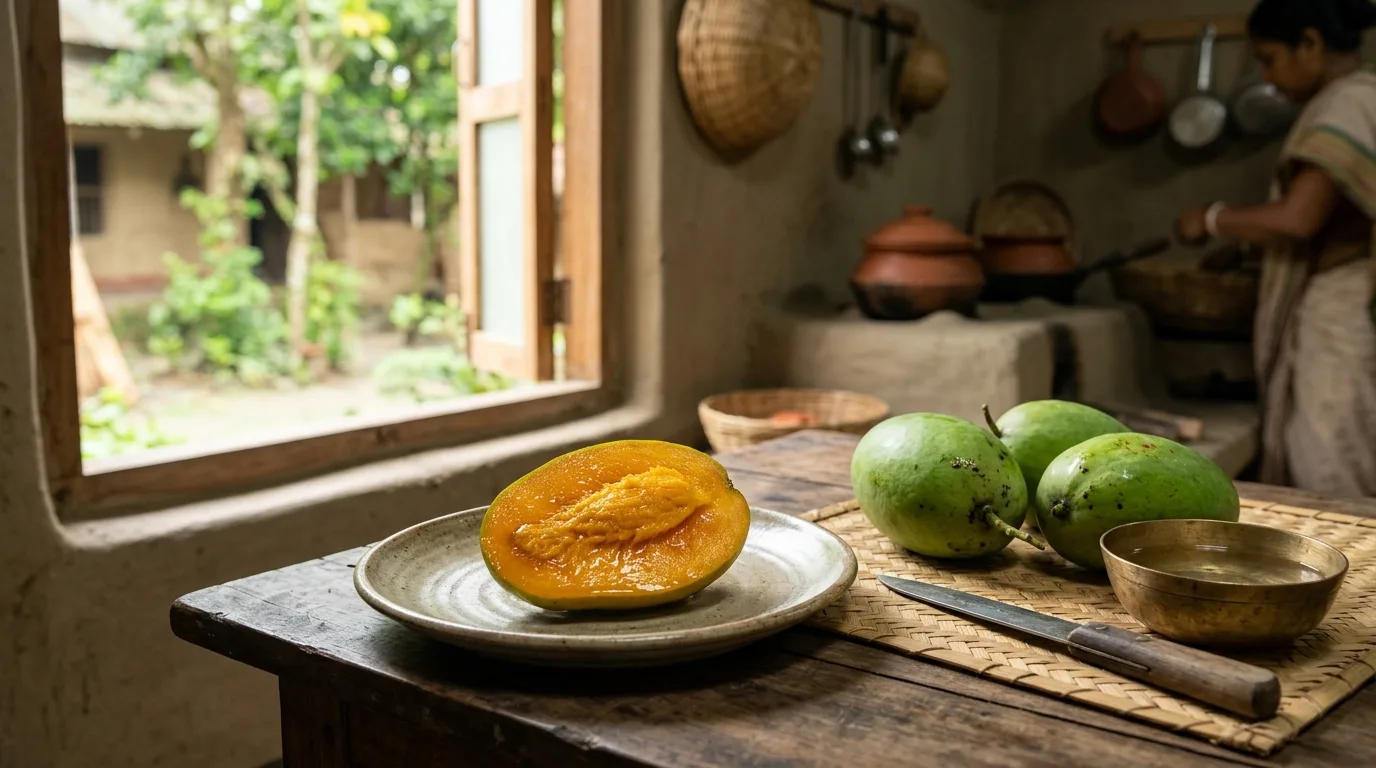
Instead, let firm mangoes sit at room temperature (between 21°C and 25°C). To help them along naturally, place them in a plain brown paper bag for two to five days. The trapped ethylene gas given off naturally by the fruit ripens it evenly. Once the mango gives slightly under gentle thumb pressure and smells fragrant at the stem, move it to the fridge at 10°C to 13°C. It will stay fresh and sweet for up to a week.
Fresh from Our Rajshahi Orchards to Your Door
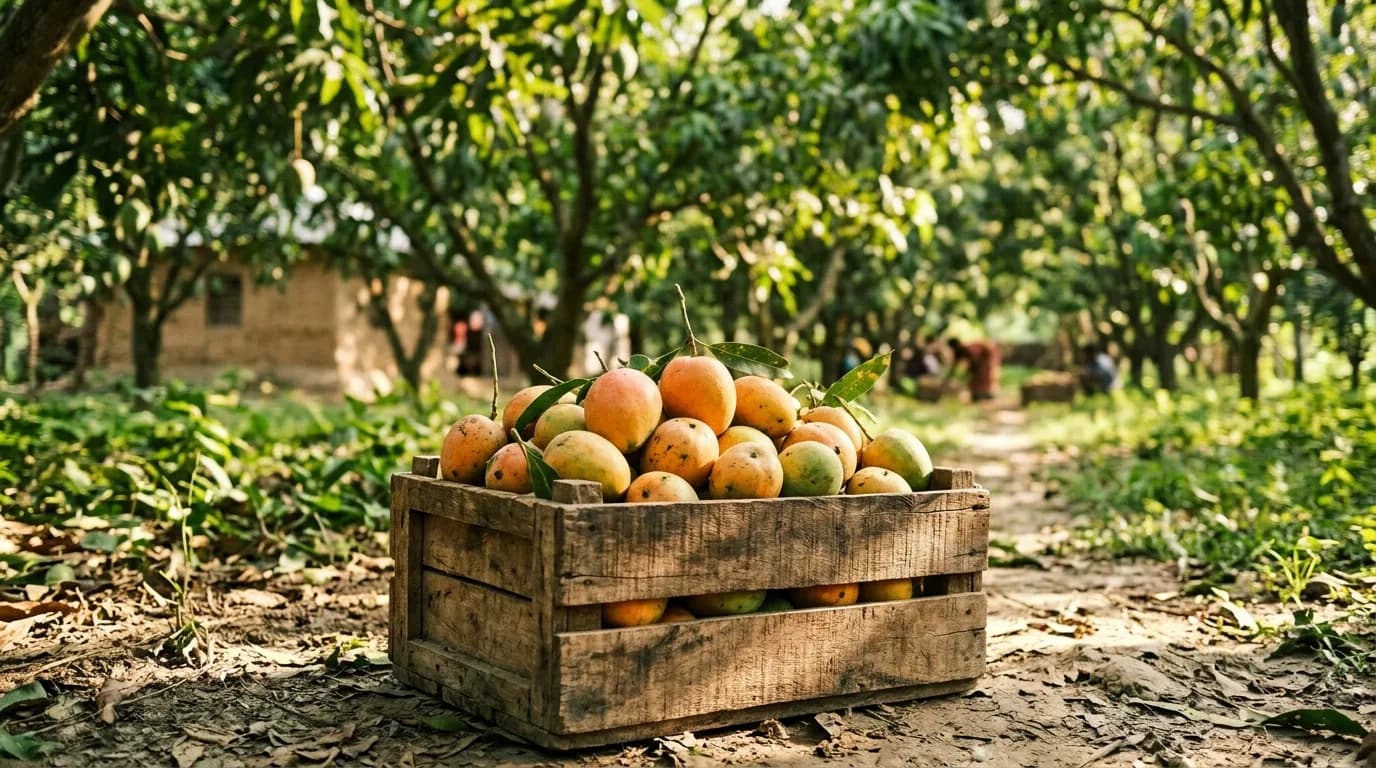
Since 2013, our family orchards in Rajshahi have stuck to one basic rule: let the fruit reach full maturity on the tree before harvesting. We never use artificial ripening chemicals, preservatives, or cosmetic washes. Whether you prefer the distinct aroma of Langra, the smooth, fibreless sweetness of Khirsapat, or the rich flavour of late-season Amrapali, we pack each batch carefully in secure 12 kg and 24 kg crates.
See what is in season right now in our fresh mango collection and get genuine Rajshahi fruit delivered straight to your home across Bangladesh, with easy payment options through cash on delivery, bKash, Nagad, and cards.