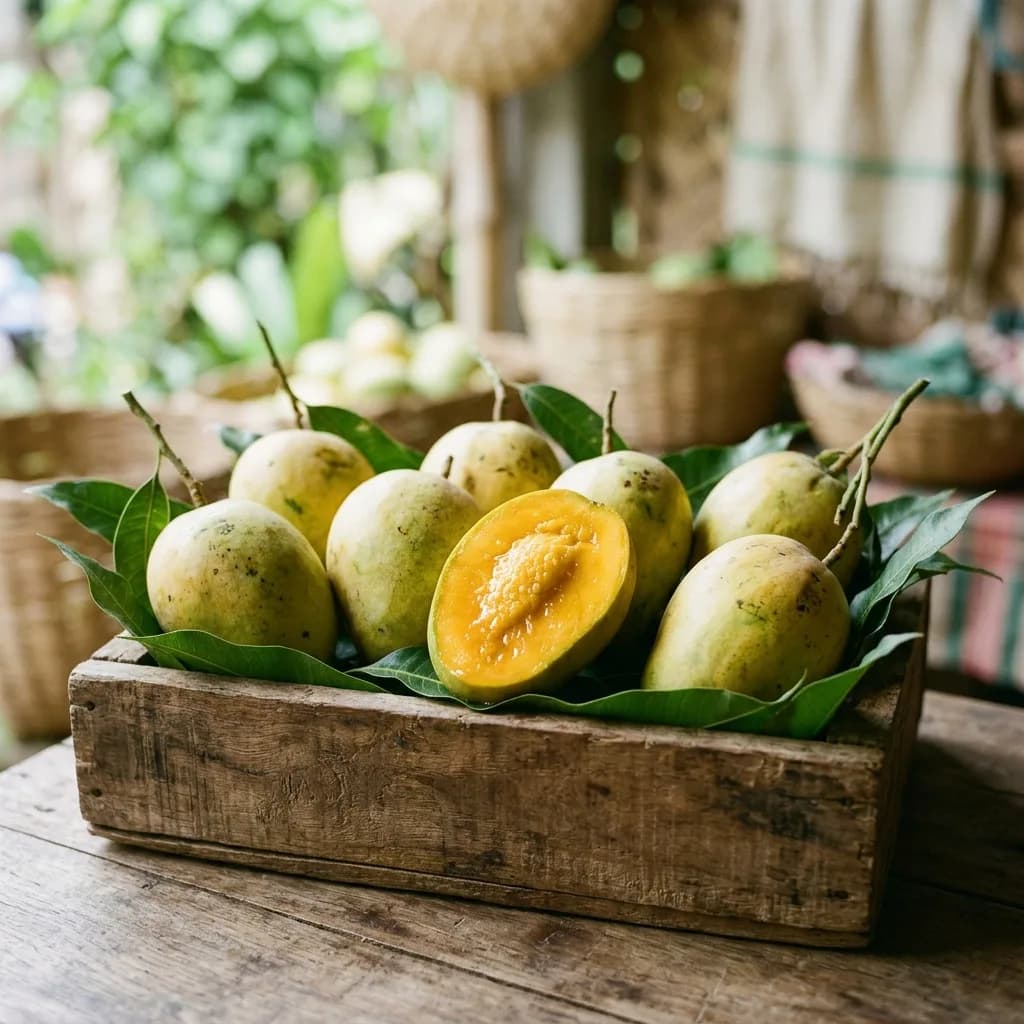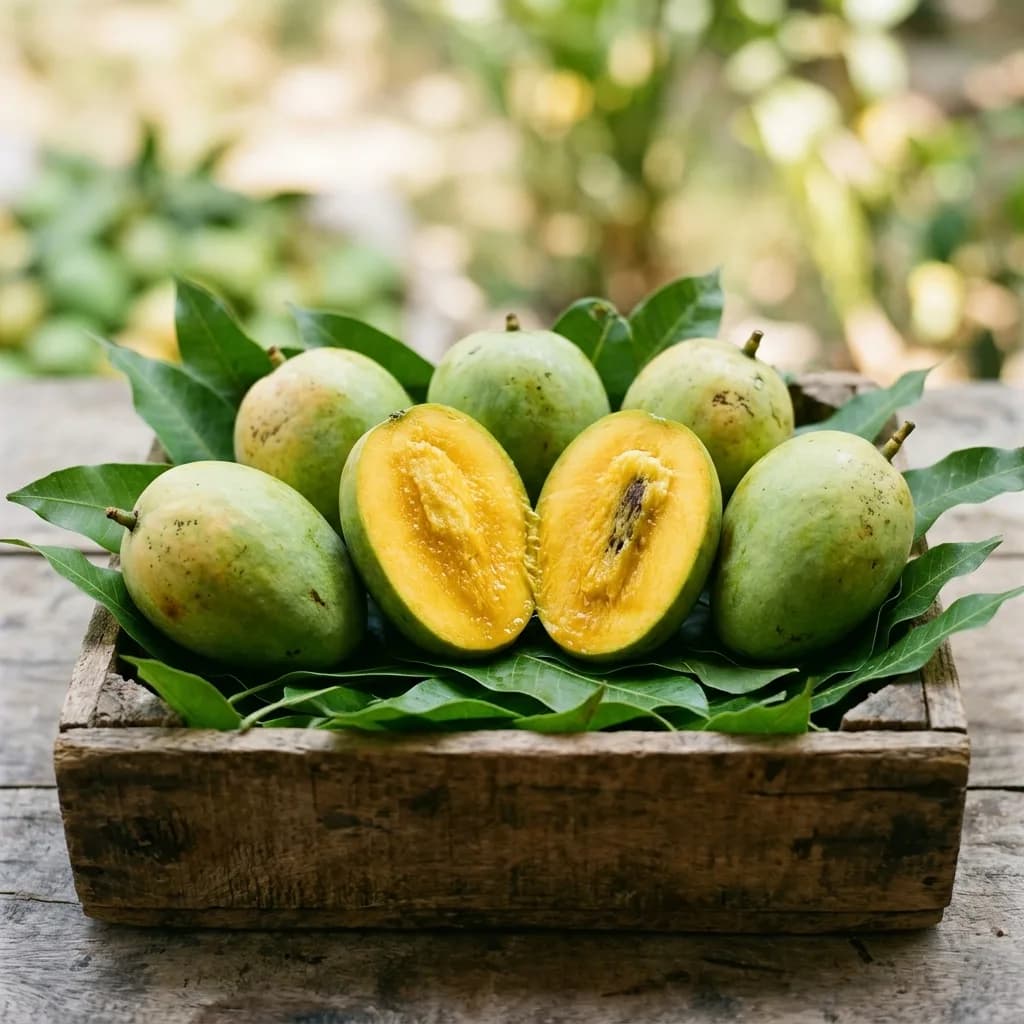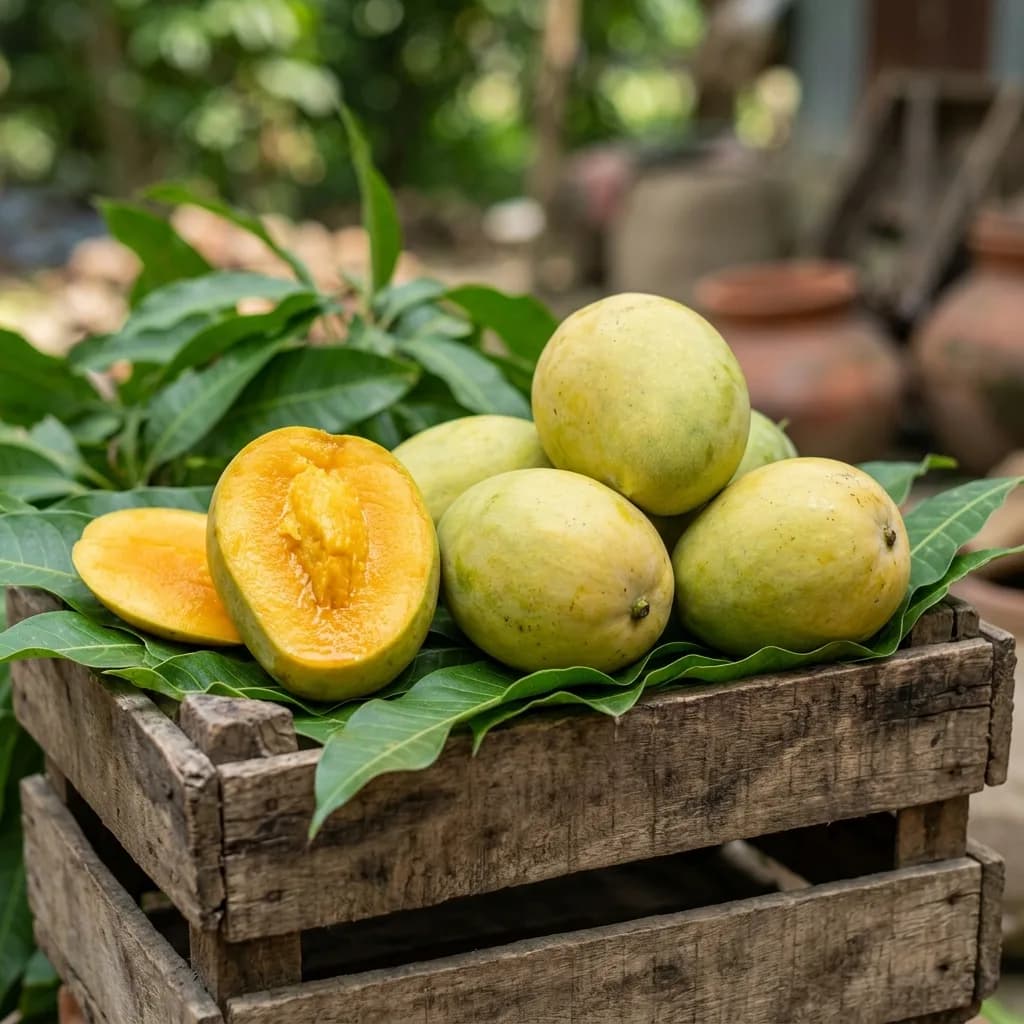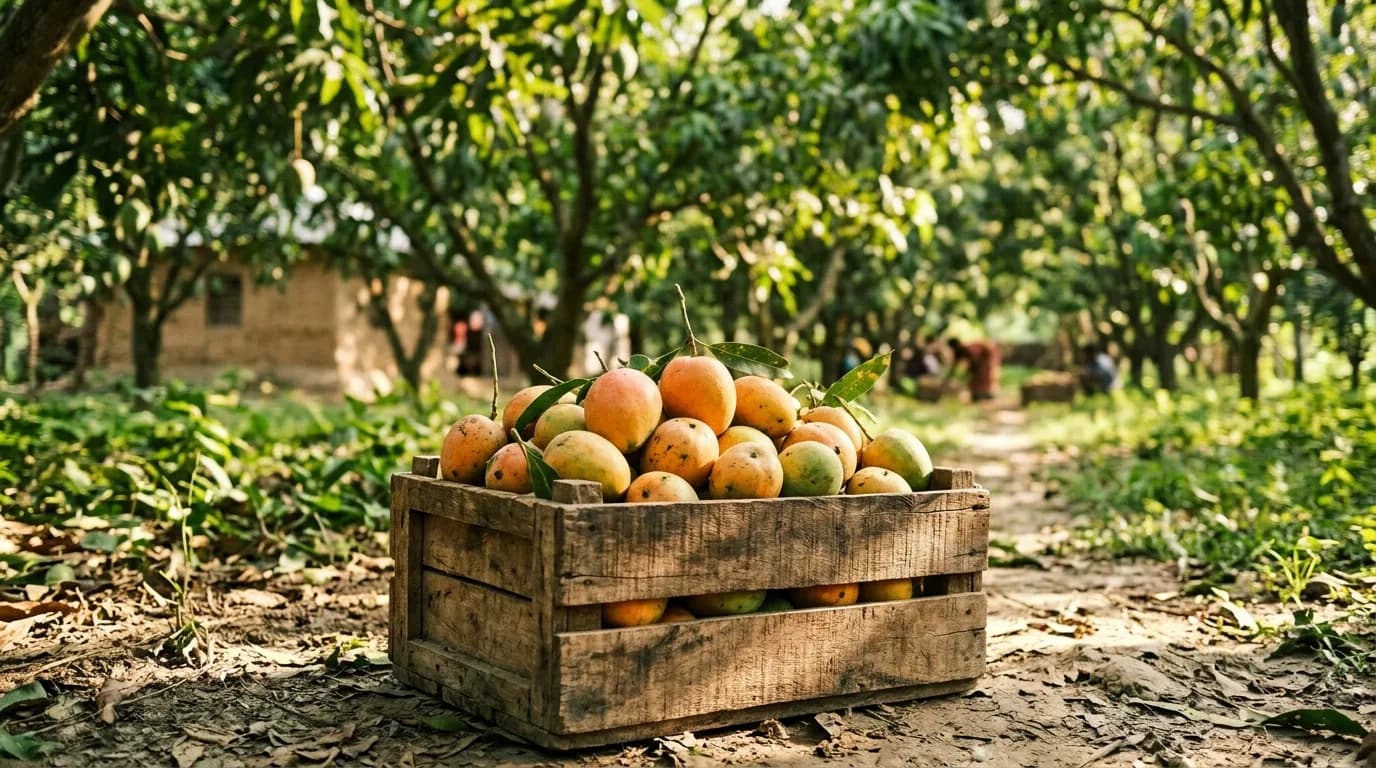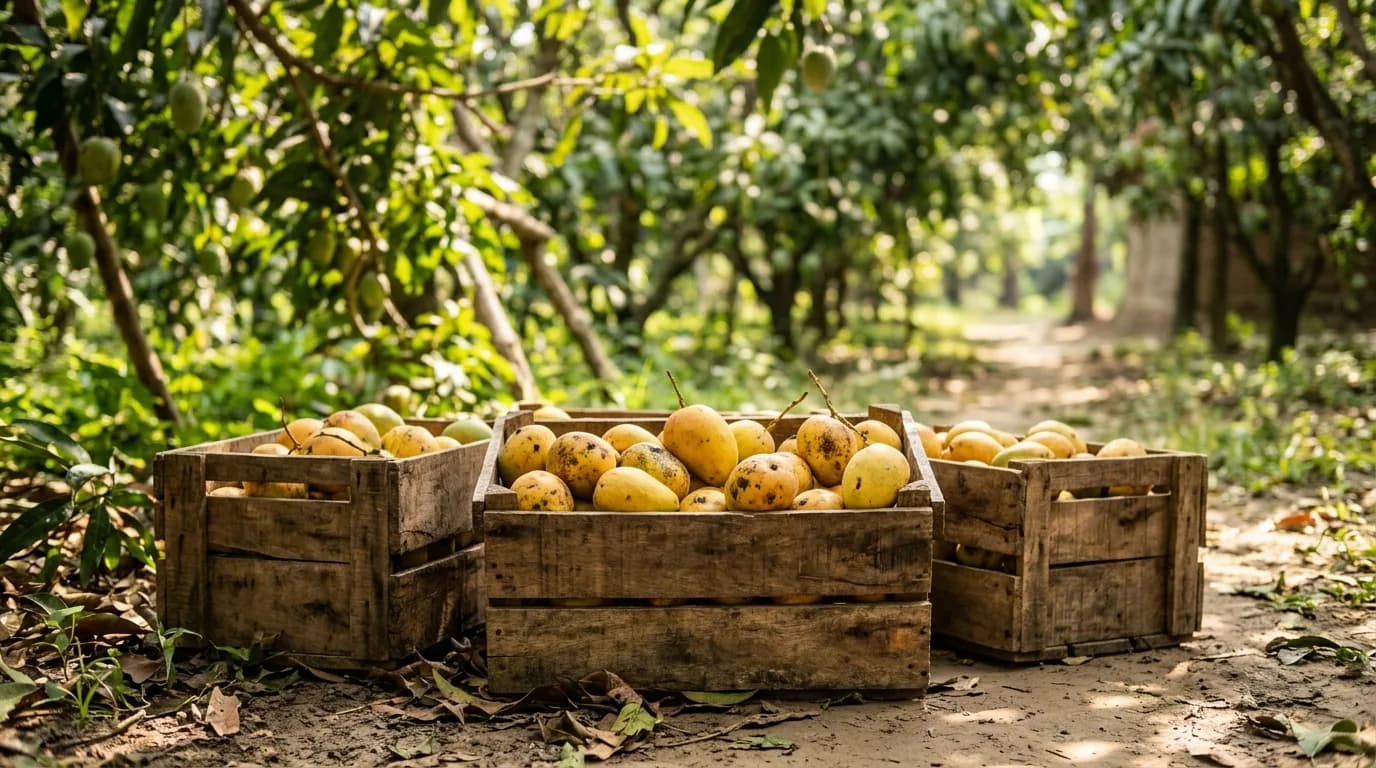
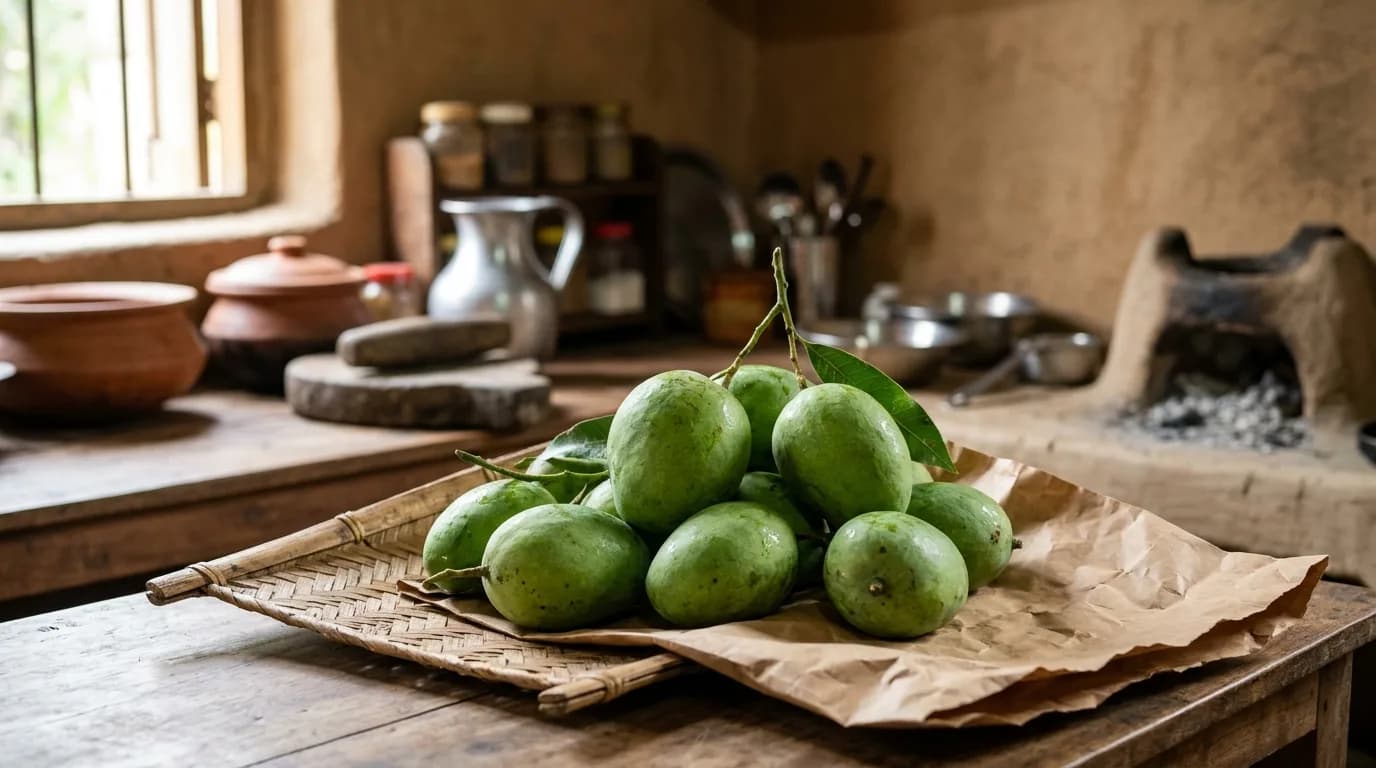
When a crate of freshly picked Rajshahi mangoes arrives at your door, the fruit is usually firm, mature, and green. Learning how to ripen mangoes naturally at home lets you enjoy their true flavor, rich aroma, and tender texture without relying on artificial ripening chemicals.
Commercial growers harvest mangoes once they reach commercial maturity—meaning the fruit has built up its sugars and dry matter on the tree, yet stays firm enough to travel safely across Bangladesh[3]. Given the right conditions on your kitchen counter, these mature green fruits will finish ripening on their own.
Understanding the Science of Natural Mango Ripening
Mangoes are climacteric fruits. Even after you harvest them, they keep breathing, breaking down starches into sugars, and softening up[5]. Ethylene gas drives this shift—it is an organic plant hormone the fruit produces naturally as it matures[6].
Room temperature plays a big role in this process. The sweet spot for natural ripening sits between 20°C and 25°C (68°F to 77°F), paired with a relative humidity around 85% to 90%[5]. Kept within this range, starches convert steadily into fructose and sucrose, the peel softens, and the fruit develops its signature aroma.
When temperatures climb past 30°C (86°F), the fruit's ripening enzymes start breaking down. That sort of heat dries out the skin, causes blotchy coloring, and leads to internal fermentation instead of clean ripening[5]. On the flip side, dropping below 12°C or 13°C (54°F to 55°F) causes chilling injury in hard fruit, stopping ethylene production for good[6].
Step-by-Step Methods to Ripen Mangoes Naturally
You do not need ripening chambers or chemical powders to bring out orchard-fresh sweetness. A couple of everyday household items are all it takes to hold in the natural ethylene and help your mangoes soften evenly.
Method 1: The Brown Paper Bag or Newspaper Wrap
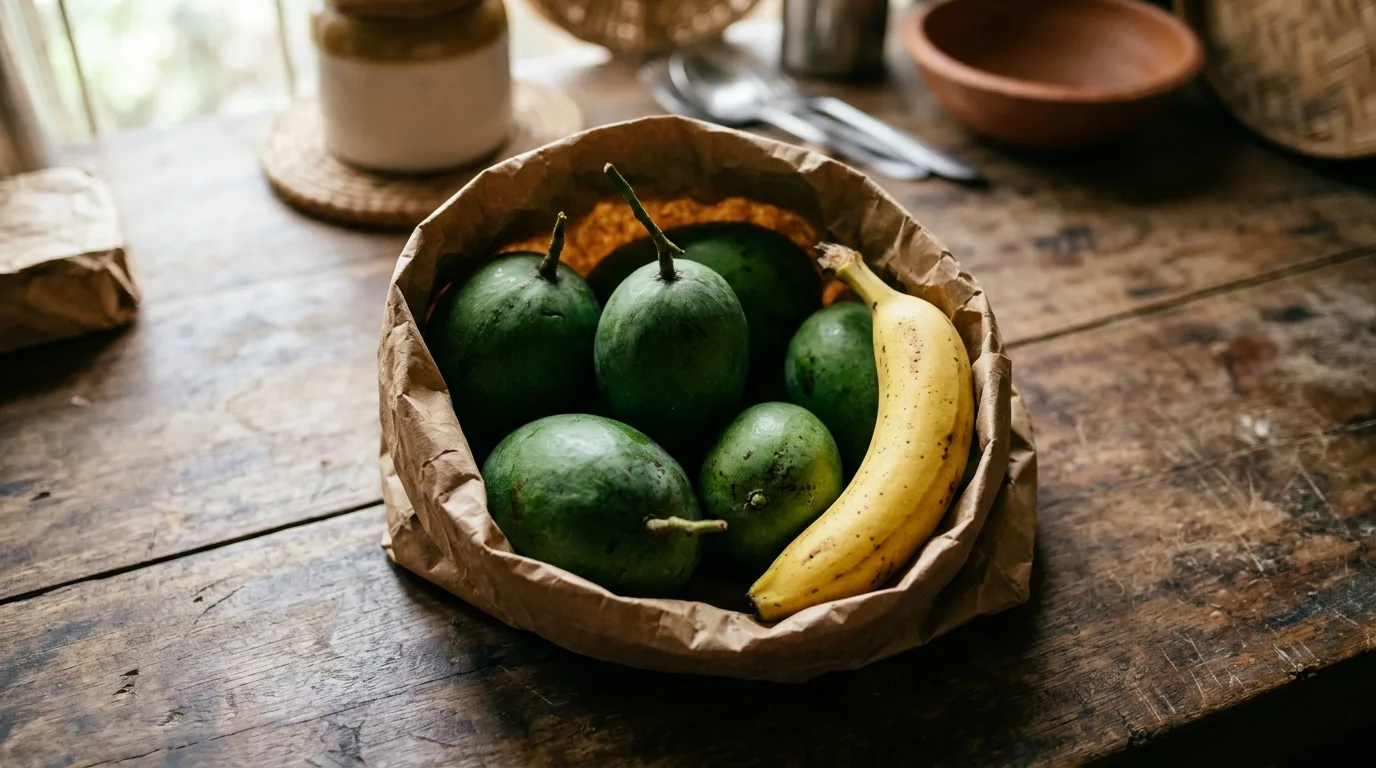
Wrapping mangoes in paper is the simplest, most dependable way to ripen them at home[5]. The porous paper holds the fruit's ethylene close while letting moisture escape so the skin stays dry.
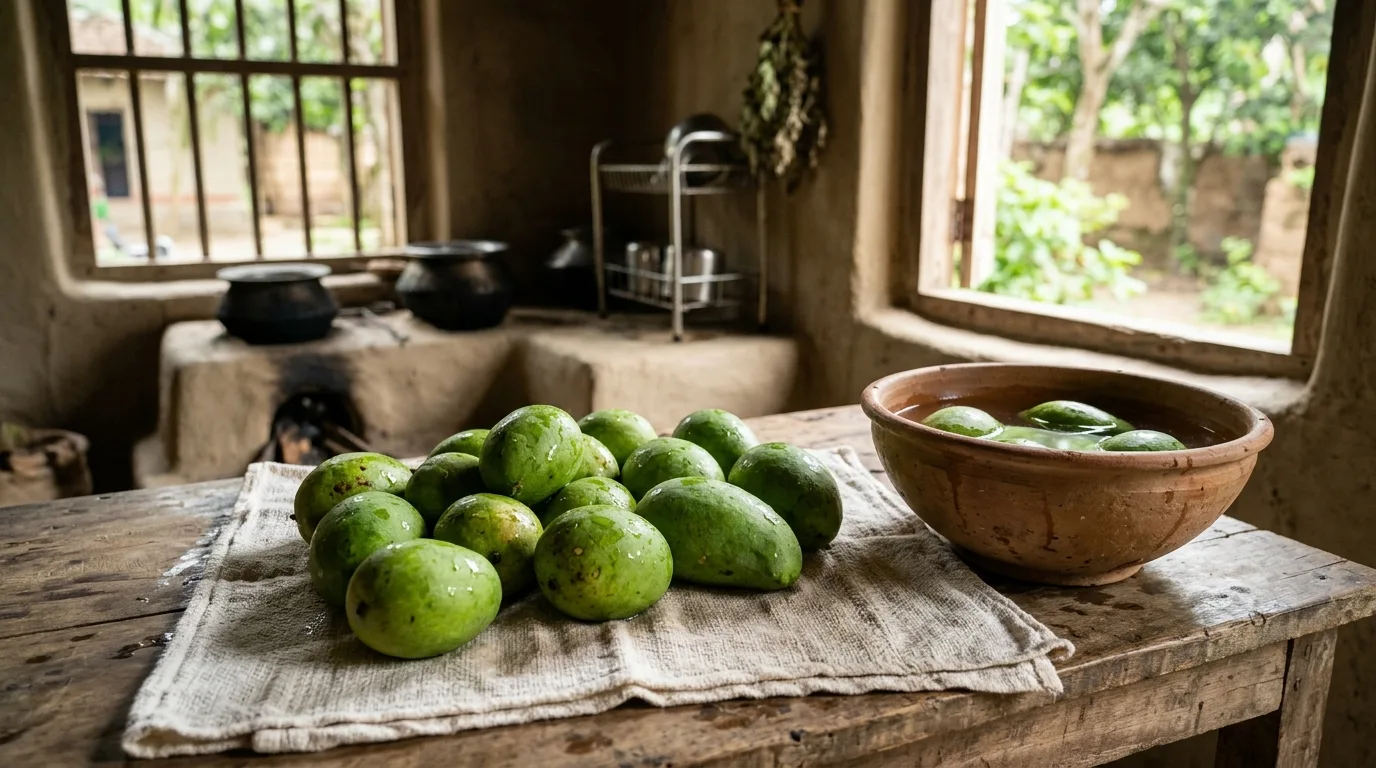
- Inspect and dry: Check your mangoes for lingering sap or damp spots. Wipe each one down with a clean, dry cotton cloth.
- Wrap individually: Wrap each fruit loosely in a couple of sheets of plain newspaper, or put two or three mangoes into a brown paper bag.
- Fold the opening: Fold the bag top over loosely to hold the gas inside. Never tape or seal it shut.
- Store at room temperature: Set the wrapped fruit in an airy, shaded spot away from direct sun.
- Check daily: Look over the fruit every 24 hours. At normal room temperatures, mature mangoes generally ripen within 3 to 5 days[5].
Speed Tip: If you want them ready a day or two sooner, tuck a ripe banana or red apple into the bag with the mangoes[5]. Bananas and apples give off plenty of ethylene, giving the ripening process a natural push.
Method 2: The Raw Grain or Rice Bin Method
Burying firm green mangoes in an uncooked rice drum is a familiar habit across rural Bengal. Dry grains create a gentle microclimate that traps ethylene while soaking up any condensation[5].
- Bury the firm mangoes under a few inches of dry, uncooked grain.
- Rest the bin lid loosely so a little air can still move through.
- Because dry rice holds warmth, fruit ripens quickly here—often in 24 to 48 hours[5].
- Check the bin twice a day. If you leave mangoes buried too long, they will overheat and turn soft or fermented around the stone.
Variety Guide: How Different Rajshahi Mangoes Ripen
Many people expect every ripe mango to turn deep yellow or orange. That is simply not true. Each heritage variety ripens differently, showing its own color changes and firmness along the seasonal harvest calendar[2],[4].
| Mango Variety | Harvest Season | Ripening Color & Texture | Key Ripeness Indicators |
|---|---|---|---|
| Gopalbhog | Mid-to-late May | Thin skin turns yellowish-green; golden flesh | Moderate give at the stem; pleasant sweet perfume[2] |
| Himsagar (Khirsapat) | Late May to mid-June | Deep green turns to pale green or mild yellow | Plump shoulders; rich floral aroma; melting, fiberless pulp[4] |
| Langra | Mid-to-late June | Peel remains predominantly green even when fully ripe | Slight softening at the shoulder; intense musky scent[2] |
| Amrapali | Late June to July | Peel shifts to rich golden-orange; deep orange-red pulp | Distinct sweetness; visible oil glands on golden rind[4] |
| Fazli | Late June to late July | Vast green surface with light yellow highlights | Softens gradually over 5–7 days; yields to gentle palm pressure[2] |
When you have green-skinned varieties like Langra mangoes, do not wait for the skin to turn yellow. If a Langra turns fully yellow on your counter, it has probably started spoiling from the inside out. Go by the gentle give near the stem and the musky fragrance drifting off the shoulder.
Bigger varieties like Fazli mangoes have thick flesh and larger seeds[2]. They take their time, often needing five to seven full days at room temperature before they soften right down to the stone.
Mistakes to Avoid: Temperature, Moisture, and Plastic Traps
Even properly harvested fruit can turn bad if handled carelessly while ripening. Steer clear of these three common slipups:
1. Refrigerating Hard, Unripe Mangoes
Putting unripe green mangoes straight into the fridge ruins them quickly. Chilling injury sets in whenever hard, unripened fruit sits below 12°C[6]. The cell walls break down, the skin turns dull gray with small pits, and the natural sugar-producing enzymes shut off[6]. Once chilled like this, the mango will never ripen properly. It will stay tough, tart, and flat even after sitting back out at room temperature.
2. Sealing Fruits in Plastic Bags or Airtight Boxes
Keep green mangoes out of plastic bags. Mangoes breathe as they ripen, shedding water vapor along with ethylene. When that moisture cannot escape, it collects on the skin and encourages fungal diseases like Anthracnose. Black rot spots will set in well before the sugars have a chance to develop.
3. Ignoring Stem Sap Residue
Fresh-picked mangoes bleed a sticky, milky sap where they break from the branch. This sap carries resorcinols and urushiol-like compounds that irritate your skin and burn black streaks into the mango peel. If you see dried sap on the fruit, rinse the stem area with cool water, dry it thoroughly, and then set the fruit to wrap.
The Menace of Industrial Chemicals: Why Natural Ripening Matters
In wholesale markets, dishonest dealers sometimes treat green fruit with calcium carbide ($CaC_2$) to force a quick yellow color. Calcium carbide gives off acetylene gas to mimic ethylene, but it remains illegal under Bangladesh food safety laws.
Industrial carbide carries traces of arsenic and phosphorus hydrides, both of which pose real health risks. Worse, carbide-treated fruit only looks ripe on the surface; the pulp inside stays sour, hard, and scentless. Ripening mangoes naturally at home keeps dangerous residues away from your table and protects the true flavor of a pure mango.
Knowing When It Is Ready and How to Store Ripe Fruit
Trust your hands and nose more than your eyes to tell when a mango is ready. Cradle the fruit in your palm and press gently near the stem with your thumb. A ripe mango yields slightly, without feeling mushy or hollow.
Take a quick smell near the stem end, too. A properly ripened mango gives off a distinct, sweet perfume. Once the fruit reaches this point, move it to your refrigerator crisper drawer at 4°C to 8°C to slow down further softening. Chilling at this stage keeps the texture and sweetness in good shape for another 3 to 5 days without hurting the pulp.
At Rajshahir Mango, we pick mature, untreated fruit straight from our family-run orchards in Rajshahi, operating with integrity since 2013. When you order our 12 kg or 24 kg crates, you get genuine, tree-matured mangoes ready to finish ripening on your pantry shelf. Take a look at our seasonal lineup of fresh Rajshahi mangoes, including sweet Himsagar mangoes, and enjoy clean orchard fruit delivered right across Bangladesh.