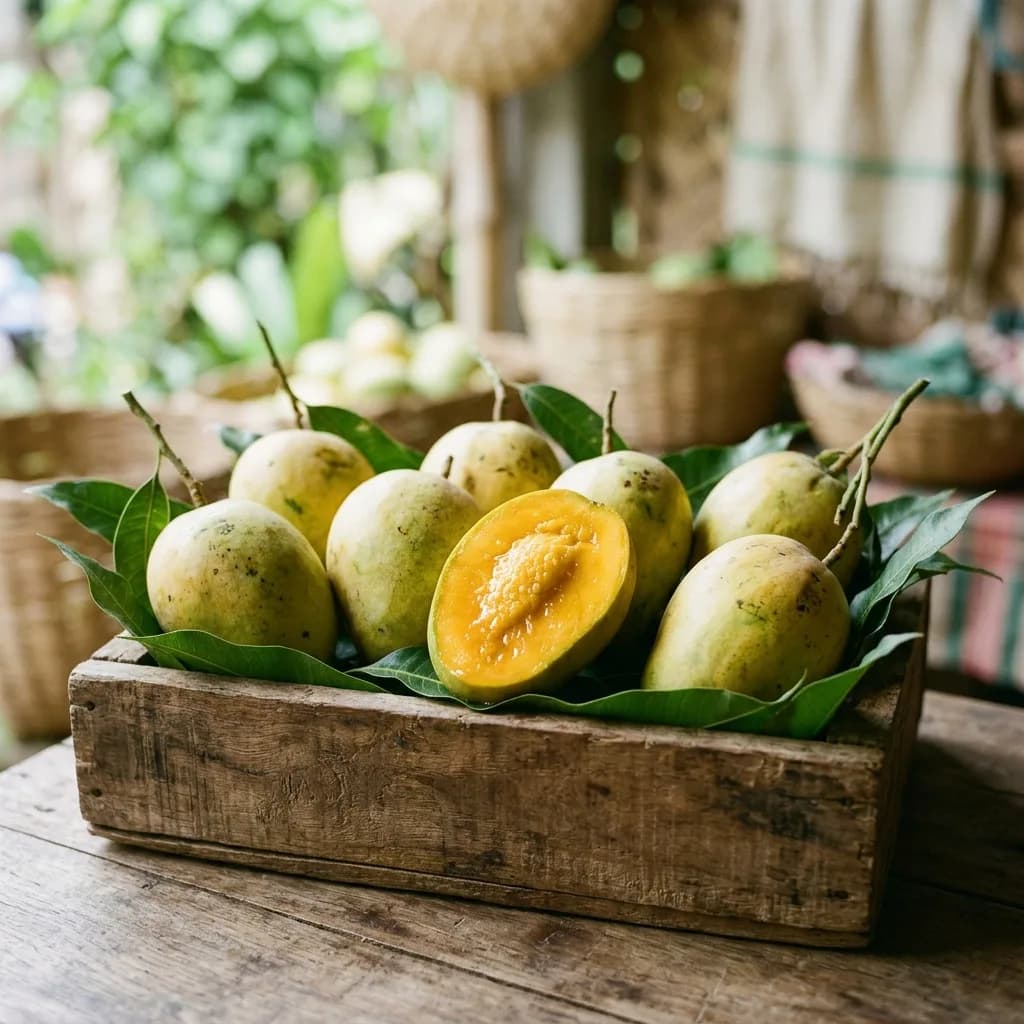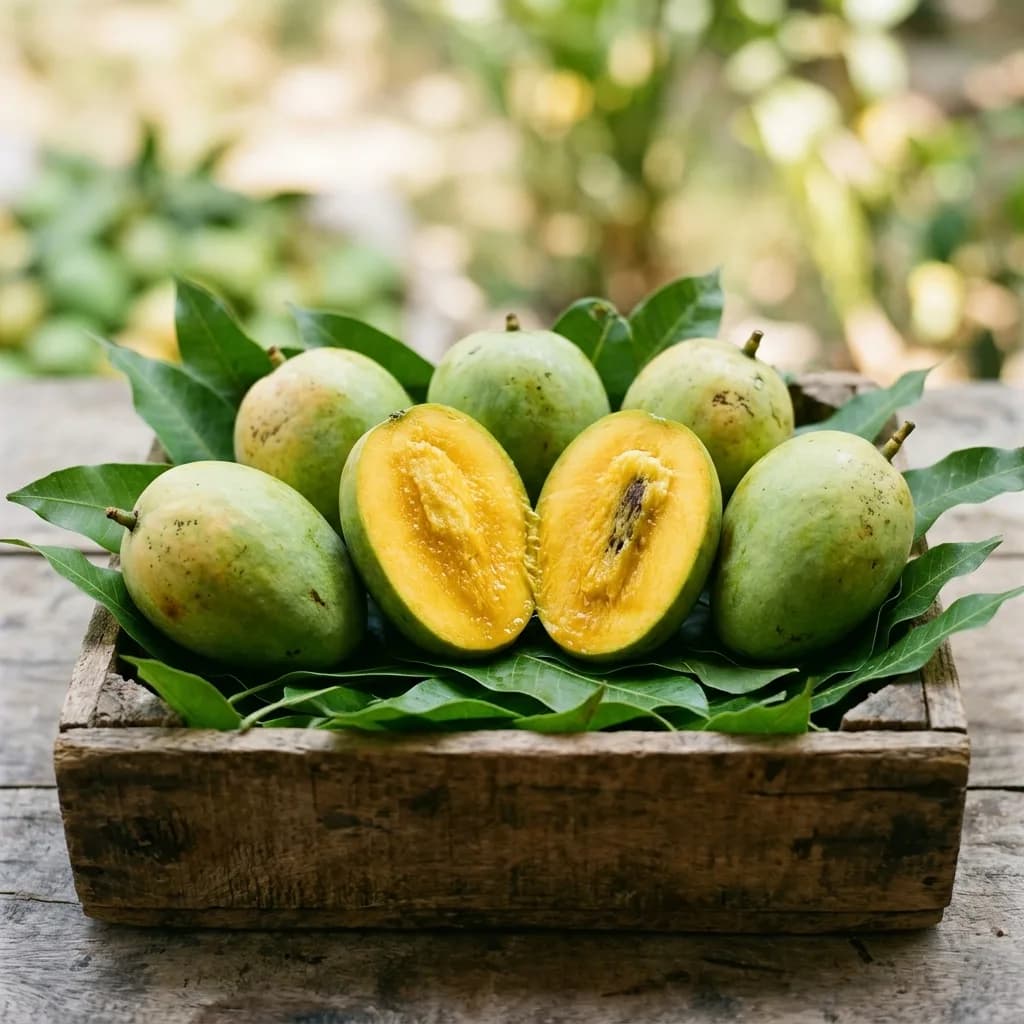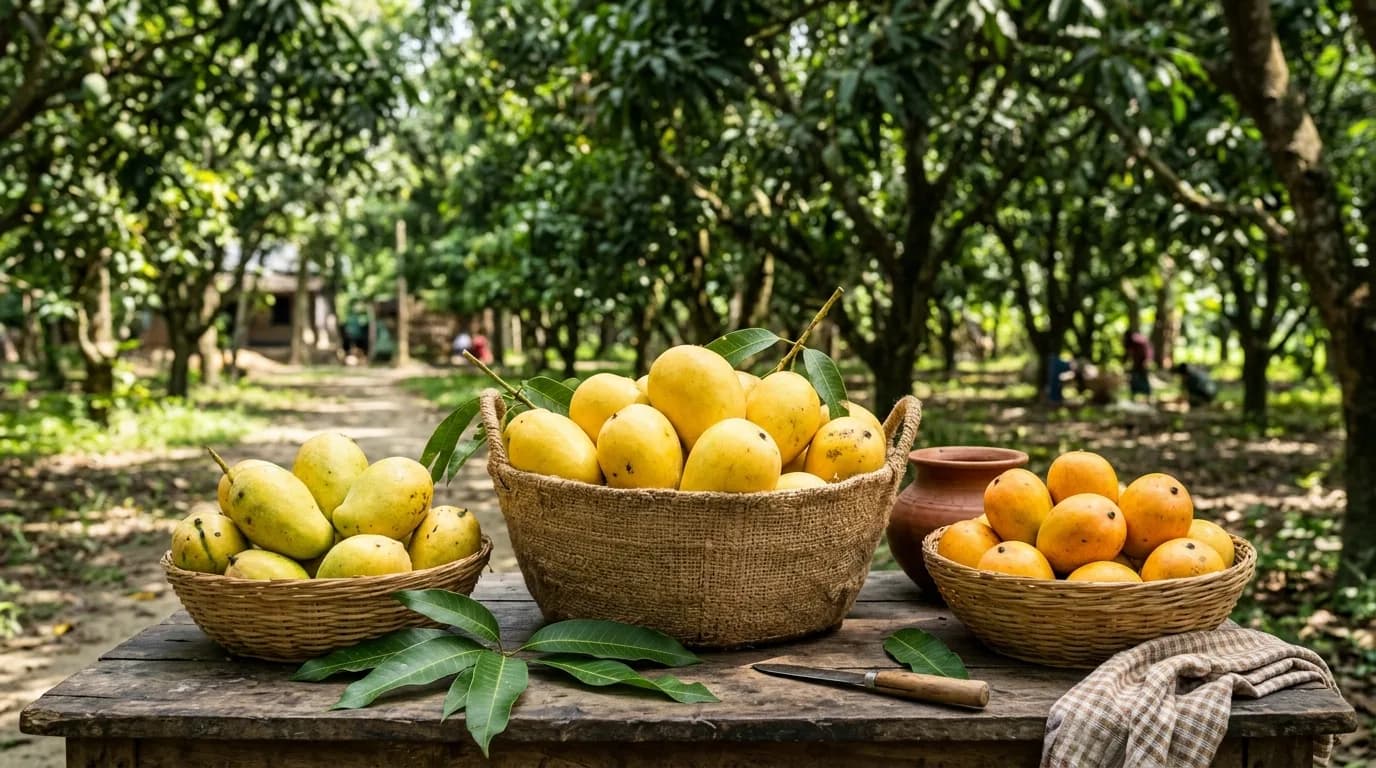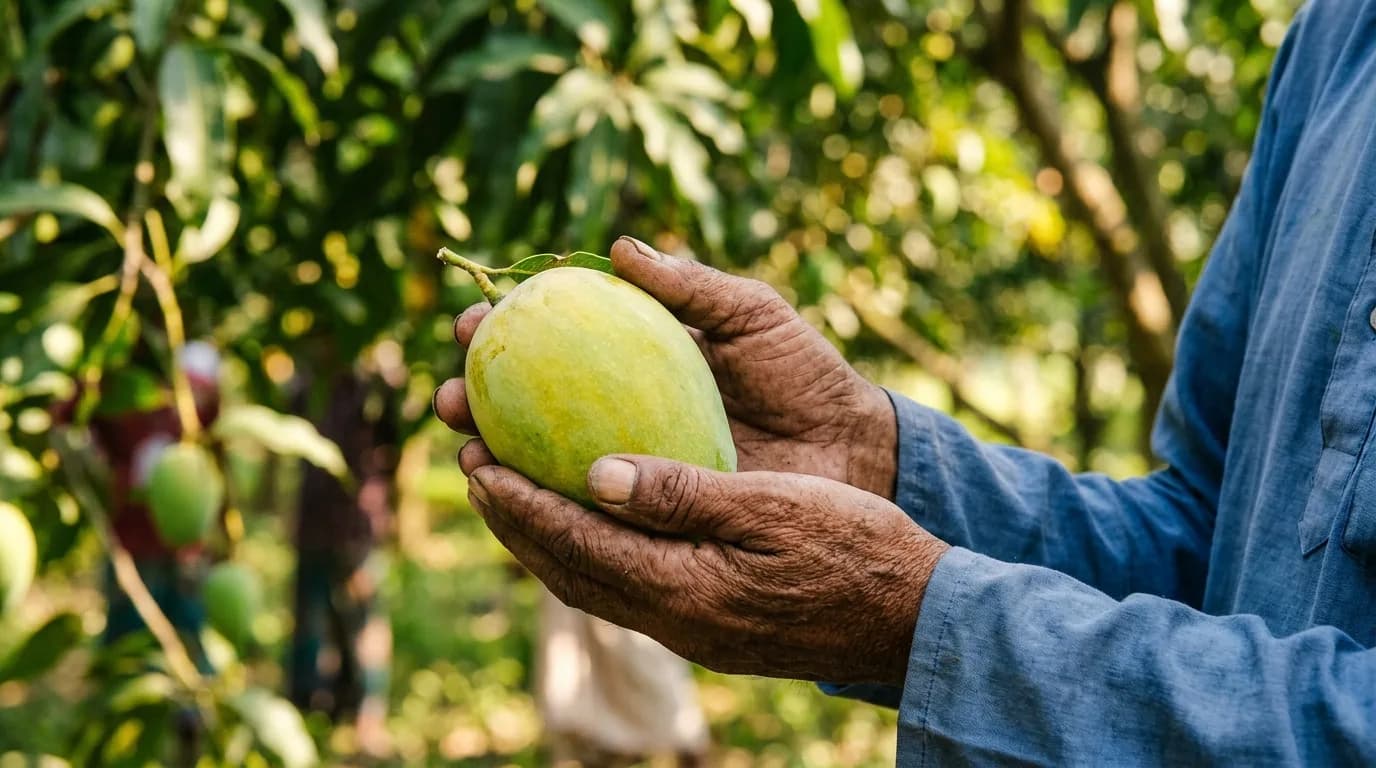
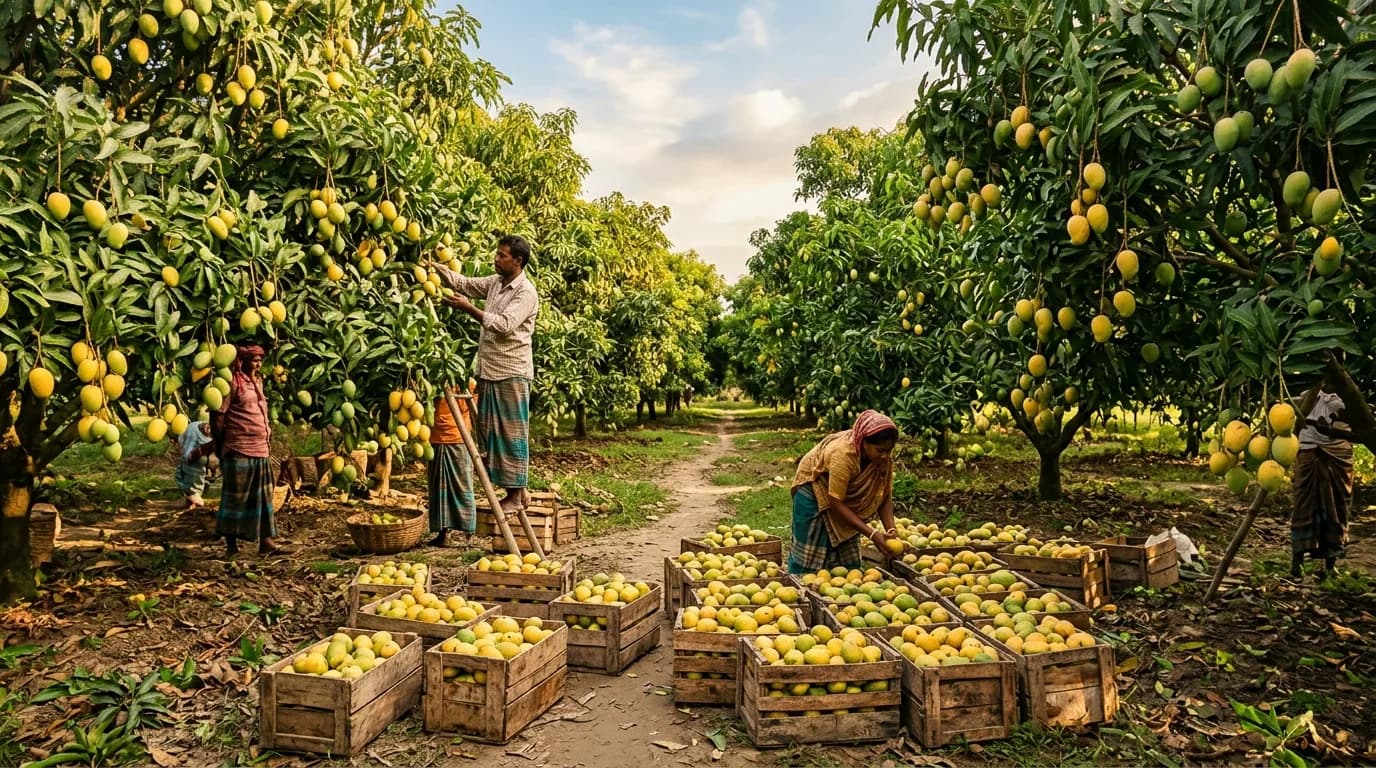
Summer in Bangladesh means mango season. From Satkhira's southern groves up to the orchards of Rajshahi and Chapainawabganj, the trees ripen on nature's timetable, steered by local weather and district guidelines.
To protect fruit quality and stop unripe picking, the Department of Agricultural Extension (DAE) and local district administrations release an official harvest calendar every year[3]. Pluck a mango too early, and it stays sour and fibrous without ever ripening properly on its own. For buyers and growers alike, following this schedule is the simplest way to get clean, naturally ripened fruit right when it tastes best.
Early May: The Season Opens with Guti and Baishakhi
The season gets going in early May down south. In places like Satkhira, warmer early-summer heat pushes local varieties to maturity between May 5 and May 10. Up in northern hubs like Rajshahi, the administration usually sets the start date for indigenous seedling mangoes—known locally as Guti or Baishakhi—around May 15[3],[4].
These first mangoes run small to medium, with a brisk, tangy bite. They don't have the rich sweetness of later cultivars, but they're just what folks want after months without fresh fruit. Kitchens put them to work right away in sour summer dal, quick chutneys, or sliced thin with a sprinkle of rock salt while the premier table varieties finish filling out on the branch[5].
Late May: The Arrival of Gopalbhog and Lakshmanbhog
Things move fast by late May. In Rajshahi, the harvest for Gopalbhog usually kicks off around May 22[3]. Most growers see Gopalbhog as the real start of the premium table mango season[6]. It has a thin skin, warm golden-orange pulp, very little stringiness, and a honey-like scent that carries across the whole room once a basket starts ripening.
A few days later, around May 25, the calendar clears Ranipasand and Lakshmanbhog (often called Lakhanbhog) for picking[3]. Lakshmanbhog is easy to recognize by the reddish-orange blush on its shoulders and its firm flesh. It's not quite as sugary as Gopalbhog, but it slices neatly and travels well without bruising on the road to Dhaka, Chattogram, or Sylhet.
Late May to Early June: The Himsagar and Khirsapat Window
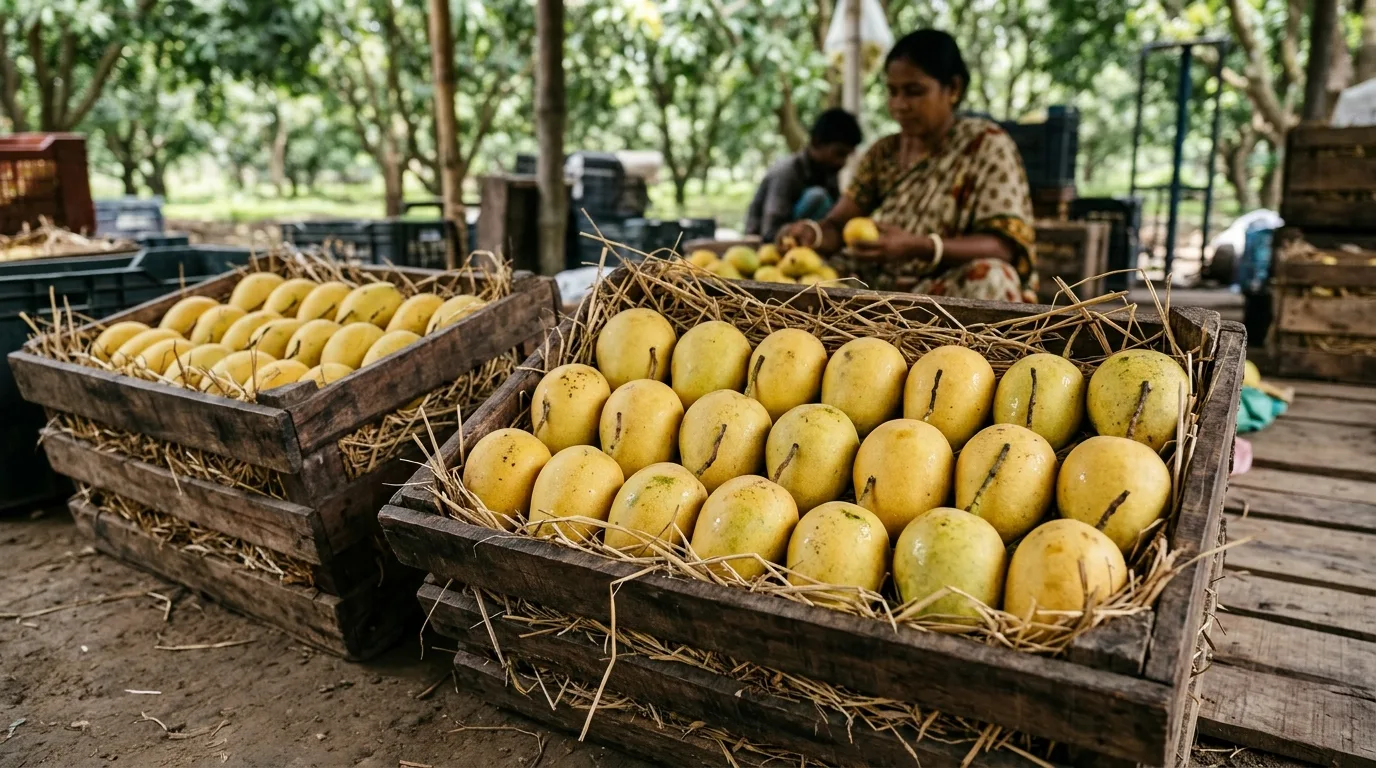
By late May, the orchards turn their focus to Khirsapat, often sold across the country as Himsagar[6]. In Rajshahi and Chapainawabganj, the official picking date usually lands around May 30[3]. It carries GI certification and stands as one of the best-loved varieties in the northern belt.
Averaging 250 to 350 grams, our Himsagar mango has soft, completely fiberless pale-yellow flesh and a sweet floral fragrance. It cuts smooth and melts in your mouth, which is why so many people rate it as their favorite eating mango. The skin is delicate, so we take extra care during picking to keep raw sap from dripping onto the peel and causing black marks during shipping.
Mid-June: Langra, Haribhanga, and Amrapali Reach Maturity
Mid-June brings the heaviest harvest of the year. Around June 10, orchards begin plucking Langra along with Banana mango[3]. Langra has a devoted following for good reason: it combines high sweetness with a distinct hint of tartness and plenty of juice. Keep in mind that a ripe Langra stays mostly greenish-yellow outside. Don't wait for it to turn bright yellow; check if the shoulders have softened slightly and give off that familiar, fragrant aroma.
Around June 15, the gates open for Amrapali, early Fazli, and Rangpur's celebrated Haribhanga[3]. Amrapali is a regular standout for sweetness, routinely hitting 19 to 22° Brix on sugar tests. The flesh is dark reddish-orange, fiberless, and packed with rich, concentrated flavor.
Weekly Harvest Calendar Overview
The table below summarizes the typical harvest progression during the peak mango season in Bangladesh based on agricultural guidelines:
| Harvest Window | Primary Mango Varieties | Key Characteristics | Optimal Table Use |
|---|---|---|---|
| Early May (May 5–15) | Guti, Baishakhi | Mild sweetness, tangy undertone, fibrous | Fresh green slices, tart curries, chutneys |
| Late May (May 20–25) | Gopalbhog, Ranipasand, Lakshmanbhog | Aromatic, golden pulp, moderate fiber | First premium dessert slicing |
| Late May (May 28–31) | Khirsapat / Himsagar | Fiberless, exceptionally sweet, floral aroma | Premium table fruit, pure mango purees |
| Mid-June (June 10–15) | Langra, Banana Mango | Thin skin, green peel when ripe, highly juicy | Connoisseur table dessert |
| Mid to Late June (June 15–25) | Amrapali, Haribhanga, Fazli | High Brix sweetness, firm flesh, large size | Direct slicing, desserts, processing |
| July to August | Ashwina, BARI Aam-4, Gourmati | Thick peel, late ripening, tart-to-sweet | Pickling, cooking, late-season eating |
July to August: Late-Season Varieties and Extended Harvests
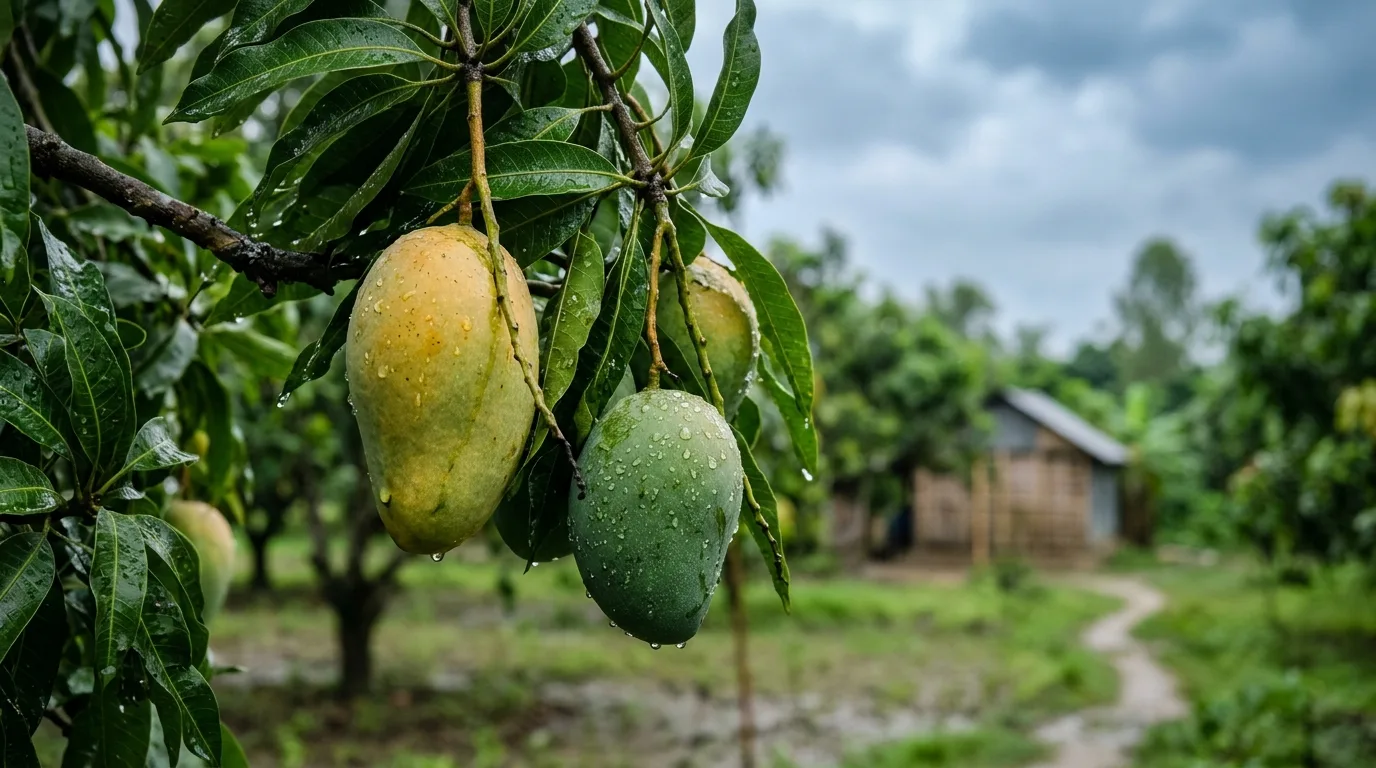
A lot of people think mango season wraps up once June ends, but our orchards in the north keep producing right through the monsoon. Around July 5, BARI Aam-4 comes in. It has firm, fiber-free flesh that stays sweet and travels unusually well. Right behind it comes Ashwina on July 10[3]. Ashwina is an older, heavy-bearing tree with thick skin, fibrous pulp, and a tart edge—the traditional choice for late-season pickles, sour chutneys (tok), and cooking.
The premium late-comer Gourmati ripens around July 15, followed by Ilamati toward late August[3]. Newer varieties like Katimon and BARI Aam-11 flower multiple times a year and give fruit well outside the main summer window. Still, for traditional growers, May through August remains the true heart of Bangladesh's mango calendar.
Post-Harvest Care, Food Safety, and Ripening Truths
Picking on the right date is only half the job. What happens right after plucking determines how the fruit eats and how long it keeps. We pick every mango leaving a 1 to 2 cm stem attached. Snapping the stem clean off releases caustic sap that runs down the skin, causing dark sap burns that quickly turn into rot.
To deal with natural fungal spores like anthracnose (Colletotrichum gloeosporioides) and protect against fruit-fly larvae without harsh chemicals, research guidelines point to hot water treatment. Freshly washed mangoes are dipped into water held at 55 ± 1 °C for exactly 5 minutes. This simple, chemical-free step safely adds 7 to 10 days to the fruit's shelf life.
At home, leave unripe mangoes on an open counter at normal room temperature (20–25 °C) with good airflow. Don't put green mangoes in the fridge below 10 °C. The cold causes chill injury, pitting the skin, turning the flesh gray, and stopping the sugars from developing.
Every summer brings rumors about chemicals. Testing by the Bangladesh Food Safety Authority (BFSA) and agricultural universities has proven that formalin doesn't work on fresh mangoes—it simply can't preserve living fruit tissue. The real concern is calcium carbide, which middlemen sometimes use to force unripe fruit onto the market early. You can spot carbide fruit quickly: the skin looks unnaturally uniform and bright yellow, but the inside stays pale, hard, and sour, with none of the true mango fragrance.
Ordering Directly from Rajshahi Orchards
At Rajshahir Mango, we've cared for our own groves in Rajshahi since 2013, sticking strictly to the official district schedule. We don't harvest early, and we never use ripening agents. We pack tree-ripened, chemical-free fruit in ventilated 12 kg and 24 kg crates, shipping straight to your door across Bangladesh through dependable couriers.
If you're waiting for Khirsapat or counting down the days until mid-June Langra, browse our fresh mango collection to see what's being picked right now. You can read about how we manage our trees on our about us page, and place an order using cash on delivery, bKash, Nagad, or bank card.