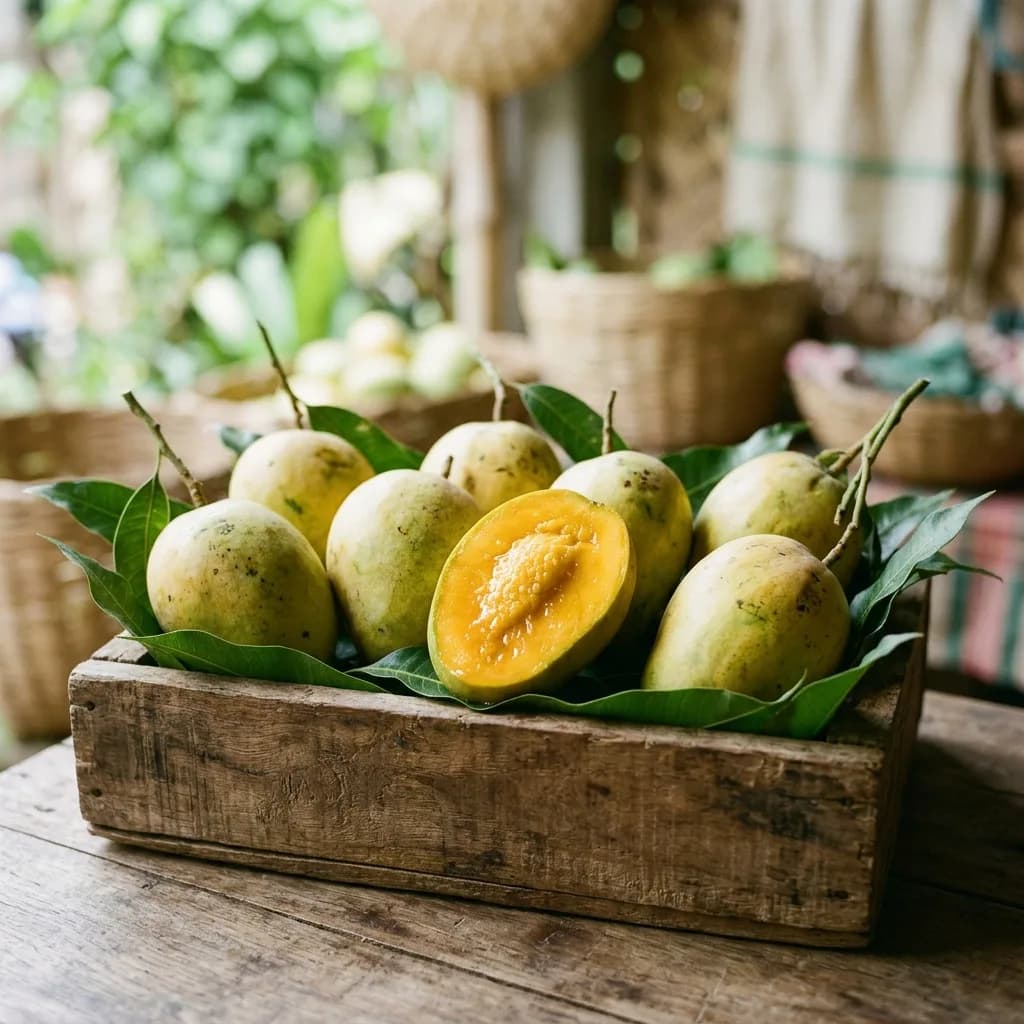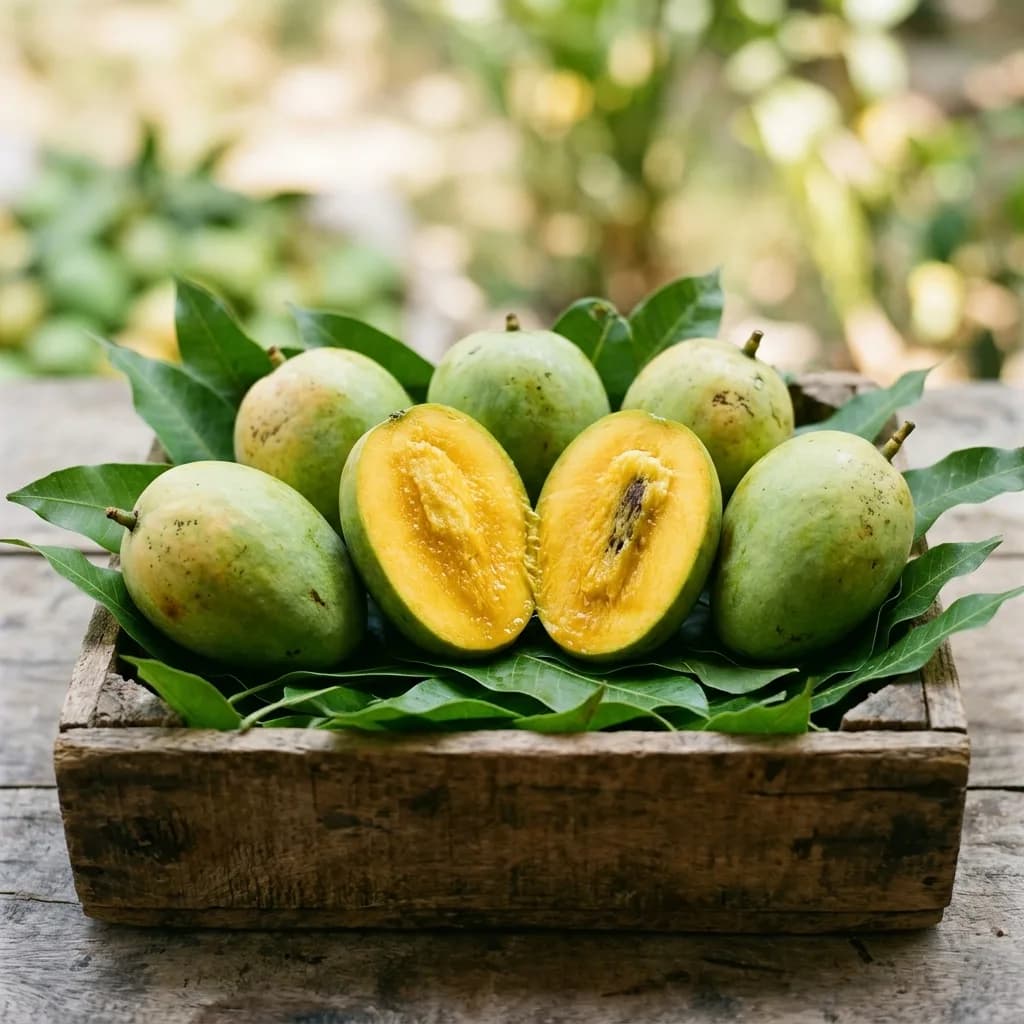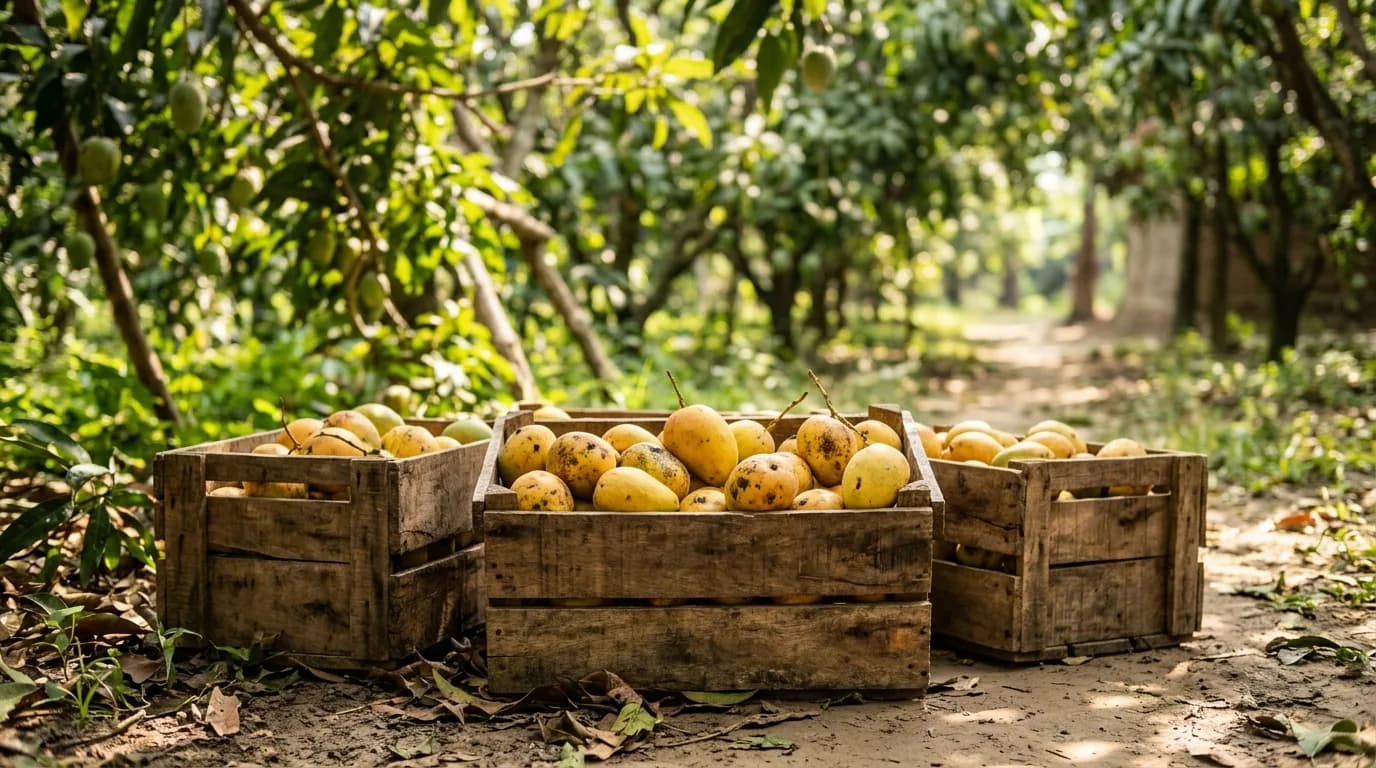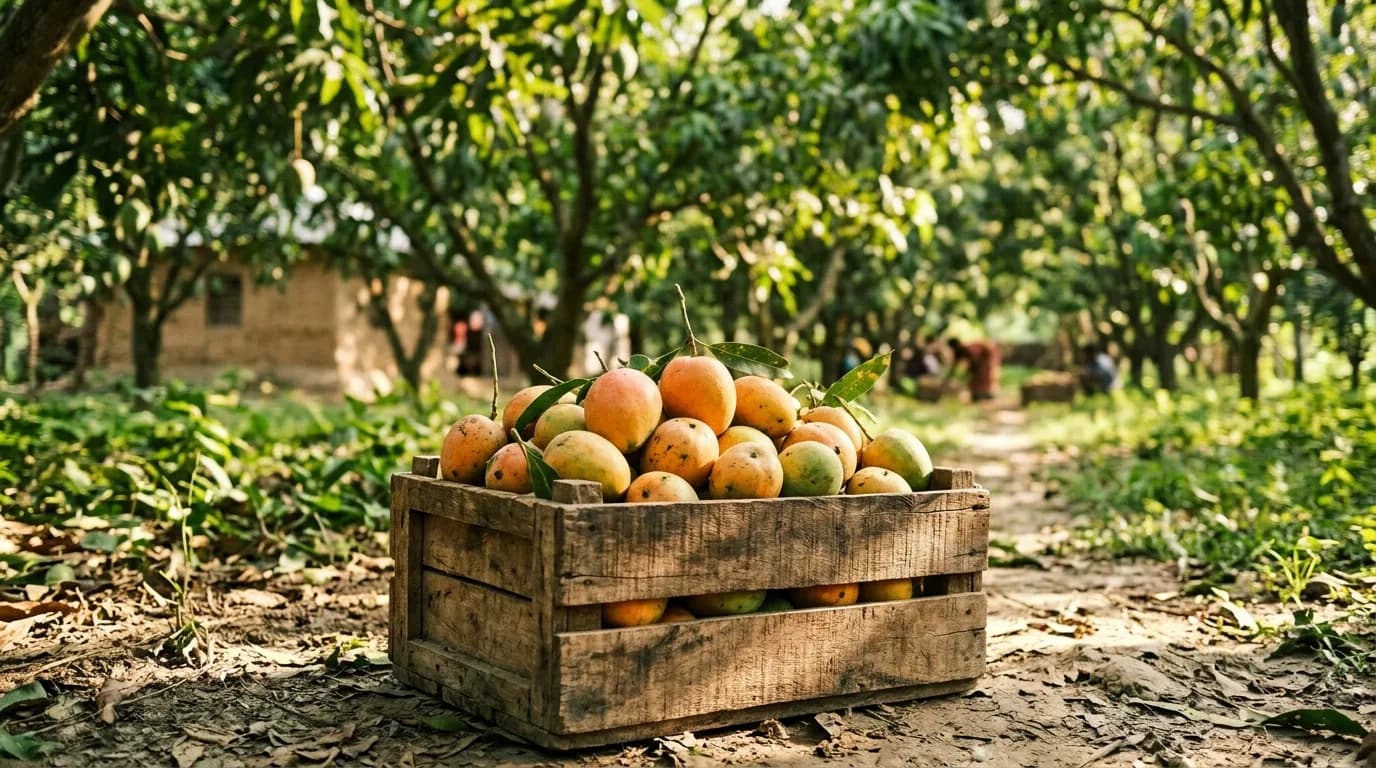
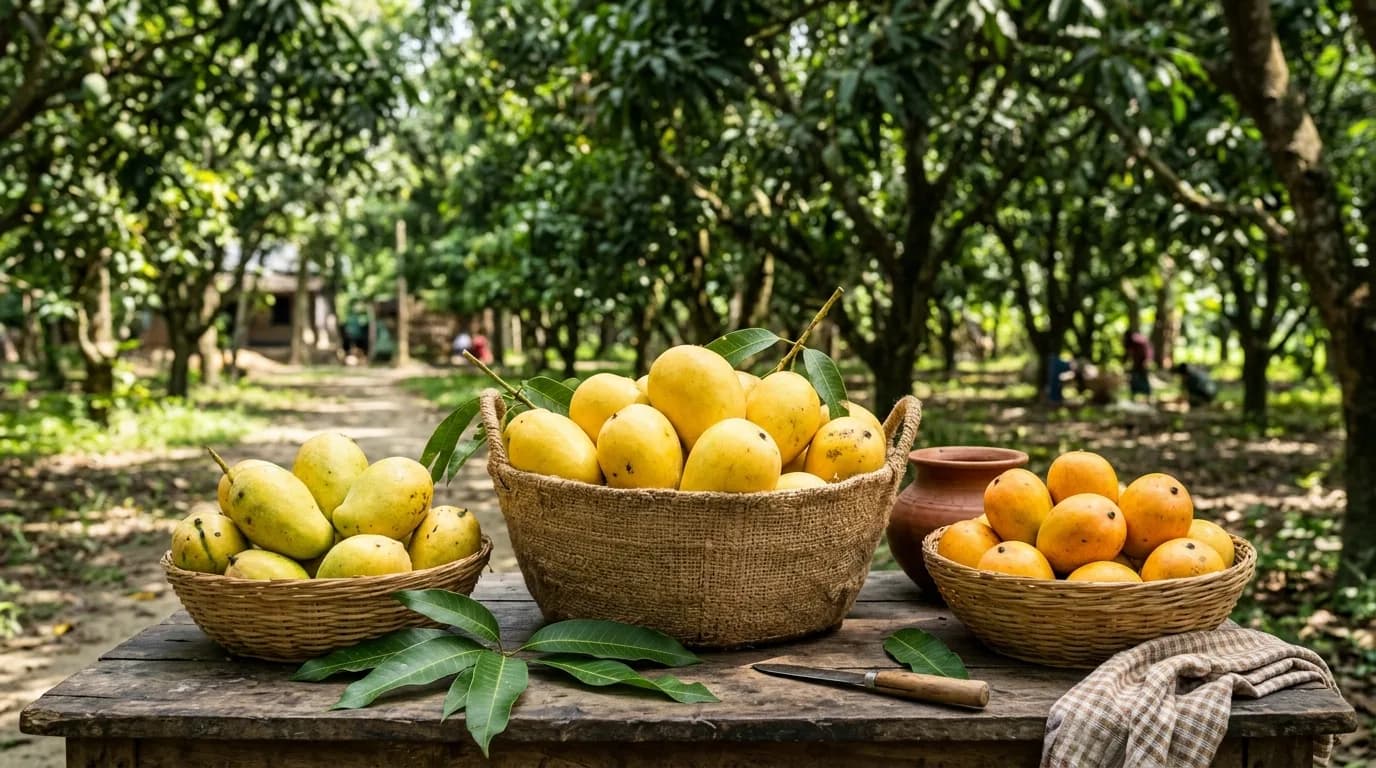
Every summer along the Padma basin, orchards wake up as different Rajshahi mango varieties hit maturity under the northern heat. Walking into a market when Gopalbhog, Himsagar, Langra, and Fazli arrive all within a few weeks can make choosing the right basket tricky.
Each variety has its own balance of sweetness, aroma, pulp density, and harvest timing. Once you know how they differ, picking the right flavor, organizing seasonal gifts, or simply getting the best out of each crate becomes second nature.
The Rajshahi Mango Calendar: Why Harvesting Dates Matter
In Rajshahi, mango harvesting isn't left to guesswork. The Rajshahi District Administration works with the Department of Agricultural Extension (DAE) to set an official harvest calendar every year[1]. That timetable keeps farmers from plucking immature fruit before its starch reserves fully build up[2].
When a mango finishes growing on the tree, its starches turn into complex sugars, giving the fruit its deep sweetness and unmistakable perfume. The harvest moves in stages across the summer:
- Gopalbhog: Picking begins around May 22, inaugurating the early season[1].
- Himsagar (Khirsapat): Harvesting starts around May 30, marking the early-to-mid season arrival of this Geographical Indication (GI) certified fruit[1].
- Langra: Harvesting opens around June 10, delivering classic mid-season aromatics[1].
- Fazli: Harvesting commences around June 15 and extends through late July, anchoring the late season[1].
Pulling fruit from branches before these dates leads to uneven ripening, shriveled skin, and a sharp, stubborn sourness that never mellows into proper sweetness[2].
Comparing the Big Four: Distinct Profiles of Rajshahi Mango Varieties
Hundreds of indigenous mangoes grow across this district, but four traditional cultivars drive the commercial trade and sit on family tables across Bangladesh. Knowing their size, sweetness, and fiber content makes finding your favorite straightforward.
Gopalbhog: The Early Summer Delicacy
Gopalbhog starts off the sweet mango run. It is a modest fruit, usually weighing between 150 and 250 grams. As it softens, its thin peel turns from green to a gentle, pale yellow.
Inside, the flesh is bright golden-orange with a light, floral fragrance. Gopalbhog clocks in at a Total Soluble Solids (TSS) reading of 18° to 20° Brix[3]. The pulp melts easily in the mouth, though you'll find a few fine fibers hugging the stone. It remains an ideal choice for anyone waiting eagerly for the first proper table fruit of the year.
Himsagar (Khirsapat): The Fiberless Standard
Locally called Khirsapat, Himsagar sets the benchmark for rich sweetness. Individual fruits weigh between 250 and 350 grams, giving you an edible pulp yield of roughly 70% to 75%[4].
Its biggest claim to fame is pulp that is completely free of fiber. The flesh is dense, deep golden-orange, and dripping with juice, reading between 19° and 22° Brix[4]. Don't wait for it to turn yellow; Himsagar often keeps a greenish-yellow cast even when ready to cut. If you want silky slices without stringy threads getting in the way, our freshly packed Himsagar mango crates are hard to beat.
Langra: The Connoisseur’s Sweet-Tart Balance
Langra brings a whole different character to mid-season eating. Weighing in at 250 to 350 grams, this oval mango keeps an unassuming, grayish-green skin straight through to peak ripeness.
What makes Langra special is its balance. A high TSS of 19° to 21° Brix is matched by natural fruit acids that give it a clean, refreshing bite[5]. The pale orange flesh is tender and virtually fiber-free. Even better, the seed inside is small and flat, so you get an impressive amount of meat from every piece. Open a crate in your living room, and the scent fills the house within hours.
Fazli: The Late-Season Giant
Just as early varieties wind down, Fazli takes over the market on sheer scale. An average Fazli weighs between 500 and 1,000 grams, and orchard pickers frequently pull down even larger specimens.
It has an oblong frame with pale, yellow-green skin. The flesh is firm, light yellow, and gently sweet, registering 15° to 18° Brix[6]. While it carries less concentrated sugar than Himsagar, Fazli offers the highest pulp-to-seed ratio of the four, running well between 78% and 82%[6]. The firm flesh holds its cut edges neatly, making it great for big family platters, homemade purees, and traditional fruit processing.
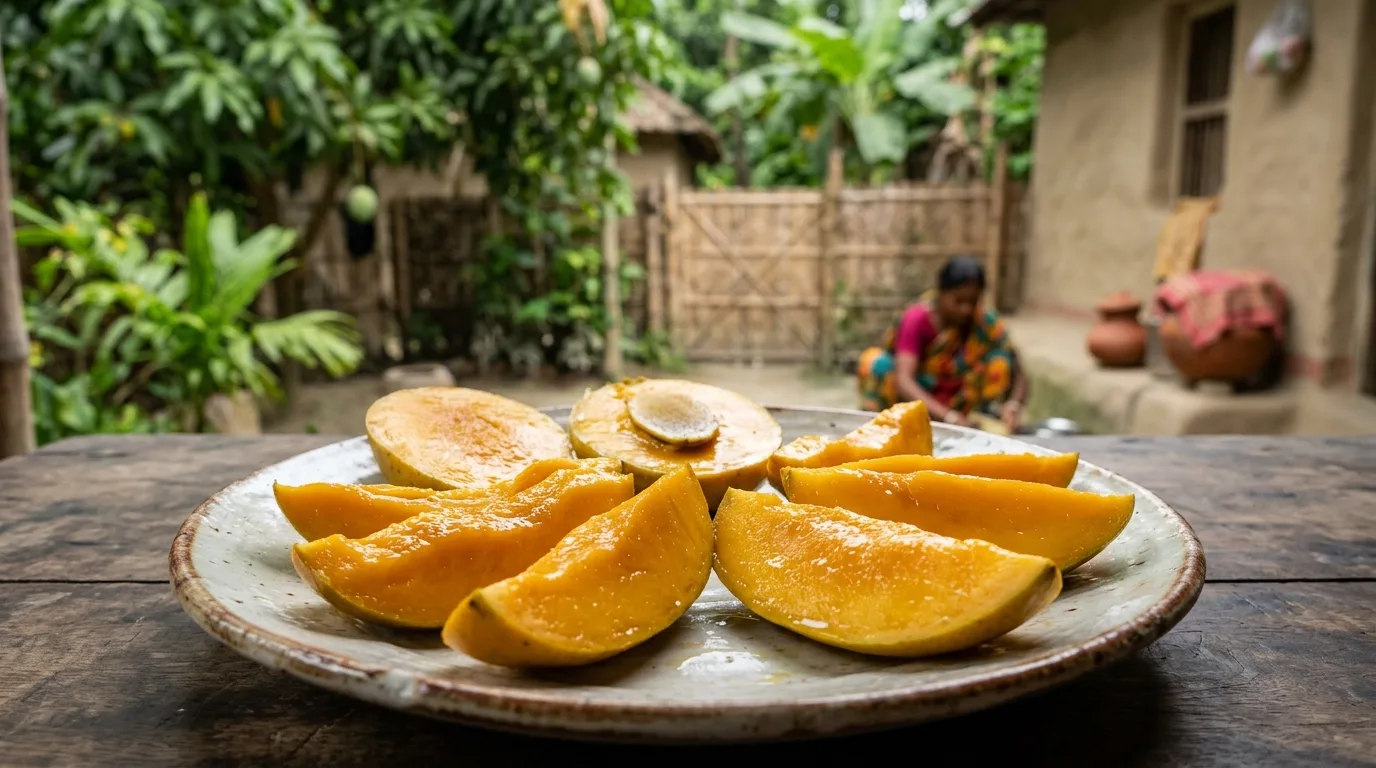
Side-by-Side Comparison: Which Mango Fits Your Taste?
Here is how the four varieties stack up side by side to help you pick the right crate for your home:
| Mango Variety | Average Weight | Ripening Peel Color | Sweetness (TSS) | Pulp Texture | Best Culinary Use |
|---|---|---|---|---|---|
| Gopalbhog | 150–250 g | Yellowish | 18–20° Brix | Soft, slight fiber near stone | Fresh slicing, early gifting |
| Himsagar | 250–350 g | Greenish-yellow | 19–22° Brix | Juicy, completely fiberless | Table fruit, mango milkshakes, desserts |
| Langra | 250–350 g | Grayish-green | 19–21° Brix | Soft, fiberless, sweet-tart | Fresh eating, aromatic pulp drinks |
| Fazli | 500–1,000+ g | Pale yellow-green | 15–18° Brix | Firm, low fiber, high yield | Family slicing, aamshotto, dehydration |
Common Buyer Mistakes: Peel Color and Early Harvesting
The single biggest mistake buyers make is shopping strictly by yellow skin. Langra and Himsagar stay green or grayish-green right through to the table. If you leave a Langra sitting around waiting for it to turn bright yellow, you'll end up with an overripe, fermented mess.
Trust your hands and nose instead. A ready mango gives slightly under gentle thumb pressure near the stem shoulder and gives off a distinct, sweet smell. Testing firmness and aroma will tell you far more than peel color ever will.
Another misstep is buying fruit ahead of the DAE harvest schedule[1]. Mangoes knocked down weeks early simply haven't stored enough starch on the branch. No amount of wrapping or warm storage will coax real sweetness out of them; they just turn soft, wrinkled, and sour[2].
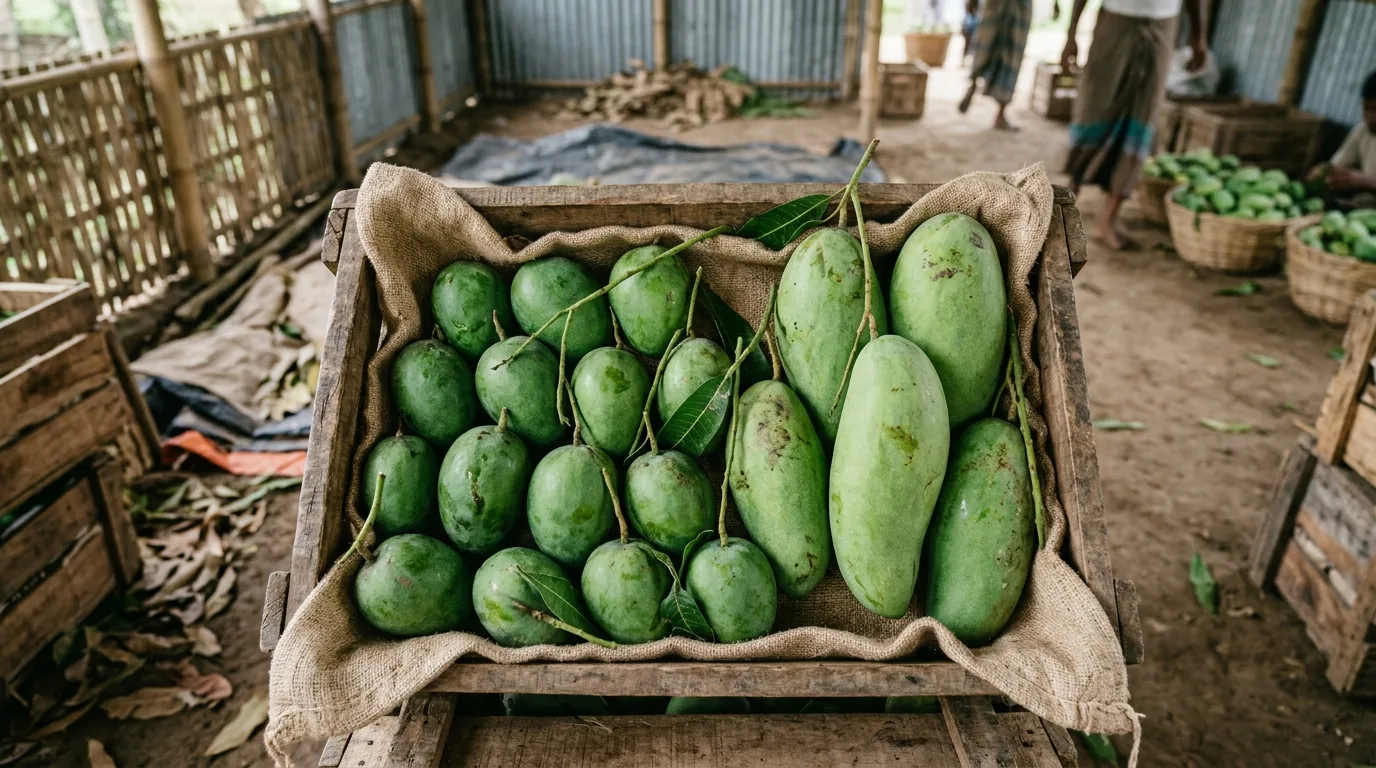
Ripening, Storage, and Food Safety at Home
Once good fruit leaves the orchard, proper handling keeps its flavor intact and prevents waste.
Ripening Conditions
Keep mature green fruit at normal room temperature, roughly 20°C to 25°C, with moderate humidity around 85% to 90%[3]. Under those conditions, the fruit's natural respiration breaks down starches into sugars over 4 to 7 days[3]. Place them in a shaded, well-ventilated spot, and keep them out of direct sun or tightly sealed poly bags.
Refrigeration and Chilling Injury
Keep unripe green mangoes out of the fridge. Exposing unripened fruit to temperatures under 10°C to 12°C triggers chilling injury[4]. That cold shock damages internal cell structures, leaving the skin pitted and brown, turning the pulp gray, and stopping the ripening process permanently[4]. Once a mango has fully softened at room temperature, however, chilling it at 10°C to 13°C will safely hold it for 14 to 18 days[4].
Washing and Surface Care
Rinse your mangoes thoroughly under clean running water before cutting into them. You can also bathe them in warm water (50°C to 52°C) for five minutes; this clears away dried sap and neutralizes surface anthracnose spores[5]. Mango sap carries acidic compounds that irritate bare skin and leave dark scald marks on the peel if not washed off.
Food Safety Realities
Under the Bangladesh Pure Food Act, calcium carbide is completely illegal because of dangerous arsenic and phosphorus residues. Commercial fruit hubs rely instead on controlled doses of ethylene gas (100–150 ppm), which simply mimics the natural plant hormone that fruit produces during ripening[3].
The recurring scare around formalin in fresh mangoes makes no biological sense, either. Formalin can't preserve living plant tissue; splashing it on a live mango blackens the peel, dehydrates the skin, and rots the interior right away. Healthy ripening fruit naturally produces tiny, harmless traces of organic formaldehyde during routine metabolism, which is entirely normal.
Savoring the Rajshahi Season with Confidence
From the tender sweetness of early Gopalbhog mango in late May to silky Himsagar, tangy Langra, and hearty late-season Fazli, every stage of the Rajshahi calendar brings something distinct to enjoy.
Here at Rajshahir Mango, we pick directly from our own groves established back in 2013. We follow the district administration's harvest schedule to the day so our fruit ripens naturally, with zero chemical shortcuts. Take a look at what is coming off the trees right now in our fresh mango collection, packed securely in sturdy 12 kg and 24 kg crates and delivered right to your door anywhere in Bangladesh.