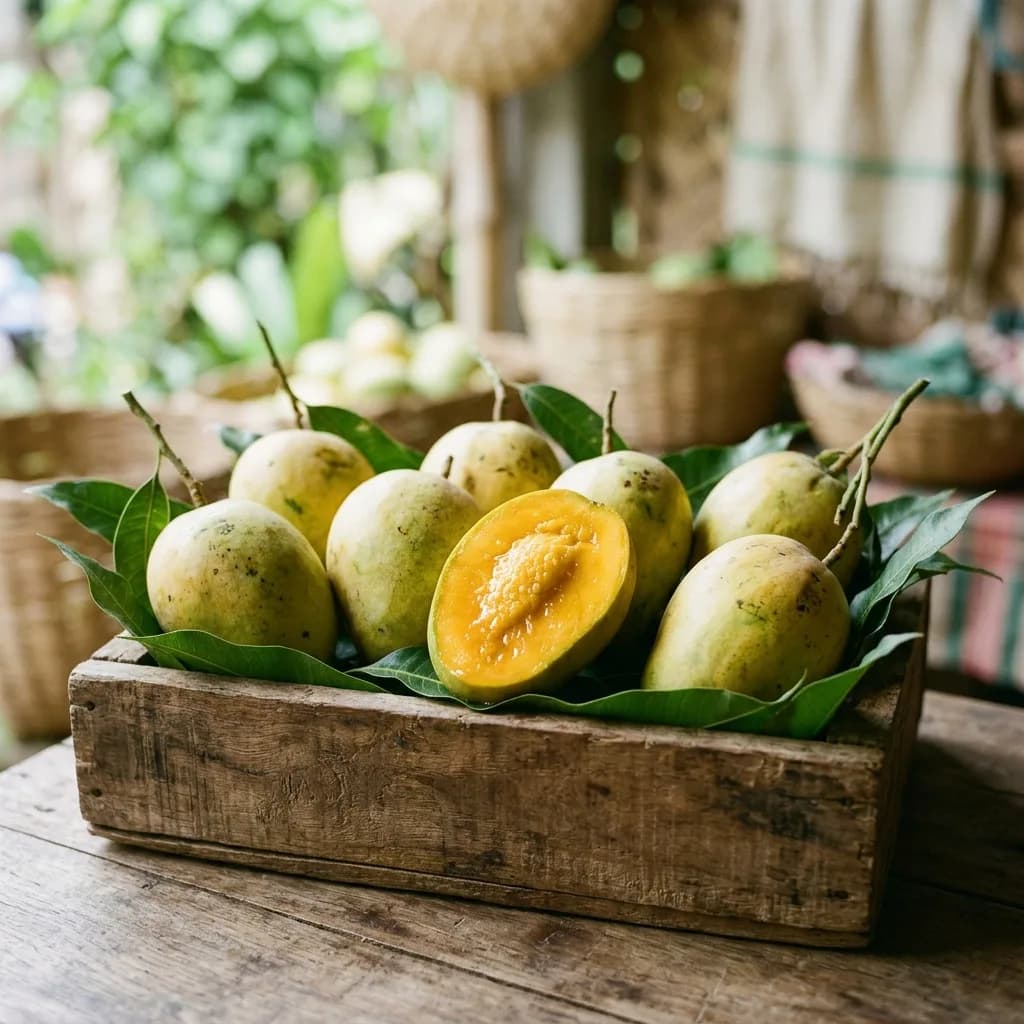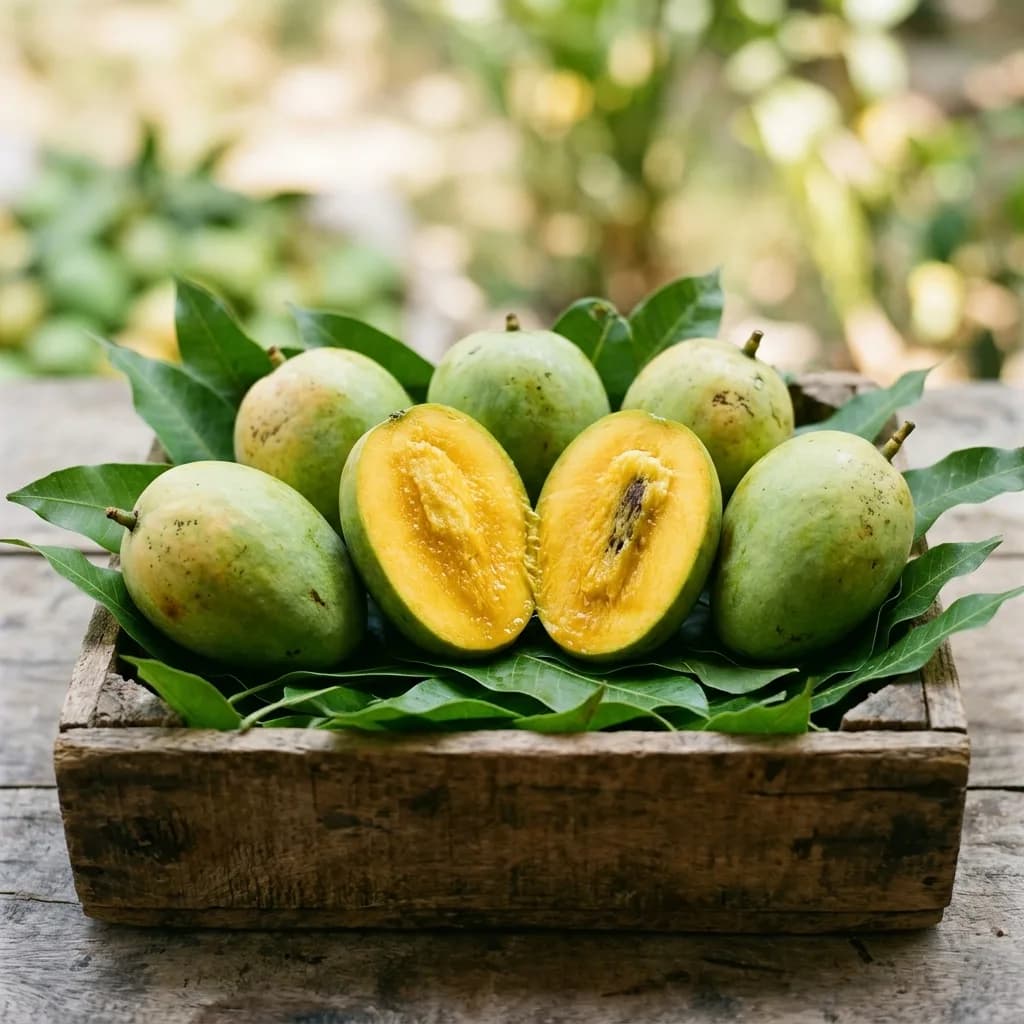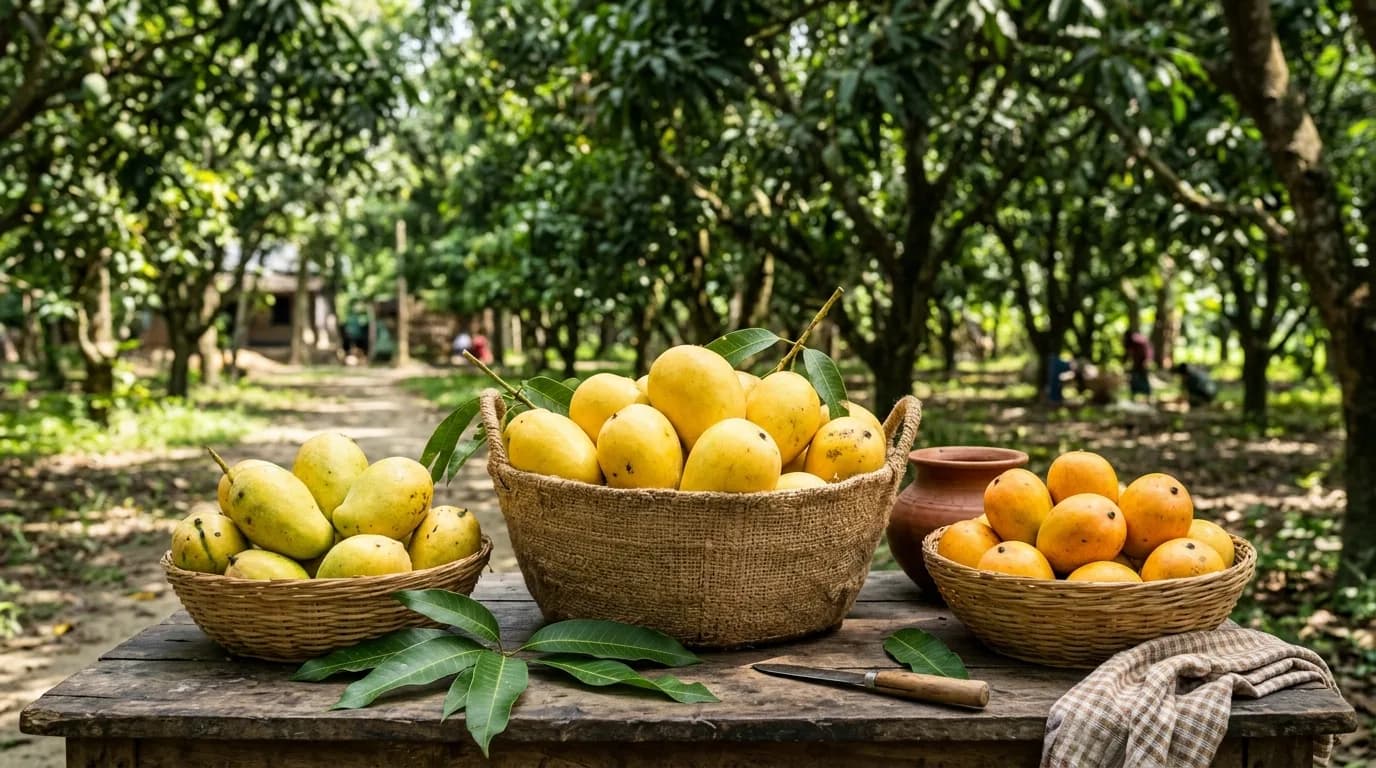

Anyone who has bitten into a ripe mango from the northern bank of the Padma knows the authentic Rajshahi mango taste immediately. You get a deep rush of aroma, followed by a thick, balanced sweetness that stays with you well after the season ends. That quality isn't an accident of marketing or local pride. It comes down to a specific regional environment, distinct seasonal weather patterns, and generations of disciplined orchard work[1].
Across Bangladesh, many districts bring in heavy harvests, but Rajshahi remains the acknowledged gold standard. To understand why this fruit tastes so rich, you have to look down into the red clay of the Barind Tract, up into the cloudless skies before the monsoon, and at the careful post-harvest work that protects each fruit from tree to table.
Soil Chemistry: The Red Alluvium of the Barind Tract
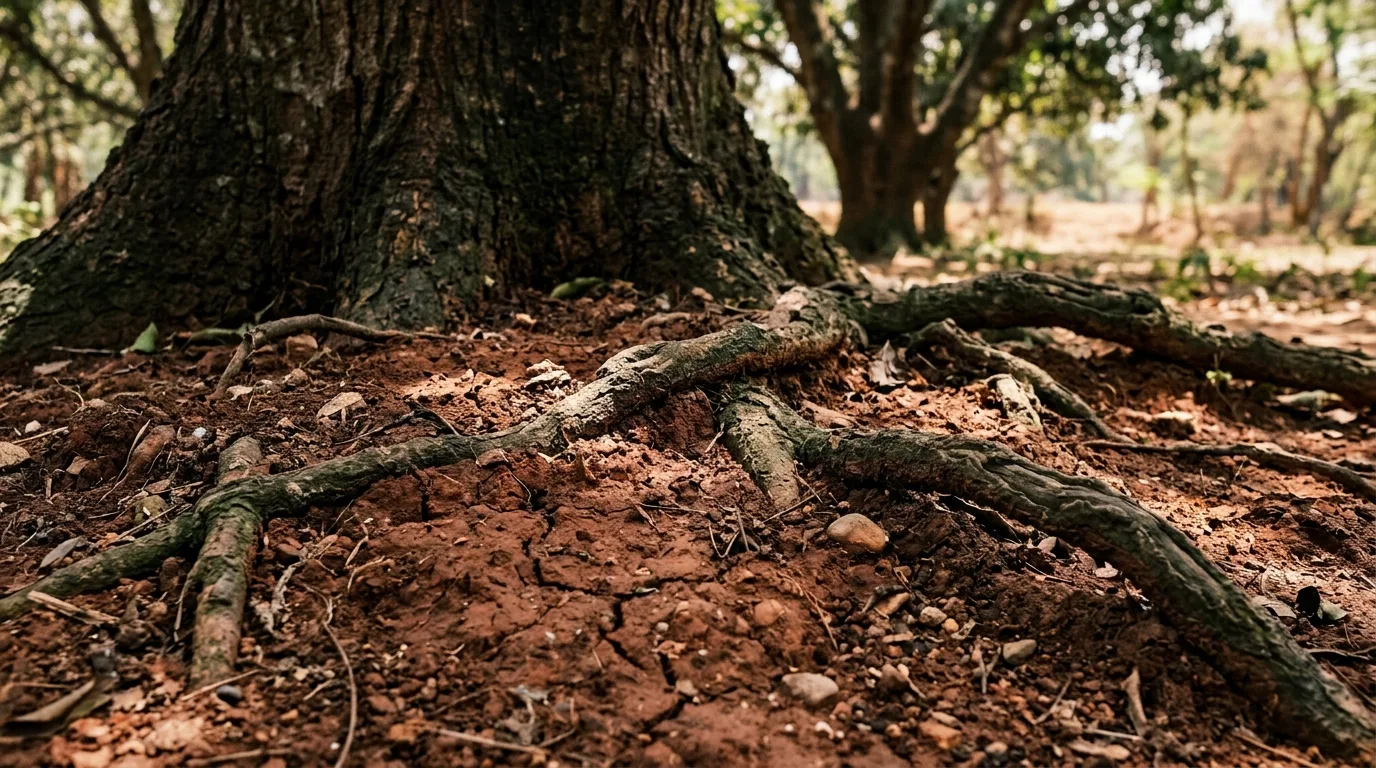
Flavor starts under the roots. The mango orchards in Rajshahi sit mainly on the High Barind Tract, an old physiographic terrace shaped by deep, well-drained Pleistocene alluvium[1]. Unlike the loose sandy silt along lower river floodplains, Barind soil is a silty clay loam with a slightly acidic to slightly alkaline pH between 6.3 and 7.9[1]. That balanced pH lets deep-rooted perennial trees draw up soil minerals easily.
More than that, Barind clay holds generous levels of potassium, ranging from 36 to 206 mg/kg[1],[2]. Potassium is the single most important nutrient for fruit quality. It moves carbohydrates straight from the leaves into the swelling fruit, powering the enzymes that turn raw starches into natural sucrose, glucose, and fructose as the mango matures on the branch[2]. Because trees feed on this potassium-rich clay loam, the fruit builds dense, firm pulp with lower water content—giving you concentrated flavor instead of a watery bite.
Weather Dynamics: Scorching Heat and Crisp Dry Winters
Good soil is only half the story. The subtropical climate of northern Bangladesh supplies the exact temperature shifts mangoes need. It begins in winter, from December through February, when night temperatures reliably fall below 15°C[3]. That dry, chilly stretch checks leafy growth and pushes the trees into a resting period, triggering heavy, uniform bloom across the canopy come spring[3].
Then, as the fruit sets and grows from March to May, the weather shifts hard. It turns bone-dry and fiercely hot. Daytime temperatures in Rajshahi regularly climb between 35°C and 42°C through April and May[3]. It can be punishing for people, but it is pure medicine for the orchards. Bright, uninterrupted sun drives active photosynthesis, while the dry stretch keeps the trees from drinking up too much ground water.
Down in coastal regions, early seasonal rain often waters down the sugars and natural acids in the flesh, leaving the fruit tasting flat. Rajshahi's dry heat does the opposite. By gently stressing the tree, it concentrates soluble sugars, citric acids, and delicate aroma compounds right inside the cells. That natural concentration is the real secret behind the Rajshahi mango taste.
Scientific Orchard Care: How Cultivation Shapes Rajshahi Mango Taste
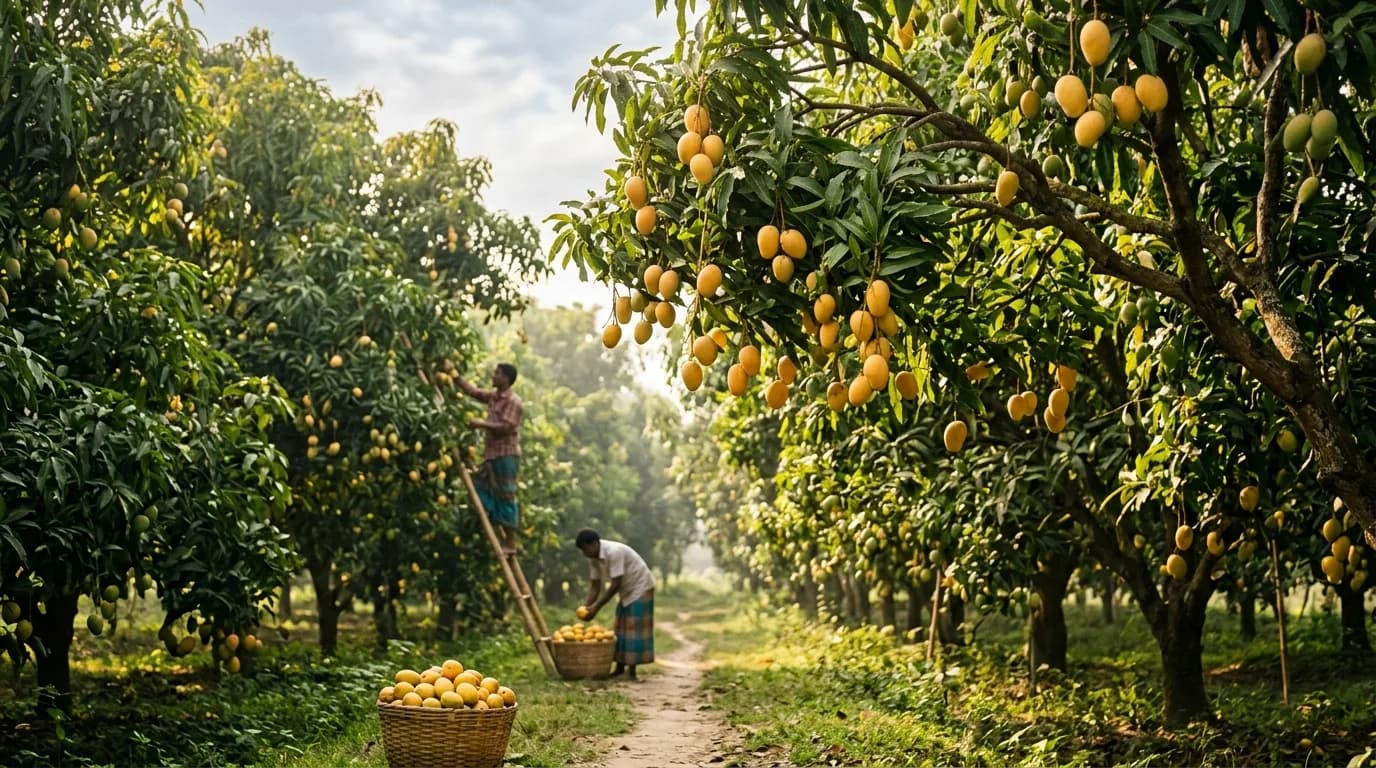
Nature provides the foundation, but careful orchard work brings it home. Over the past decade, growers in Rajshahi have largely moved away from untended traditional groves toward cleaner, scientific orchard management. The single biggest shift has been pre-harvest fruit bagging.
Roughly 35 to 45 days after the fruit sets, growers tie double-layered brown paper bags over each cluster on the branch. This simple physical cover protects the growing fruit from Oriental fruit flies (Bactrocera dorsalis) and fungal spots without requiring pesticide sprays near harvest. With zero late-season chemical sprays, the natural skin biome stays intact, letting each variety develop its genuine floral aroma without interference.
That care carries right into harvest. Modern growers use the protocol developed by the Bangladesh Agricultural Research Institute (BARI): dipping freshly picked, mature green fruit in clean water held at 55°C (±1°C) for five minutes. This quick hot water treatment cleans off surface anthracnose spores (Colletotrichum gloeosporioides) and fruit fly eggs, dropping post-harvest spoilage from around 30% to under 1% without leaving a trace of chemical residue.
Sugar Levels and Maturity: The Science Behind the Sweetness
Sweetness in fruit is measured on the Brix scale (°Bx), which tracks Total Soluble Solids (TSS) in the pulp. Most commercial table mangoes in the international market hover around 12° to 15° Brix. By comparison, mature Rajshahi mangoes picked at full maturity routinely read between 18° and 23° Brix[4].
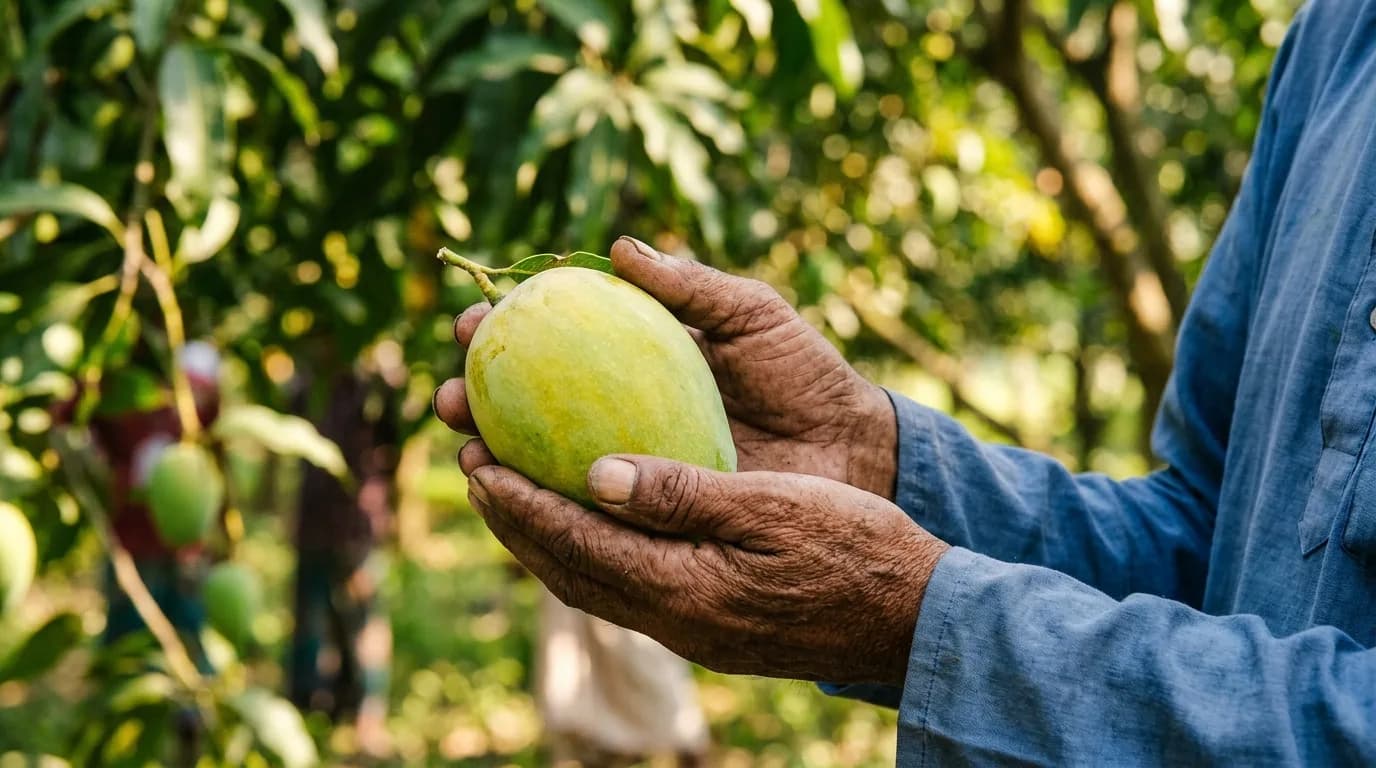
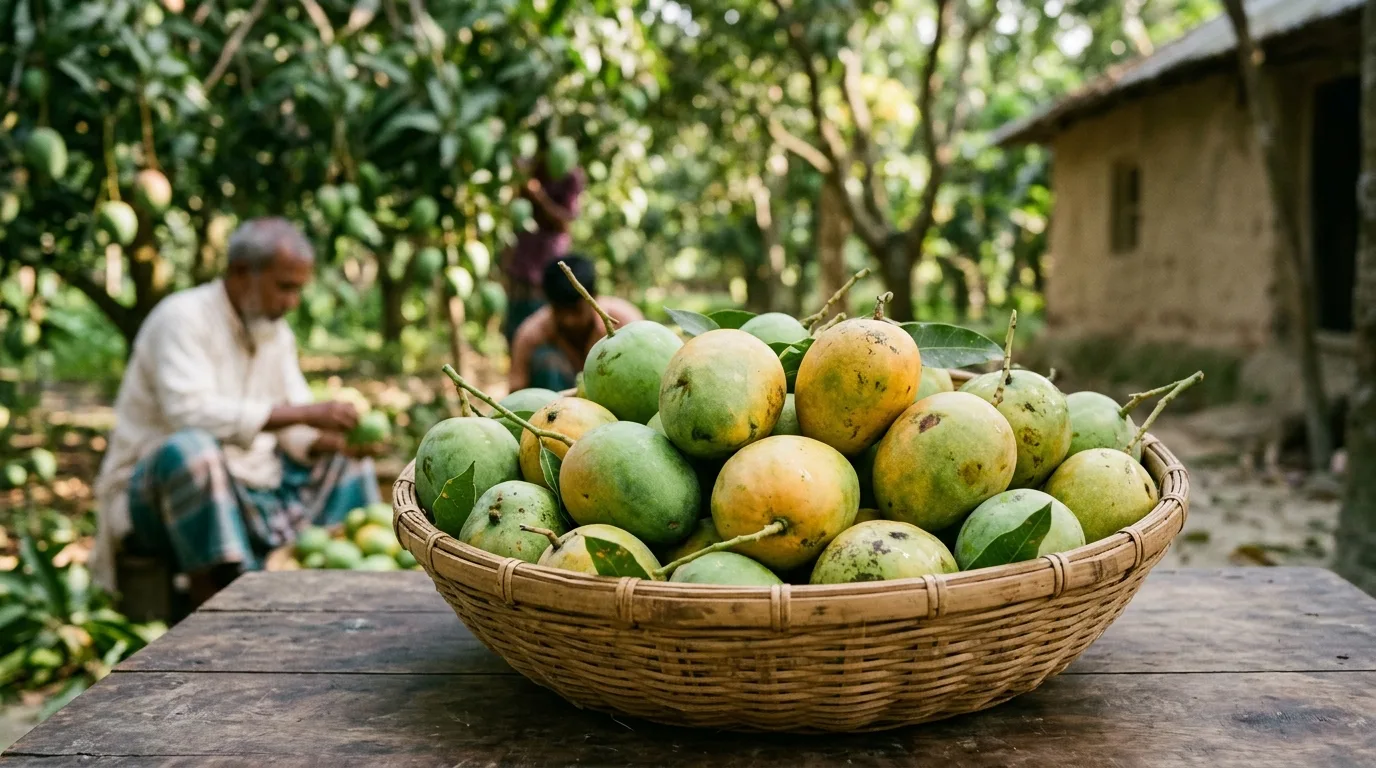
Timing on the tree is everything. Pick a mango too early and you shut down sugar production for good, leaving the fruit sour, chalky, and without its proper scent. To protect buyers and maintain standards, the Department of Agricultural Extension (DAE) sets an official harvest calendar for the district each year[4],[5],[6].
| Variety | DAE Harvest Date | Average Brix (°Bx) | Taste & Texture Profile |
|---|---|---|---|
| Gopalbhog | May 20–22 | 18°–19° | Early sweet variety; thin skin, smooth orange pulp with light floral notes[4],[5]. |
| Khirsapat (Himsagar) | May 25–30 | 19°–21° | Intensely aromatic, virtually fiberless, rich honeyed sweetness[4],[6]. |
| Langra | June 10 | 18°–20° | Green-skinned when ripe; bright balance of rich sweetness and zesty tartness[4],[5]. |
| Amrapali | June 15 | 20°–23° | Exceptionally dense sweetness, deep orange-red pulp, rich tropical aroma. |
| Fazli | June 15 | 16°–18° | Large fruit, firm and mildly sweet with pleasant, refreshing acidity. |
These dates make sure every variety—from our early Himsagar Mango in late May to the tangy-sweet Langra Mango in mid-June—gets enough time on the branch to turn stored starches into natural sucrose before anyone cuts the stem.
Debunking Myths: Ripening, Chemicals, and Kitchen Care
Rumors about chemical preservatives have troubled city shoppers for years, especially talk of formalin. Controlled tests by BARI and Bangladesh Agricultural University have repeatedly shown that formalin cannot preserve fresh fruit; it is far too volatile, evaporating quickly into the air rather than soaking into mango peel or pulp. The genuine threat in unregulated markets was always industrial calcium carbide, used to force green fruit to turn yellow early. Because commercial carbide carries trace impurities of arsenic and phosphorus hydride, it is strictly outlawed across Bangladesh.
Legitimate commercial ripening uses trace amounts of ethylene gas, the exact same ripening hormone plants produce on their own[2]. You can do the very same thing at home simply by keeping firm mangoes in a well-ventilated room at 22°C to 25°C. In that setting, natural ethylene builds up around the fruit and ripens it evenly over four to seven days.
Avoiding Post-Harvest Mistakes at Home
- Do not refrigerate raw mangoes: Putting unripe green fruit into a household fridge (usually running at 3°C to 5°C) triggers chilling injury. The cold permanently shuts down the ripening enzymes, leaving the skin a dull, mottled grey-green and the flesh sour and flat. Leave them out at room temperature until they soften.
- Wash off stem sap immediately: Mango latex carries strong, harsh terpenes. If sticky sap runs down the cheek of the fruit, it leaves black chemical burn marks on the skin. Always rinse freshly picked fruit under clean, running water.
- Refrigerate only when fully ripe: Once the mango yields to a soft touch and gives off its full aroma, you can store it at 12°C to 13°C for up to two weeks without hurting its flavor.
Taste Authentic Rajshahi Mangoes at Your Table
The red clay of the Barind, the harsh pre-monsoon sun, and patient harvest timing are what make Rajshahi mangoes so hard to beat. When you let an orchard run on its natural schedule, the fruit produces a depth of flavor that no shortcut can match.
At Rajshahir Mango, we have tended our own family orchards in Rajshahi since 2013. We wait for full tree maturity before picking, use paper bags on the branch instead of late chemical sprays, and pack clean, formalin-free fruit straight into sturdy 12 kg and 24 kg crates. Take a look at our seasonal offerings in our mango collection, and enjoy the true taste of Rajshahi delivered directly to your doorstep anywhere in Bangladesh.