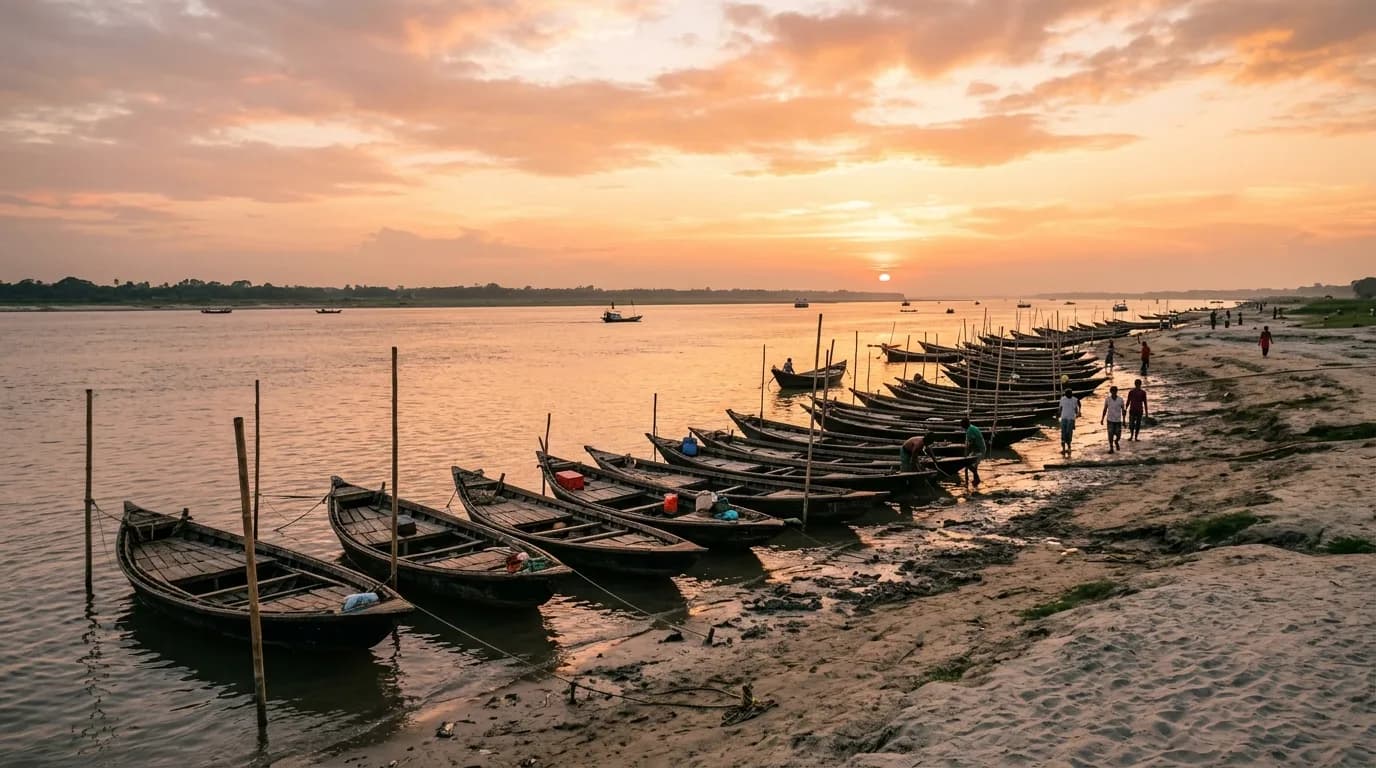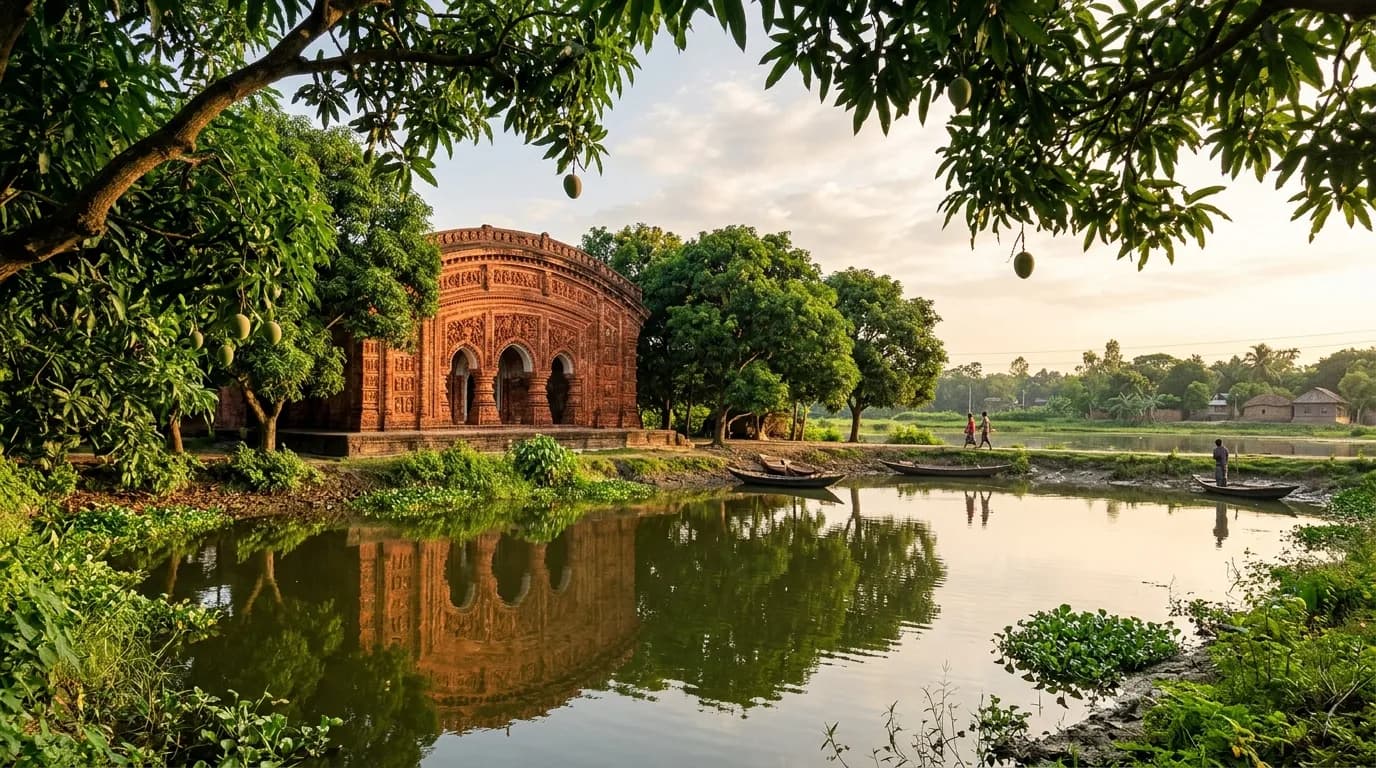
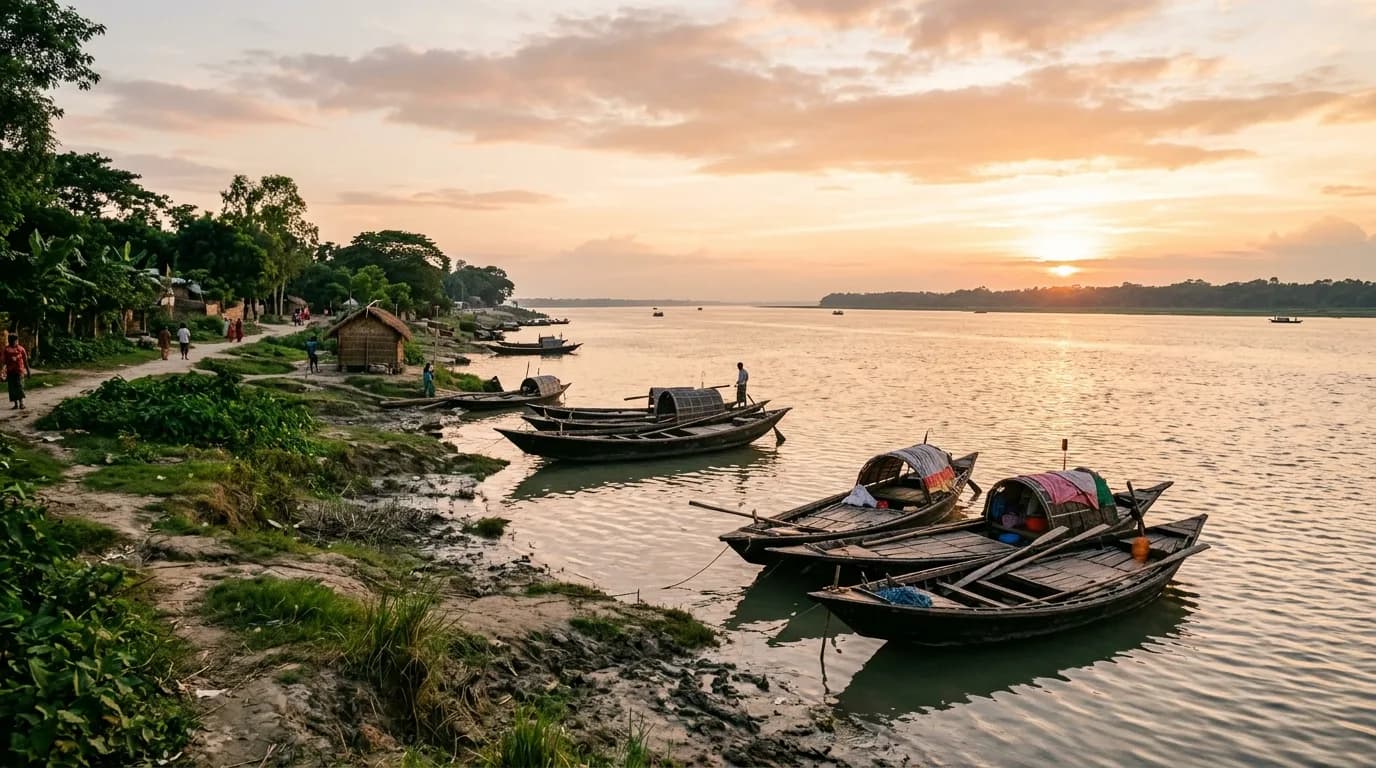
Rajshahi grew along the banks of the Padma, shifting over the centuries from a river trading outpost into one of Bengal's greatest centers of craftsmanship. For generations, this northern hub has balanced river administration with serious sericulture and rich agricultural land.
Known across Bangladesh as the "Silk City," Rajshahi combines broad river embankments, old colleges, and a living tradition of handcraft that continues uninterrupted today.
Rampur-Boalia to Silk Capital: The Foundations of Rajshahi History
Long before Rajshahi became a modern administrative division, locals called the settlement Rampur-Boalia[3]. Its position right on the Padma provided two natural advantages: fertile river silt for planting and an open water corridor into eastern and central Bengal[3].
Silk farming took hold in the wider region back in the 13th century[1]. Over the centuries that followed, local weavers produced a fine, shimmering cloth that earned renown across European and Asian trading routes as "Ganges silk" or "Bengal silk"[4].
By the 18th and early 19th centuries, European merchants took notice[3]. Dutch traders and later the British East India Company built commercial filatures in and around Rampur-Boalia, processing raw cocoons bought directly from village rearers[3],[4].
After the 1947 partition, the trade entered a more organized era. The state-run Rajshahi Silk Factory opened its doors in 1961[4]. To protect mulberry farmers and steady output, the Bangladesh Sericulture Development Board (BSDB) was set up in 1977–1978[4]. In 2021, that long lineage earned formal protection when Rajshahi Silk received national Geographical Indication (GI) status[5].
Why Rajshahi Is Called the Silk City: From Mulberry to Loom
Rajshahi didn't earn the title "Silk City" (or Reshom Nogori) simply by weaving thread bought elsewhere[1],[4]. Every stage of the process happens right here in the district, starting from the soil itself.
Mulberry Cultivation and Silkworm Rearing
The craft begins with mulberry trees (Morus alba), grown in rich river silt and the firmer clay of the Barind tract. Headquartered right in the city of Rajshahi, the Bangladesh Sericulture Research and Training Institute (BSRTI) bred hardier, high-yield varieties like BM-4, BM-5, and BM-11 so growers could feed hungry broods.
Farmers prune their mulberry plots two to three times each year, timing tender new leaf flushes with silkworm hatching dates. In Bangladesh, commercial rearing of the Bombyx mori caterpillar follows four to five distinct seasonal cycles[2]:
- Chaita: February to March
- Baishakhi: April to May
- Shrabani: July to August
- Agrahayani: November to December
Rearing silkworms takes patience and strict climate control. Farmers keep the larvae inside shaded rearing houses held at 22–25°C and 65–85% relative humidity. For 24 to 28 days, the caterpillars eat day and night on clean, dry mulberry leaves before finally spinning their cocoons.
The Delicate Craft of Reeling and Weaving
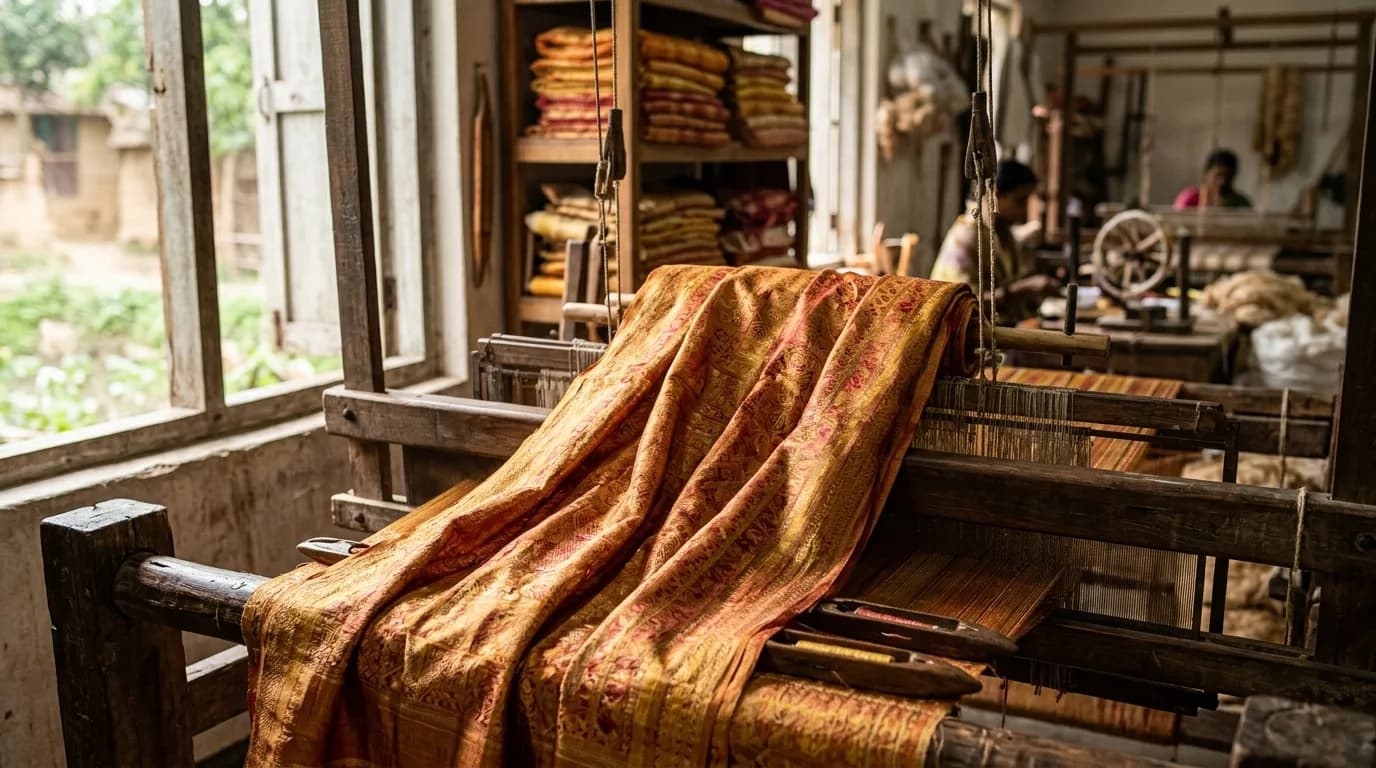
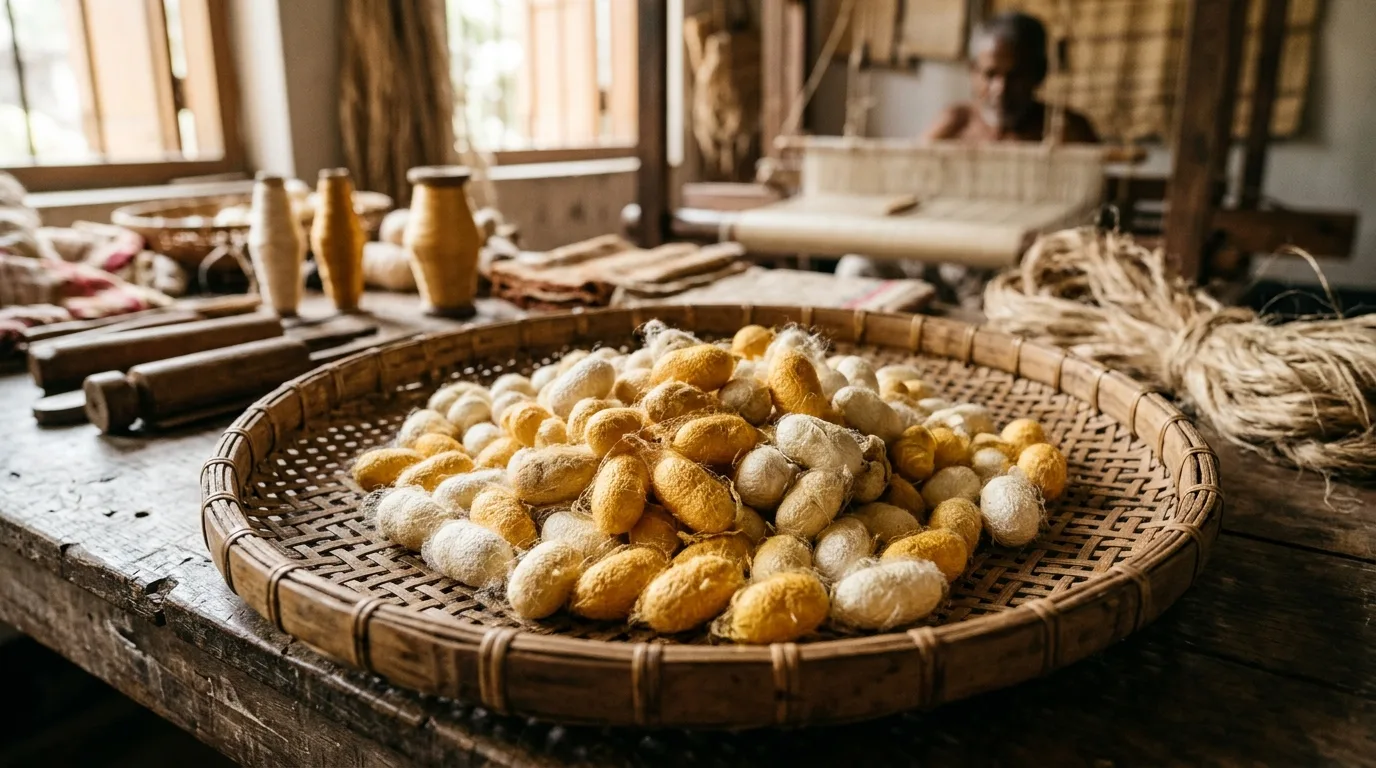
Once spinning finishes, workers gather the firm white or golden cocoons. The next step requires close temperature control. Workers immerse dried or stifled cocoons into water heated to 90–98°C for two to three minutes[2]. That short soak softens sericin—the natural gummy protein holding the cocoon together—without weakening the fibroin strands underneath[2].
Boil the water too hard and the sericin dissolves too quickly, tangling fine filaments into useless waste. Undercook it, and the gum stays tough, snapping threads during reeling. Skilled artisans draw filaments from several cocoons at once, twisting them into a single thread of dependable strength.
A few numbers show why authentic silk retains its value for decades[2]:
| Metric | Standard Production Output |
|---|---|
| Filament length per single cocoon | 600 to 1,000 meters continuous filament |
| Cocoons required for one silk saree | Approximately 5,000 intact cocoons |
| Commercial rearing seasons per year | 4 to 5 seasonal batches |
| Larval feeding period | 24 to 28 days of strict leaf feeding |
Weavers turn the reeled yarn into several distinct fabrics, including glossy Mulberry silk, light Endi silk, and textured Matka[2]. A genuine Rajshahi silk saree is easy to recognize: it carries a soft natural sheen, drapes cleanly, and holds up through years of wear.
Heritage Beyond Silk: The Barind Soil and Famous Orchards
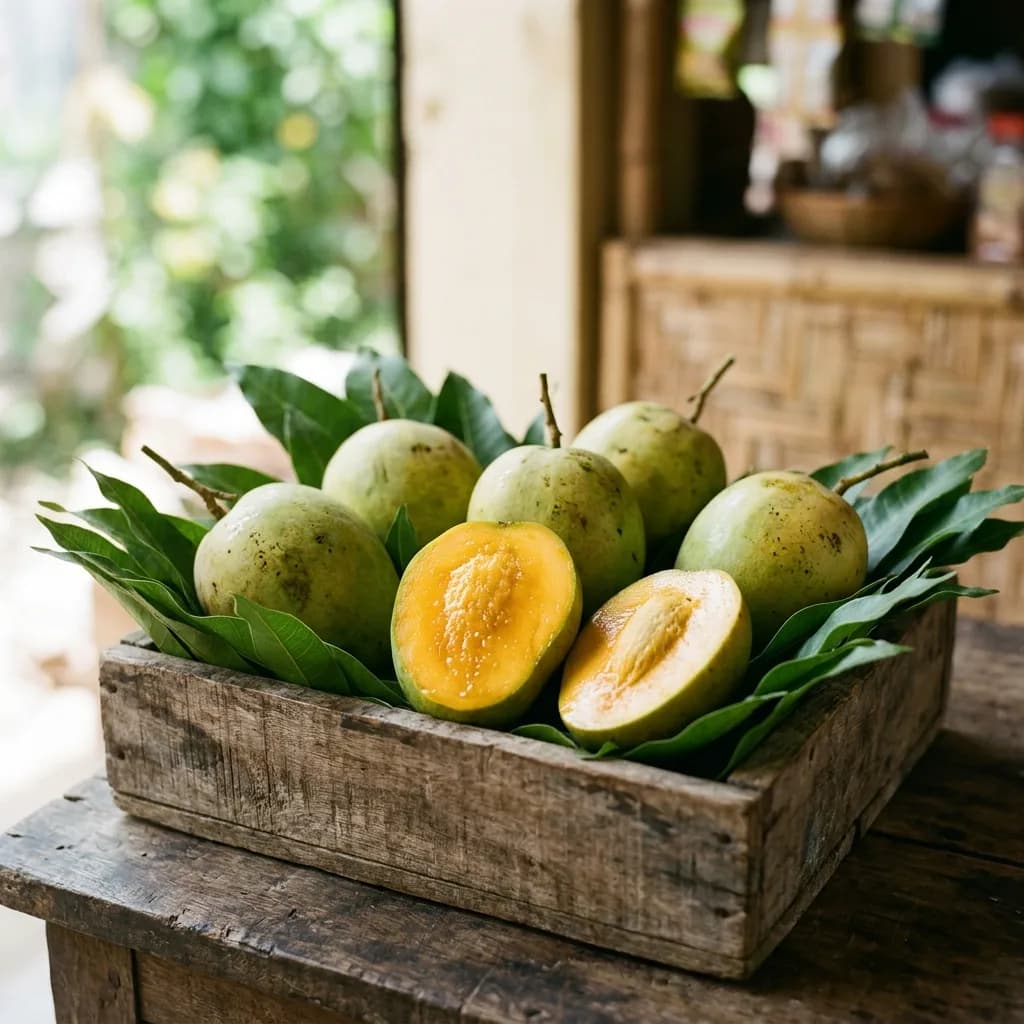
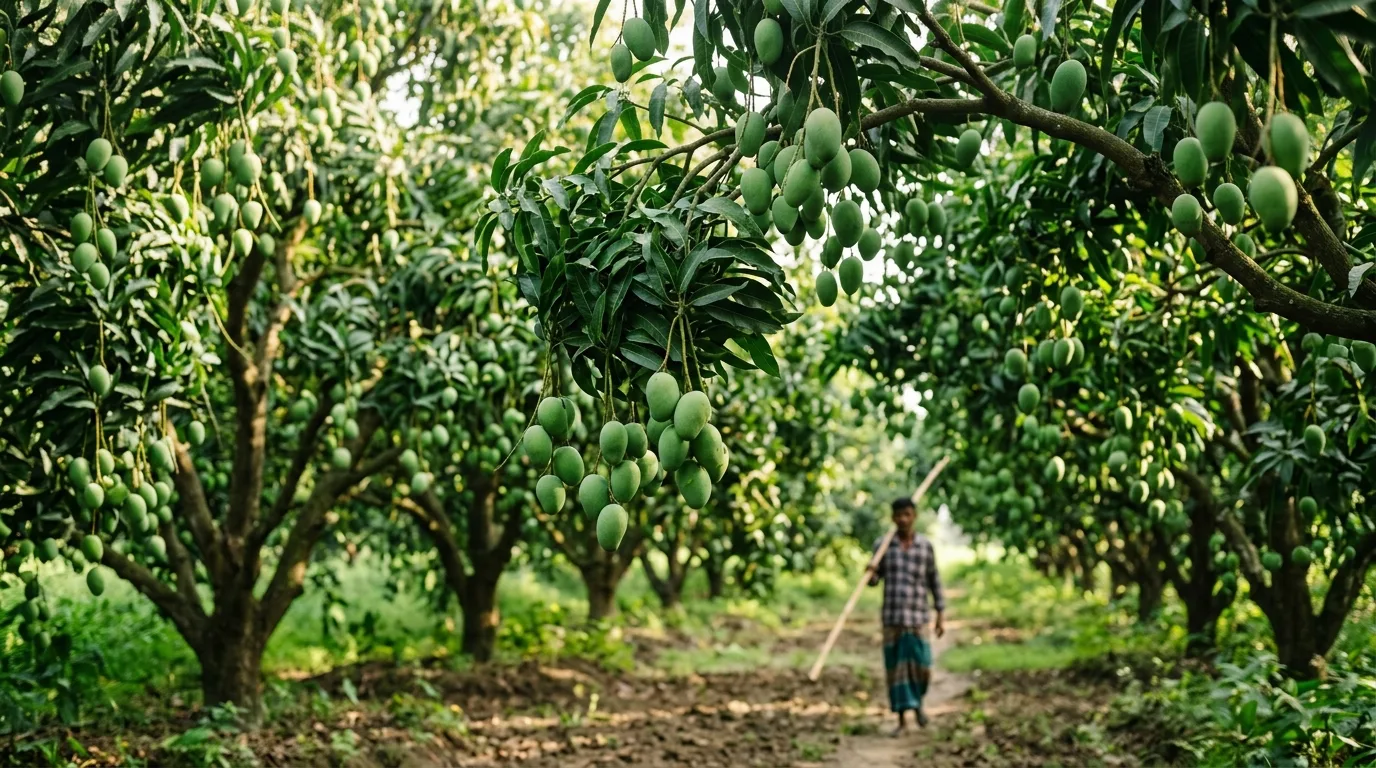
Silk gave the town its nickname, but anyone across Bangladesh knows Rajshahi just as well for its fruit. High sunshine hours, dry heat, and steady sub-soil moisture across the Barind tract make this region the country's primary fruit belt.
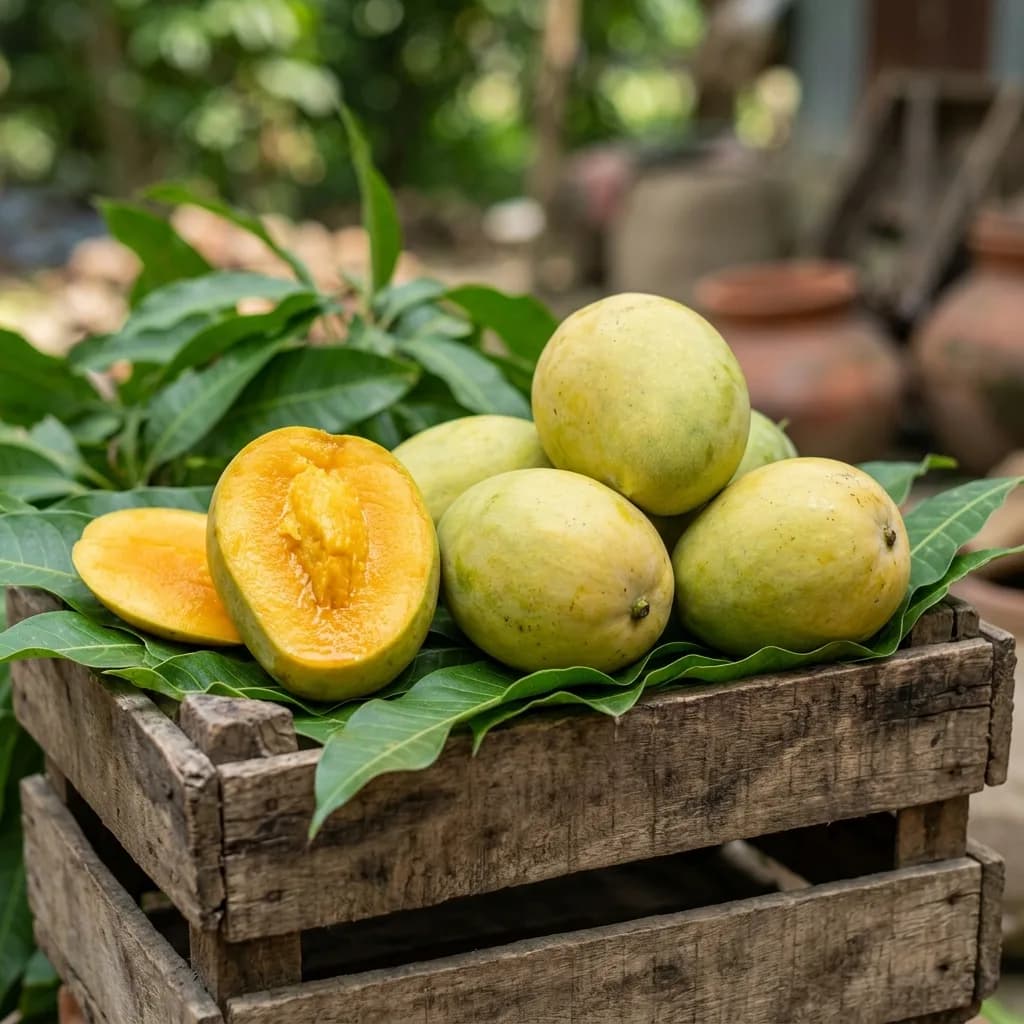
Like its silk, Rajshahi's major fruit varieties carry formal Geographical Indication (GI) status. Cultivars like Khirsapat and Fazli are protected heritage crops shared across the historical Rajshahi and Chapainawabganj belt[5],[6].
The harvest follows a predictable seasonal calendar across the river plain:
- Late May: Early table varieties like Gopalbhog mango mature on the tree, opening the commercial picking season.
- Early to Mid-June: The famous Premium Himsagar mango (Khirsapat) ripens, known for its deep sweetness and fiber-free flesh.
- Late June to July: Heavy late-season varieties like the large Fazli mango mature on the branch, closing out the summer cycle.
Practical Advice for Travelers Visiting Rajshahi
If you want to experience Rajshahi in person, pick your travel window deliberately. Between November and February, the days are dry and pleasantly cool—perfect for walking the Padma embankment, visiting sericulture research stations, or touring regional museums without the summer heat.
If you want to see the fruit harvest at full steam, visit between late May and early July instead. Wholesale mango hubs like Baneswar get going before dawn, jammed with rickshaws and wooden crates.
You can get to Rajshahi from Dhaka by intercity train or a short domestic flight. Check local train schedules, river cruise departures, and factory showroom hours before you head out, as seasonal timetables change during the year.
A Taste of Rajshahi Heritage Delivered to Your Door
At Rajshahir Mango, we work directly in this growing region. We have managed our own orchards in Rajshahi since 2013, sticking to responsible soil care and branch ripening, with zero calcium carbide or artificial ripening chemicals anywhere near our trees.
Between May and August, we hand-pick, grade, and pack fresh fruit into solid 12 kg and 24 kg crates. Working with reliable couriers, we deliver genuine, chemical-free fresh Rajshahi mangoes right to homes across Bangladesh, supported by cash-on-delivery, card, and mobile banking options.
Whether you visit Rajshahi to see the handlooms beside the Padma or order a crate of tree-ripened fruit to your door, this northern district's craft and agricultural roots speak for themselves.