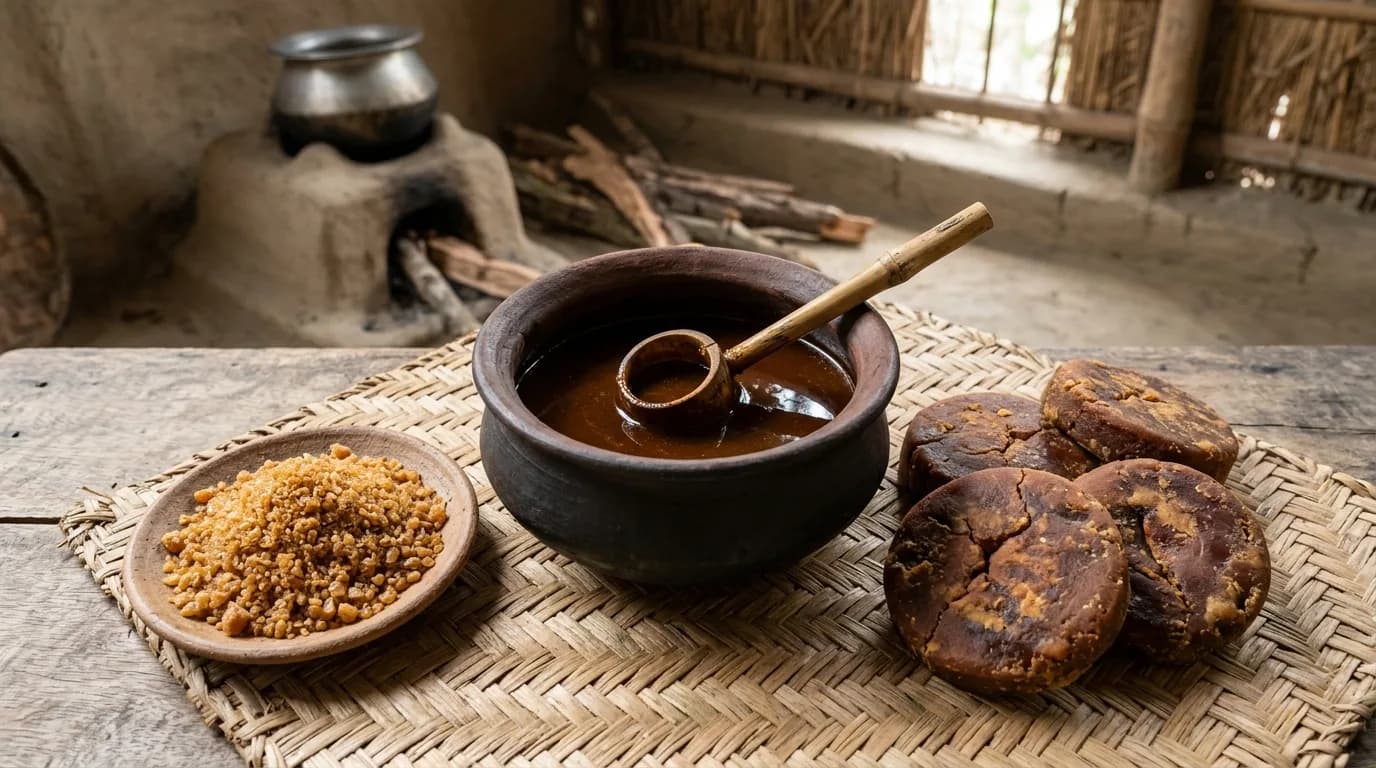
Moving fragile artisanal food out of our home district takes practical engineering and patience. Safe packaging for food delivery across Bangladesh has been a daily focus for us ever since we started boxing up seasonal harvests in Rajshahi over ten years ago. When a box reaches your door, you want the deep fragrance of fresh date molasses or raw honey, not a sticky parcel wrecked by potholed highways.
Inter-district courier routes here are tough on packages. Shipments bounce along regional highways, get shifted between sorting depots, and pass through multiple loading crews before reaching a suburban flat or a village home. Here is how we pack traditional clay pots and glass jars so they turn up at your door in the exact condition they left our packing tables.
Preparing the Vessels: Why Clay and Glass Need Specific Containment
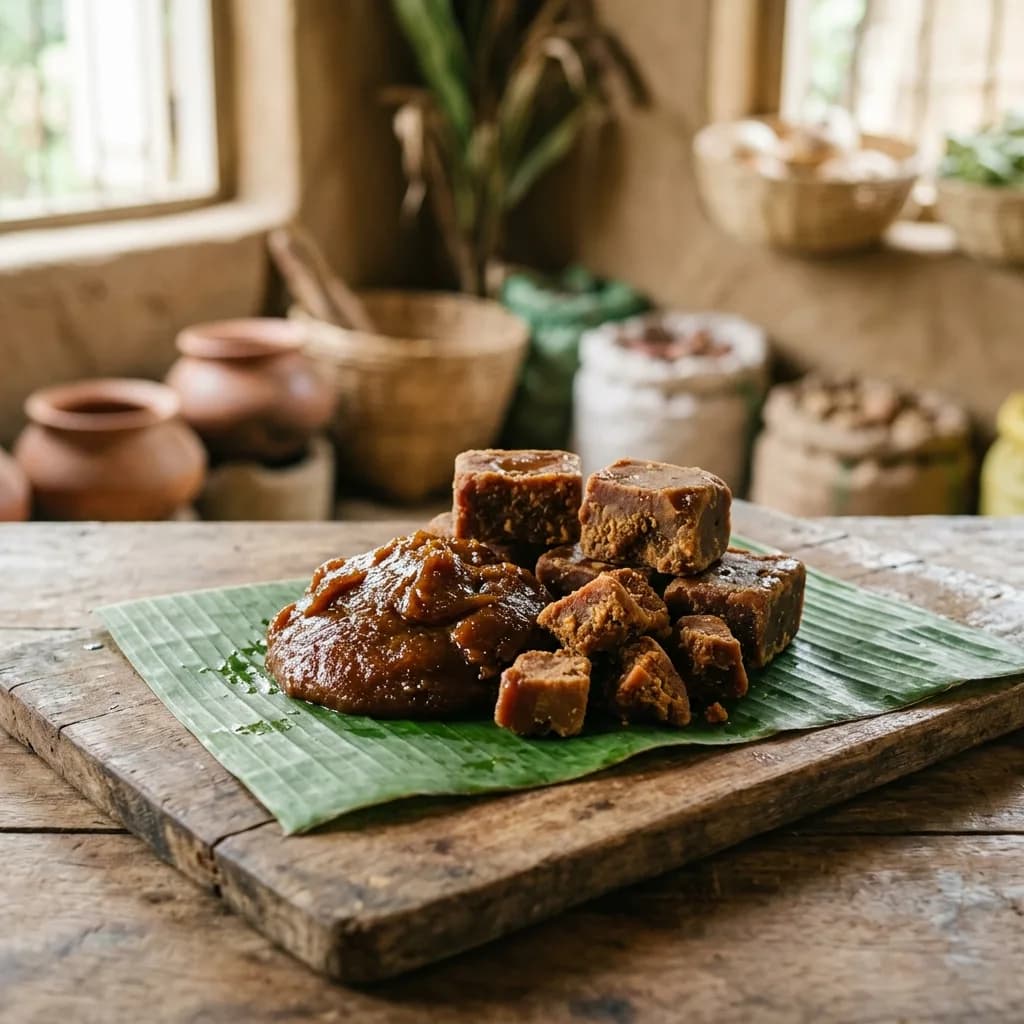
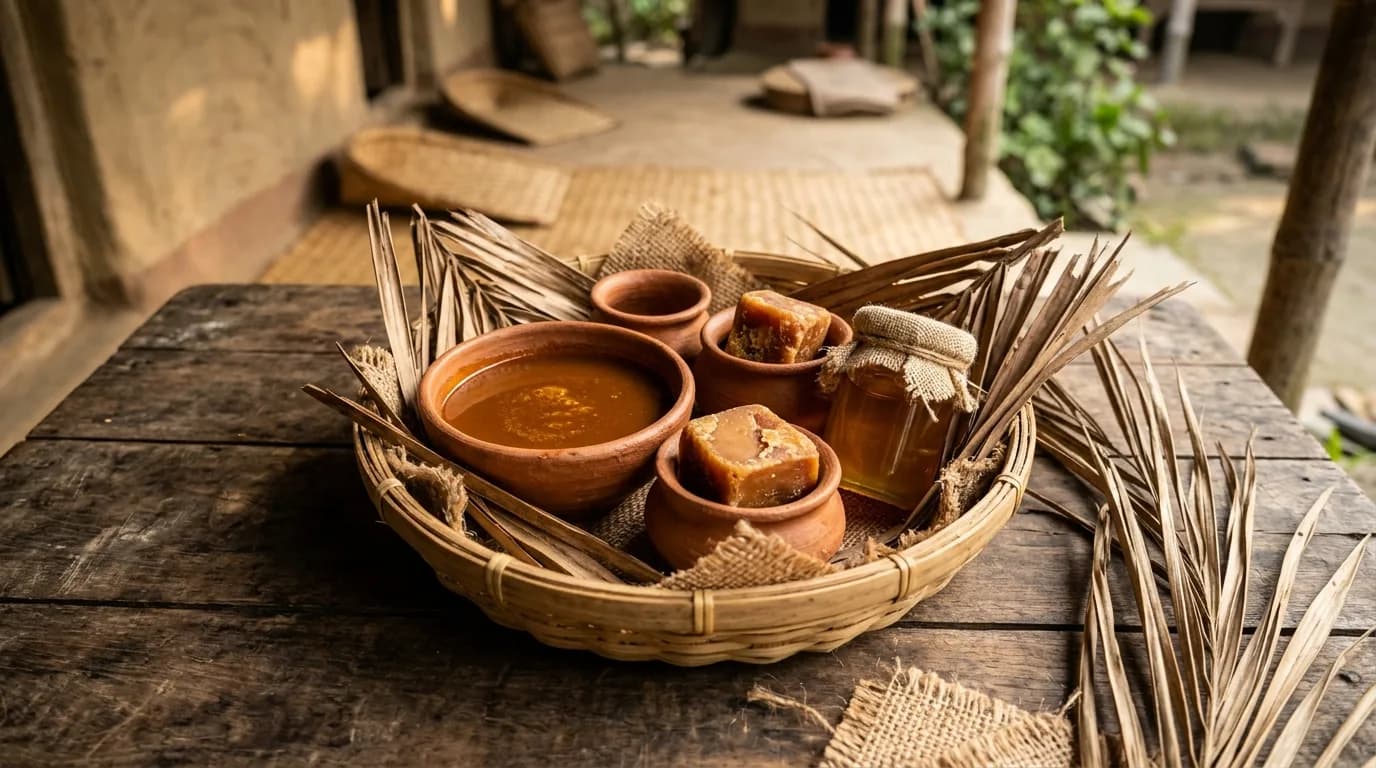
Good packaging starts well before any bubble wrap comes out. The container itself has to be sound from the start. For unpasteurized liquid molasses, traditional clay pots (*মাটির হাঁড়ি*) must be hard-fired terracotta with zero hairline cracks[2]. Low-fired or porous clay drinks up moisture and natural oils; that softens the walls until they fail under the weight of stacked cargo[2].
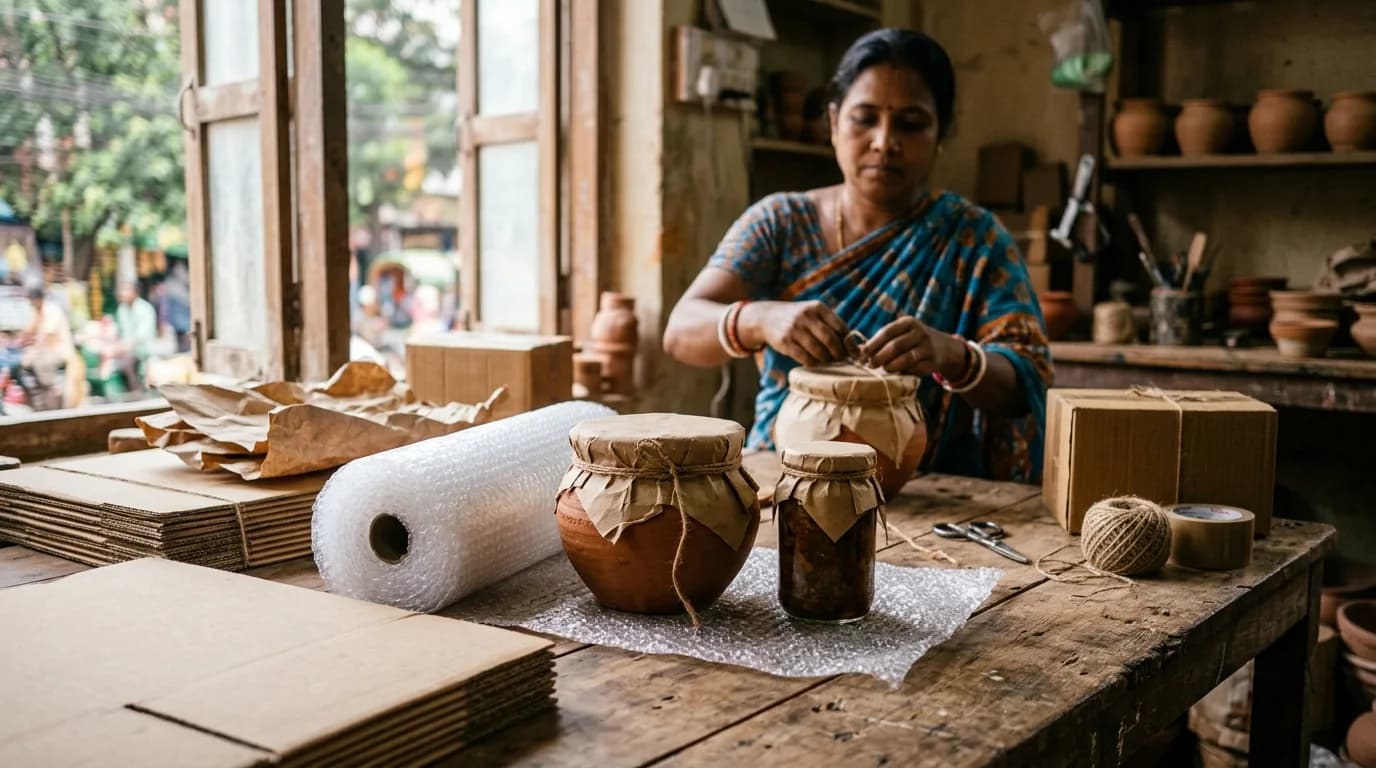
To seal each pot, we cover the mouth with greaseproof parchment paper, set a fitted clay lid over it, and bind the neck firmly with cross-tied jute twine and PVC shrink-bands. This creates a solid mechanical hold that stops the lid from sliding sideways when delivery vans swerve or brake.
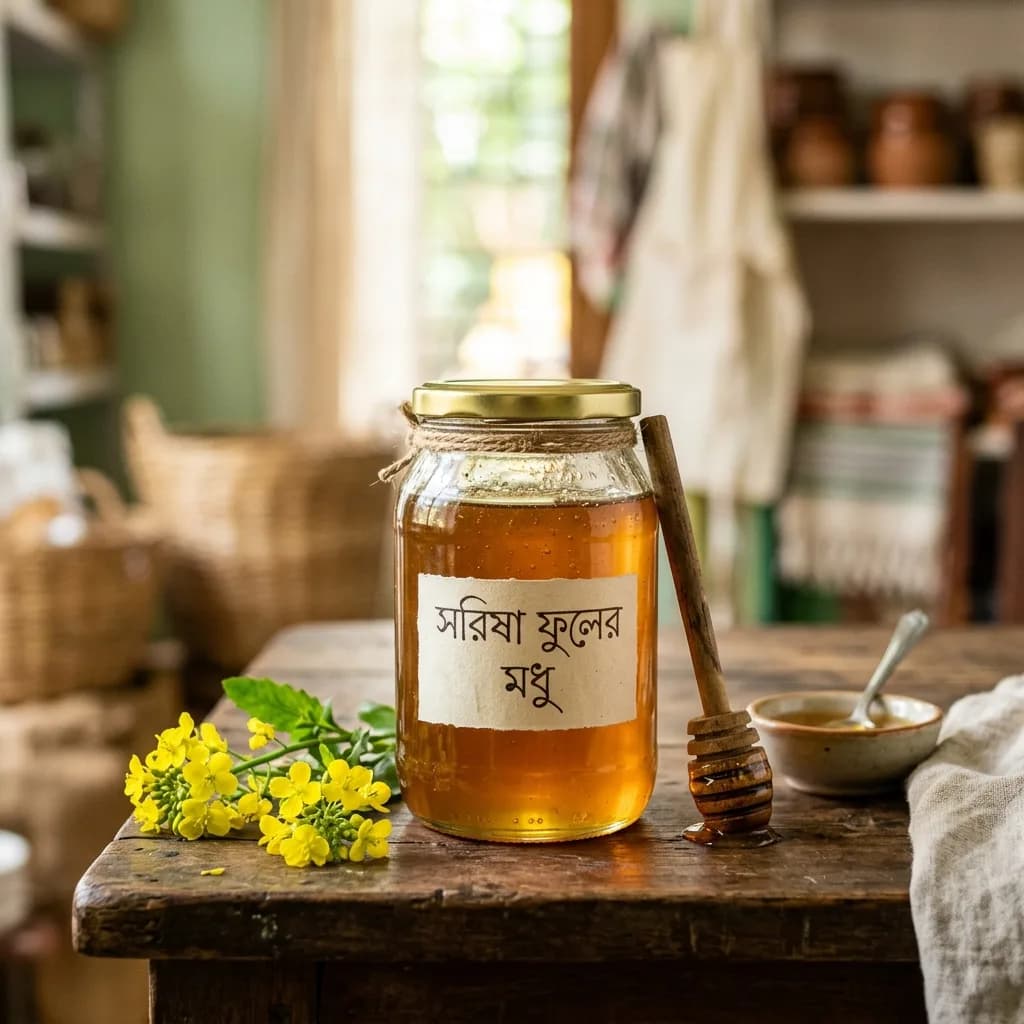
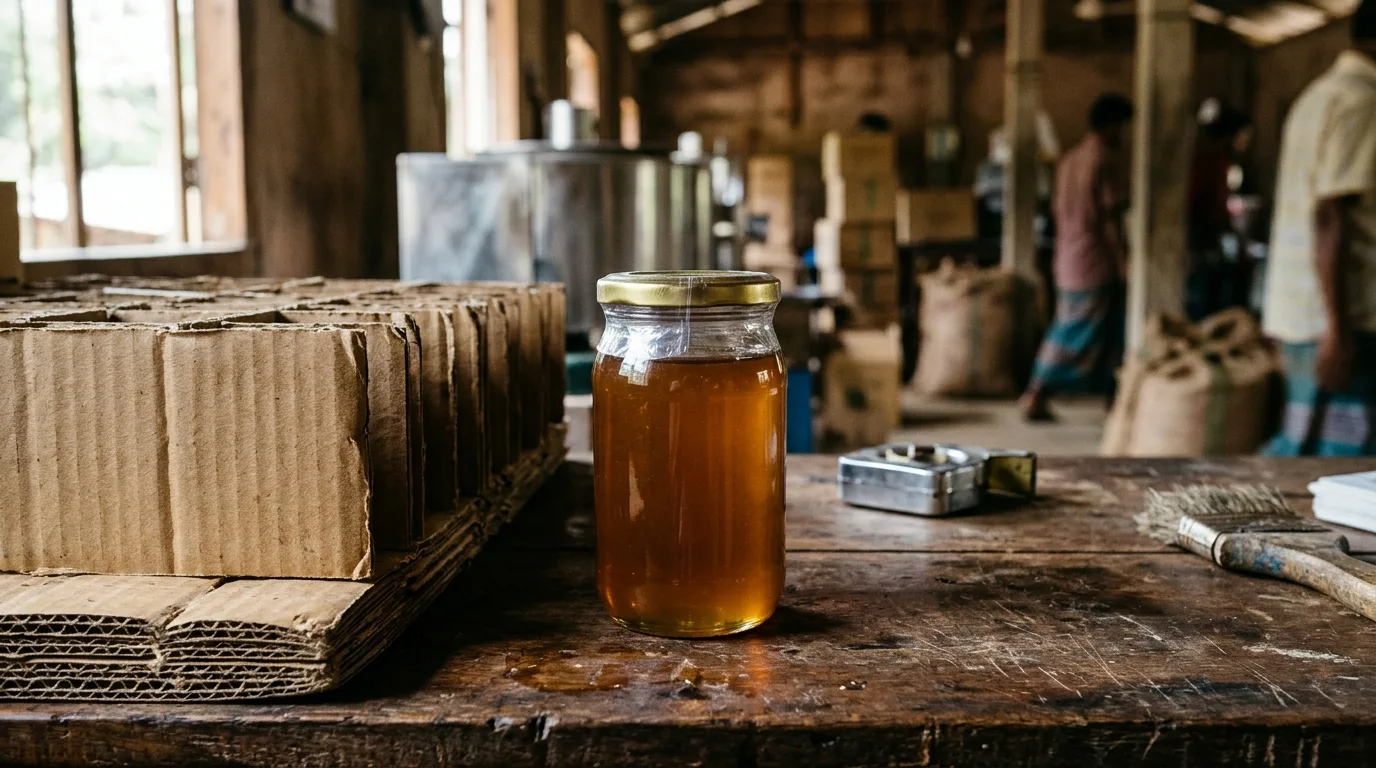
Glass needs just as much attention. We use food-grade flint glass jars with lug-finish twist-off metal lids lined with plastisol[1],[3]. On items like our Mustard Flower Honey or seasonal mustard oil pickles, we add tamper-evident neck bands or inner seals to stop thin liquids from weeping past the threads under engine vibration[3].
Thermal expansion matters just as much in our climate. On hot afternoons, air inside a sealed jar warms up and expands. We always leave 10% to 12% headspace at the top of every glass container. That empty pocket absorbs internal pressure so it won't force the seal open or stress the glass.
Cushioning Standards: Safe Packaging for Food Delivery Across Bangladesh
Moving parcels from northern districts down to Chattogram, Barisal, or Sylhet means hours of constant road vibration. Brittle containers cannot be allowed to take that impact directly, and hard surfaces should never touch inside a carton.
Each pot and jar gets wrapped in 3 to 5 layers of heavy 10 mm bubble wrap or slipped into a tubular air column bag. We never pack glass against glass or clay against clay. Instead, 3-ply corrugated partition dividers keep every single jar inside its own cushioned bay.
| Packaging Layer | Standard Vulnerability in Transit | Our Safe Delivery Specification |
|---|---|---|
| Primary Enclosure | Hairline cracks or leaking lids under road vibration | Hard-fired clay[2] or flint glass[3] with 10%–12% expansion headspace |
| Liquid Containment | Fluid leaks ruining outer shipping cartons | Individual 50–75 micron food-grade LDPE ziplock barrier pouches |
| Impact Cushioning | Shock transfer through flattened paper layers | 3 to 5 layers of 10 mm bubble wrap or custom tubular air column sleeves |
| Internal Box Dividers | Jars clinking and fracturing against one another | 3-ply corrugated partitions isolating every separate container |
| Outer Shipper Carton | Box crushing under heavy parcel consolidation | 5-ply double-wall box with 10–12 kg/cm² burst test rating |
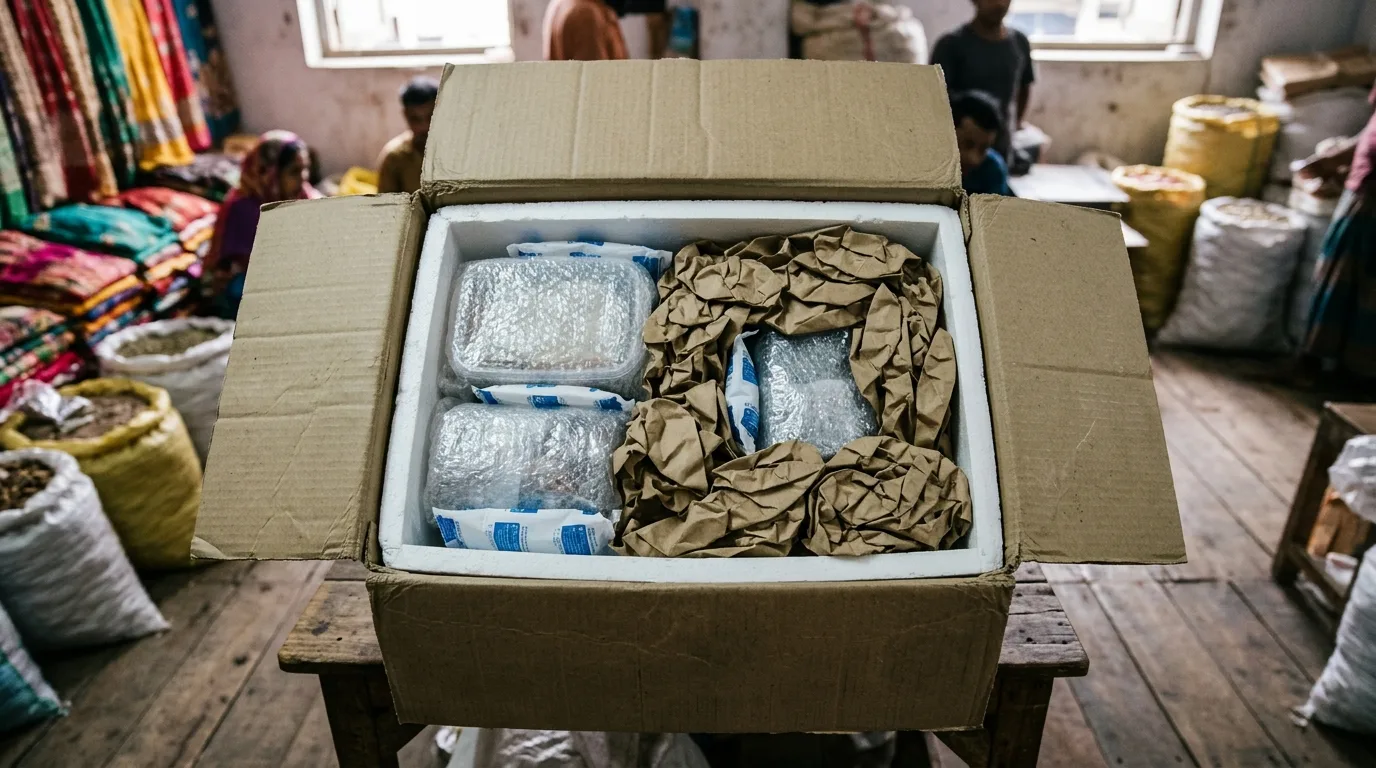
Outer cartons are where many parcels fail. Flimsy single-wall cardboard simply folds when stacked under heavy sacks in courier vans. We use 5-ply double-wall corrugated cartons rated for a minimum burst strength of 10 to 12 kg/cm². Any leftover space inside gets packed tight with crumpled Kraft paper or expanded polystyrene blocks, so nothing shifts if the box ends up upside down.
Secondary Leak Containment and Temperature Controls
Even with good glass, rough handling happens. If thick syrup leaks into a carton, the corrugated paper softens and the bottom drops right out. To prevent that, every wrapped jar or pot goes inside its own 50 to 75 micron food-grade LDPE ziplock pouch before the bubble wrap goes on. If a lid takes an unexpected knock, any seepage stays locked inside the plastic sleeve.
Heat is another constant reality in our delta climate. From March through October, midday temperatures regularly reach 32°C to 38°C, paired with humidity over 80%. That kind of heat spoils fresh food quickly. Winter, running from November through February with cooler temperatures between 15°C and 24°C, is the safe window for moving unpasteurized liquid jaggery at ambient temperature.
When we send temperature-sensitive items like dairy sweets or local curd, passive cooling is mandatory. We line the carton with 1-inch expanded polystyrene (EPS) boards and pack food-grade gel ice packs that have spent a full 24 hours at -18°C. We maintain at least a 1:2 ice-to-product weight ratio, which keeps internal box temperatures under 10°C over 24-hour express runs.
Transit Timing and Operational Discipline
Solid materials only solve half the problem; dispatch timing handles the rest. Standard hub-and-spoke couriers in Bangladesh usually take 48 to 72 hours for inter-district drops. High-moisture foods simply cannot sit in a transit hub for three days without losing their texture or leaking whey.
For perishable batches, we rely on counter-to-counter bus cargo or direct overnight express couriers to get parcels delivered within 24 hours. A major operational mistake is shipping on Thursday afternoon. Boxes sent right before Friday often sit stuck in district depots through weekend slowdowns, soaking up warehouse heat. We plan dispatches around that.
We also stay away from shortcuts like crumpled newspaper. Newsprint flattens out after a few miles of road chatter, passing road shocks straight to the pottery. Bright, high-contrast "Fragile" (*ভঙ্গুর*) and "This Side Up" stickers go on at least two sides of every parcel so handlers at sorting hubs know what they are holding.
Enjoy Authentic Regional Flavours Safely at Home
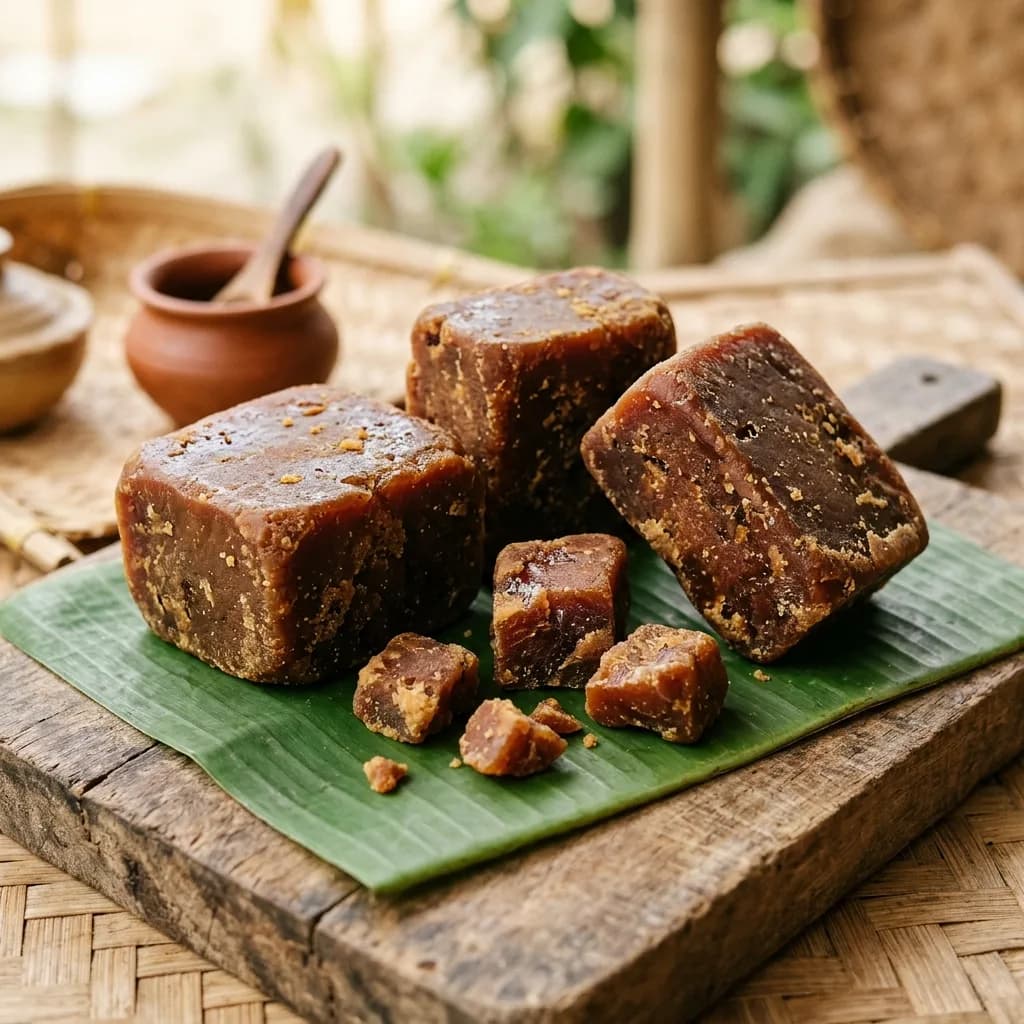
Bringing regional food from the orchards and fields of Rajshahi to family tables in Dhaka, Khulna, or Cox's Bazar is work we treat with genuine care. Whether it is our Premium Date Palm Liquid Jaggery (Jhola Gur) in traditional clay or seasonal jars from our kitchen, proper packing bridges the distance reliably.
You should never have to gamble on cracked clay or messy parcels when ordering traditional food. Take a look at our seasonal harvest through our handcrafted jaggery selection and enjoy genuine, unadulterated food from the countryside, delivered whole and clean to your door.