
In rural Bengal, early summer always announces itself the same way: the sharp sting of ground mustard in the air and trays of green mango slices drying under the courtyard sun. A good green mango pickle recipe isn't just about saving seasonal sourness for later. It is simple, dependable food science—balancing salt, sun, and spices so your achar stays sound for up to two years without a pinch of chemical preservatives.
Selecting the Right Fruit: Variety, Firmness, and Harvest Timing
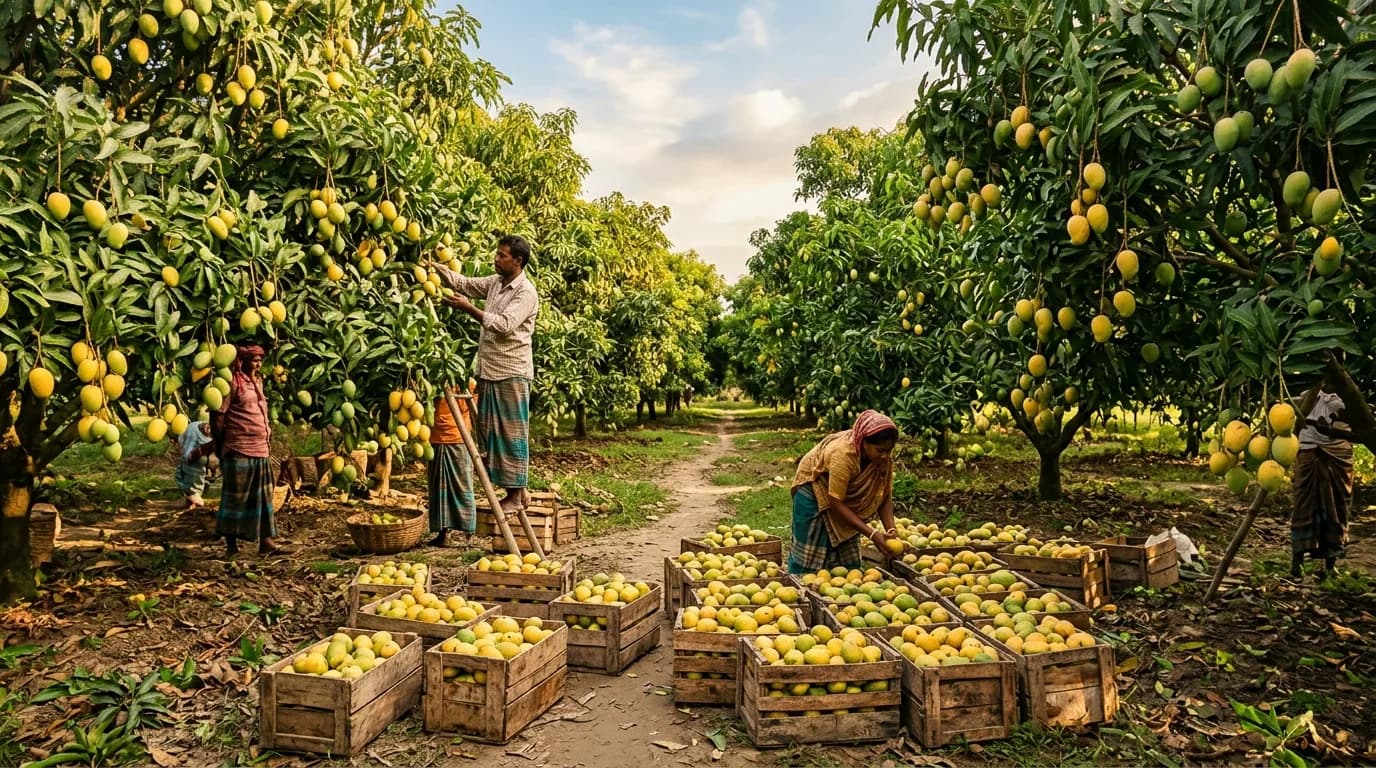
Good achar starts while the fruit is still hanging on the branch. Across Bangladesh, our main pickling window runs from mid-Chaitra into early Jyeshtha, roughly late March through May[2]. In April, sudden Kalboishakhi storms knock green, rock-hard mangoes straight out of the canopy[4]. Orchard families call these windfall fruit jhorer aam, and they gather them immediately for pickling before the afternoon heat softens the pulp.
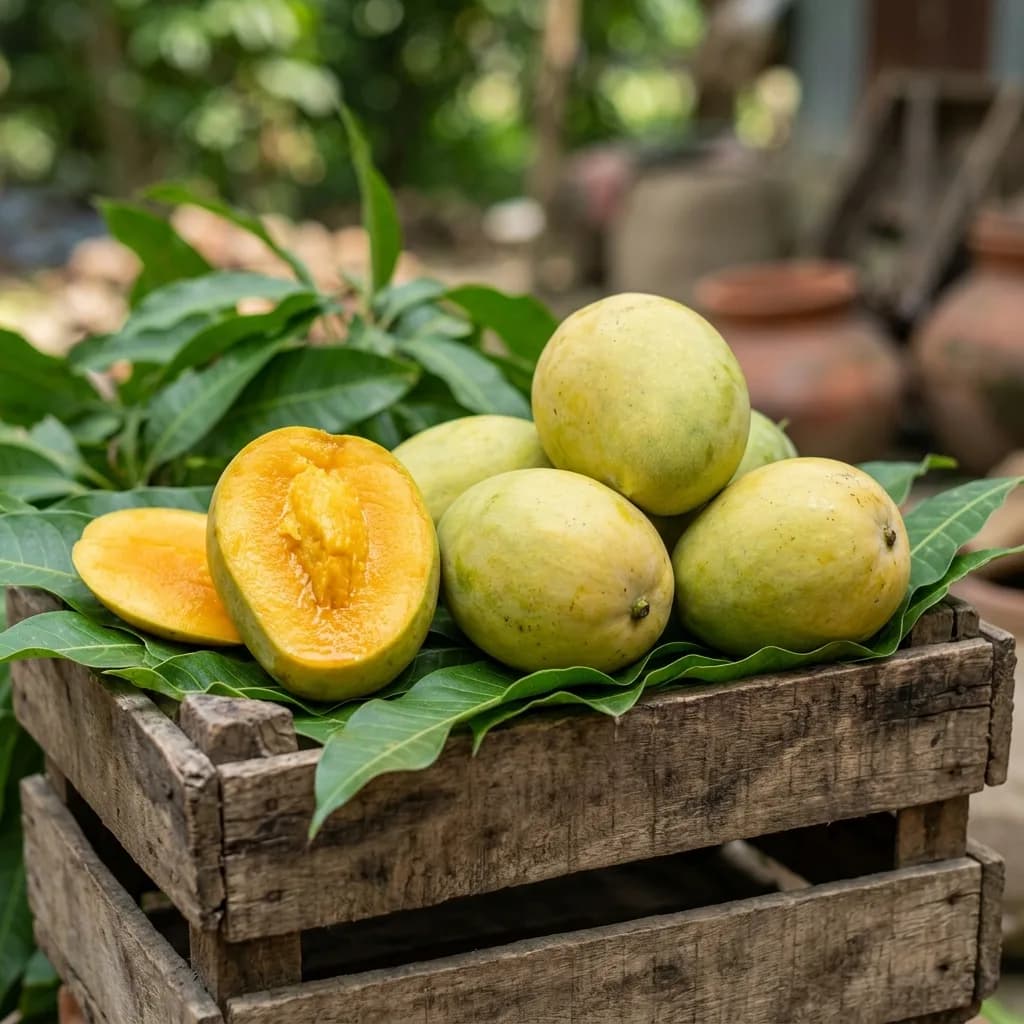
If you want pieces that keep their snap rather than turning to mush, pick your variety with care. Local seedling mangoes—what we call Deshi or Gooti aam—are best. Their flesh is dense, packed with natural pectin, and free of stringy fiber[5]. Later in the season, around July and August, unripe fruit from late varieties like Fazli and Ashwina gives you another chance to put up a fresh batch[1].
Check every mango before you slice it. The flesh inside should be clean white or pale cream, with no trace of yellow. Once yellow creeps in, sugars have started forming, which can kick off fermentation in the jar and spoil the oil. The inner stone (aanti) also needs to be hard and fully formed so the cut wedges hold their shape once submerged in oil[5].
The Curing Process: Salt Osmosis and Solar Dehydration
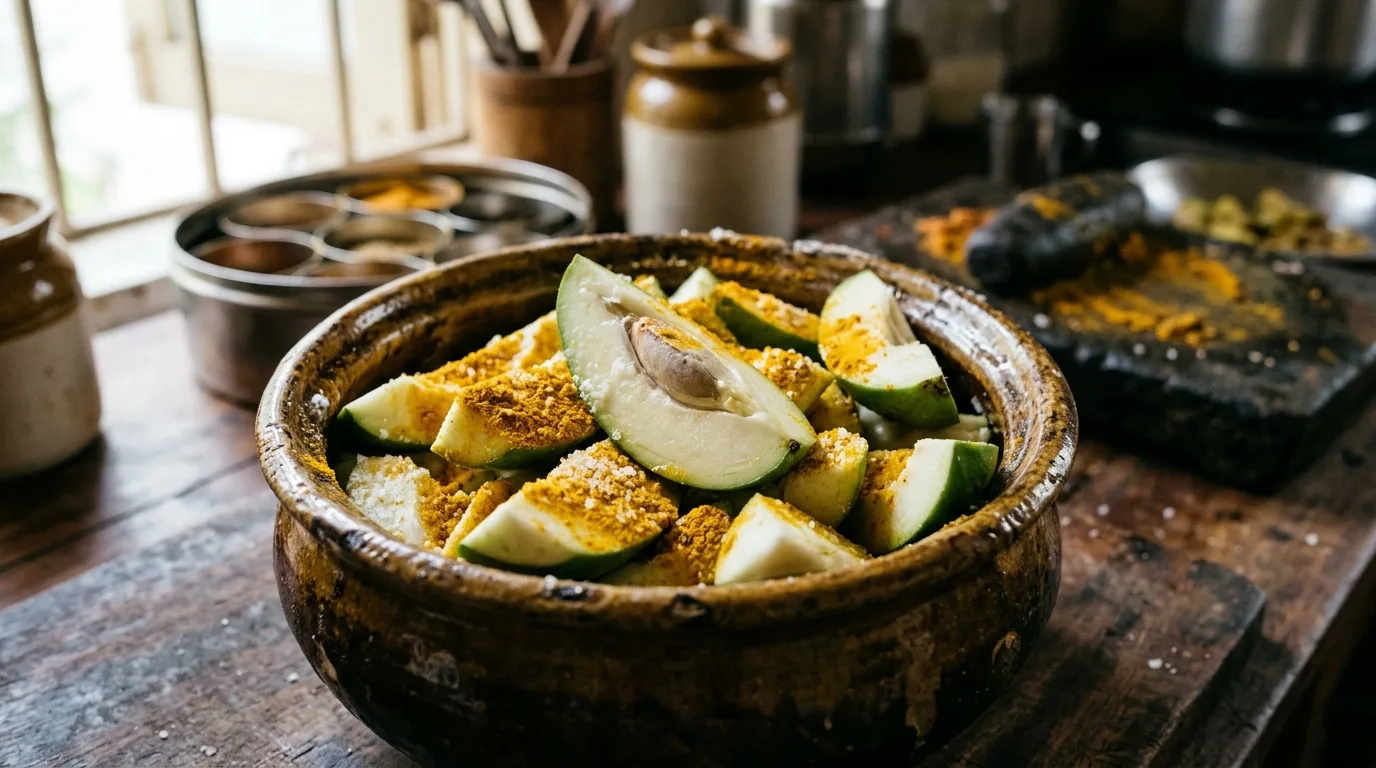
Unbound water is the enemy of any oil pickle. In our villages, we always cure the fruit in two steps before it ever touches mustard oil. First, toss the chopped mangoes with coarse salt and turmeric. The salt pulls out internal water by osmosis, while the turmeric protects against surface bacteria.
Weigh out 80 to 100 grams of non-iodized salt (about 8 to 10 percent of the fruit's weight) and 10 to 15 grams of turmeric powder for every kilogram of sliced green mango. Mix everything well in an earthenware bowl or a non-reactive food-grade pot, then let it sit for six to eight hours. By the end, the mangoes will be resting in a deep pool of sour liquid.
Pour off every drop of that liquid. Lay the pieces out on clean muslin over woven bamboo trays (kula) and set them in strong sun for one or two days—aim for six to eight hours of direct heat each day. You aren't trying to turn the fruit into tough leather. The goal is simply to drop surface moisture by 20 to 30 percent. You'll know they're ready when the peel looks slightly wrinkled, but the flesh stays bendable and feels dry to the touch.
Step-by-Step Green Mango Pickle Recipe and Spice Blending
Once your mango pieces are sun-cured, you're ready to mix. Here are the exact proportions for one kilogram of cut green mango:
| Ingredient | Amount (per 1 kg mango) | Purpose |
|---|---|---|
| Raw green mango wedges | 1,000 g | Firm, high-pectin fruit base |
| Pre-cure salt | 80–100 g | Osmotic moisture reduction |
| Turmeric powder | 10–15 g | Natural antimicrobial and color |
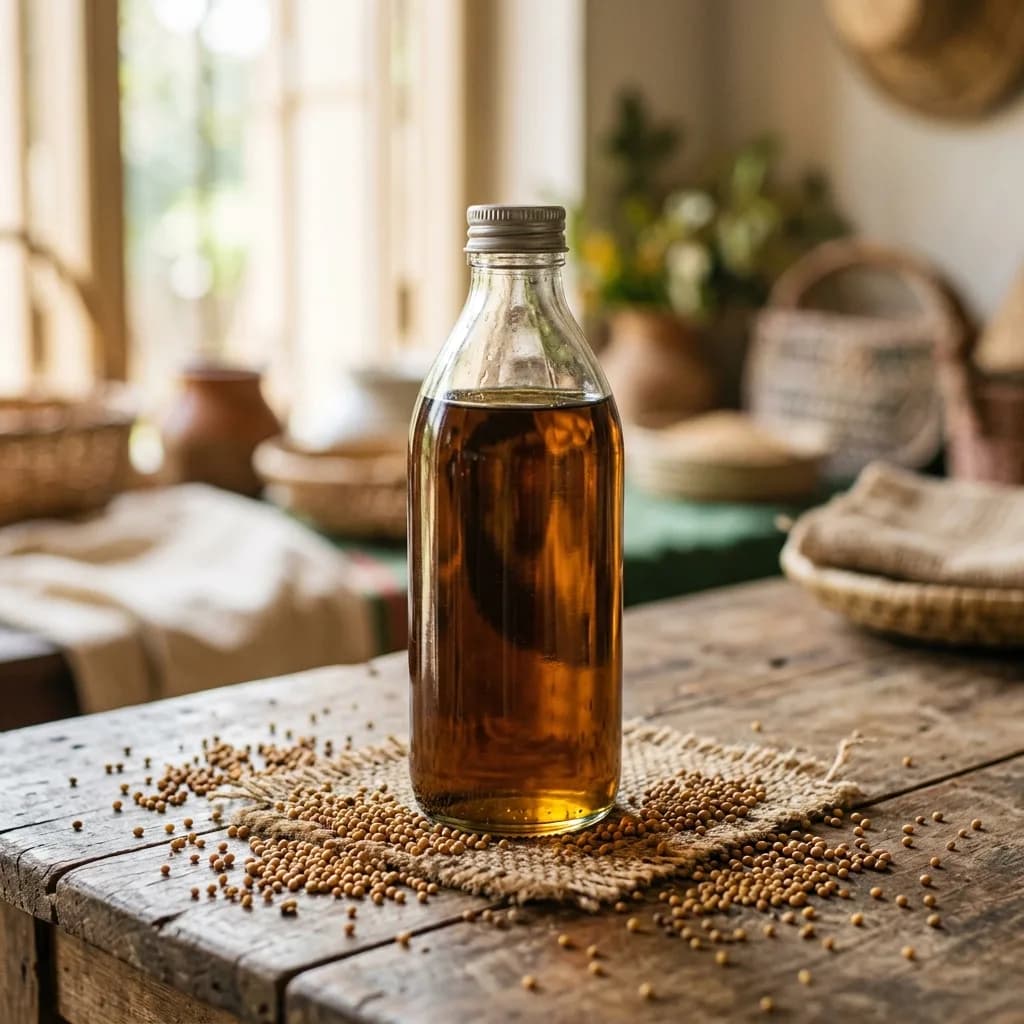
| Cold-pressed mustard oil | 300–400 ml | Preservation barrier and pungent base |
| Bengali Panch Phoron | 25 g | Aromatic five-spice profile |
| Yellow mustard seeds (ground) | 30 g | Pungency and gravy consistency |
| Dried red chillies | 6–8 whole pieces | Dry heat and visual appeal |
Preparing the Oil and Tempering
Pour cold-pressed mustard oil into a heavy pan and bring it to a gentle smoke, around 200°C to 220°C. Don't skip this step: heating cooks out tiny water droplets that naturally sit in fresh-pressed seed oils, and it softens the harsher sulfur bite of the mustard. Take the pan off the heat and let the oil cool down until it is warm to the touch.
Coarsely grind about two-thirds of your Panch Phoron (the mix of fenugreek, nigella, fennel, cumin, and radhuni or black mustard), leaving the rest whole. Give the seeds a quick dry-roast in a skillet until they smell warm and nutty. Stir them straight into the warm oil along with the ground yellow mustard. The residual heat blooms the essential oils without burning anything.
Add your dried mango pieces to the spiced oil. Using a bone-dry wooden spoon, stir thoroughly until every side of every piece carries a coat of oil and spices.
Food Safety, pH Chemistry, and Shelf Life
Village achar techniques work because they make the jar completely unlivable for harmful bacteria. Sour green mangoes from our orchards in Rajshahi naturally sit at an acidic pH between 2.5 and 3.5, driven by citric and malic acids. A finished pickle needs to stay below pH 4.0, comfortably under the critical pH 4.6 threshold where dangerous spores like Clostridium botulinum fail to grow.
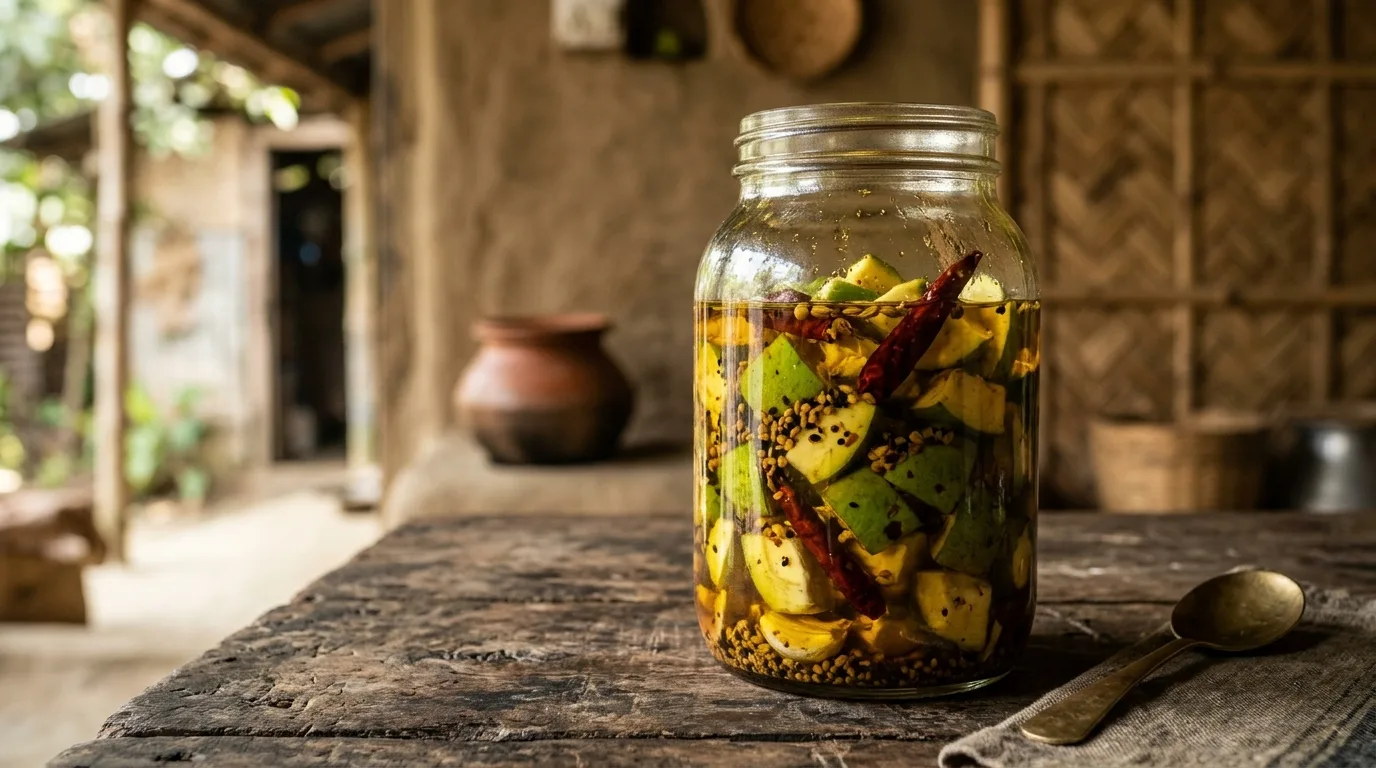
Mustard oil adds another layer of defense through allyl isothiocyanate (AITC), a natural antimicrobial compound that works alongside salt to keep spoilage organisms down. Pack your mangoes into clean, thoroughly dried glass jars, pressing them down gently to work out trapped air bubbles.
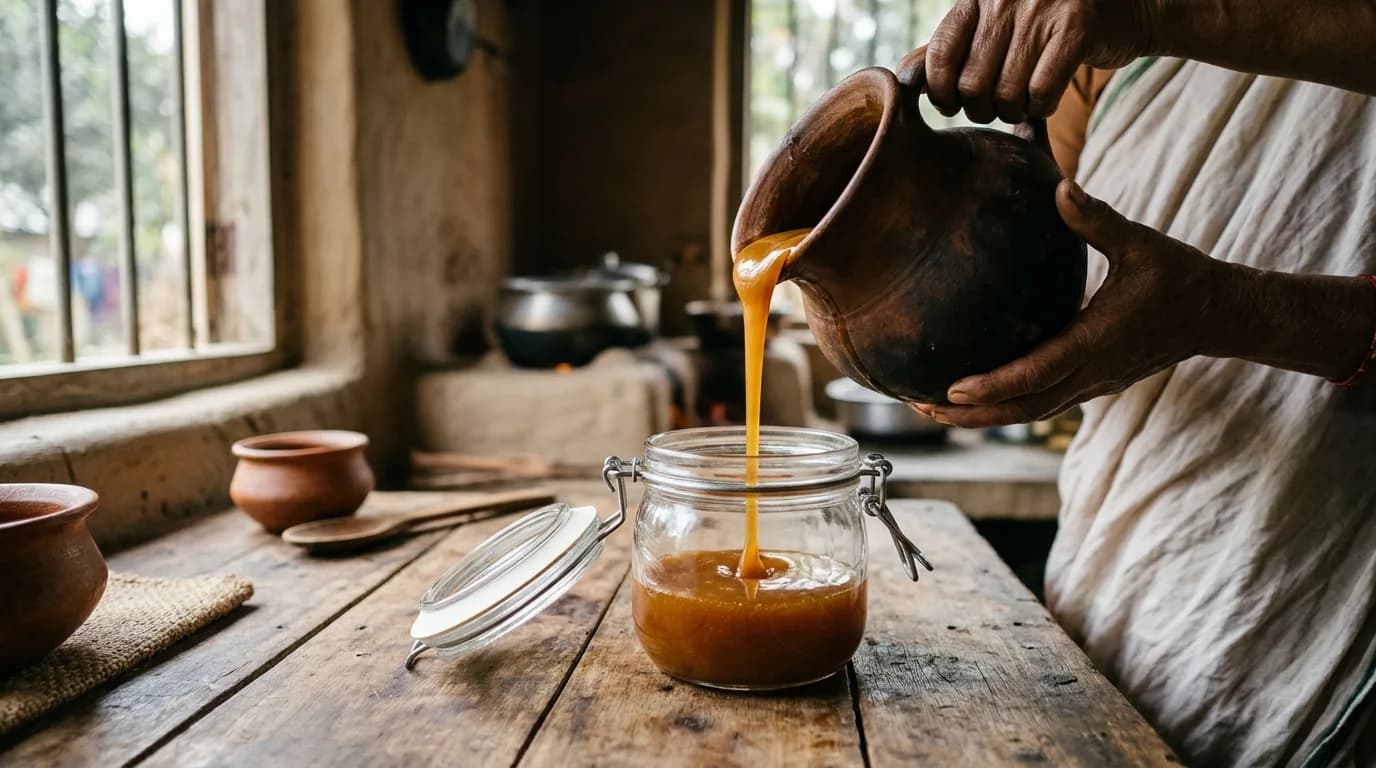
Finish by pouring in enough warm, tempered mustard oil so the mangoes sit at least one to two centimeters below the oil line. This layer shuts out oxygen completely, stopping surface molds like Aspergillus and Penicillium from taking hold. Stored this way in a cool cupboard, the pickle will stay fresh for 12 to 24 months.
Common Pickling Mistakes to Avoid
Even seasoned hands occasionally lose a jar. Watch out for these four common mistakes:
- Residual moisture on utensils: A single drop of water from a damp spoon or lid creates a pocket of moisture where gray mold can take hold within days.
- Inadequate oil depth: If mango edges poke above the oil level, they oxidize, turn black, and let surface yeasts grow.
- Skipping the seed lining cleanup: When chopping through the hard seed shell, scrape away the thin, papery white membrane (aanti'r porda) inside. Leaving it in ruins the achar with a harsh, bitter note.
- Using ripening mangoes: If a mango yields even slightly when pressed, leave it out. The extra fruit sugar ferments into alcohol and gas, making your jar bubble, seep oil, and soften into mush.
Putting up achar is one of the quiet pleasures of early summer. If you want to try this green mango pickle recipe with orchard-fresh fruit, take a look at our fresh mango section for sour, hard green mangoes harvested directly from our Rajshahi orchards.