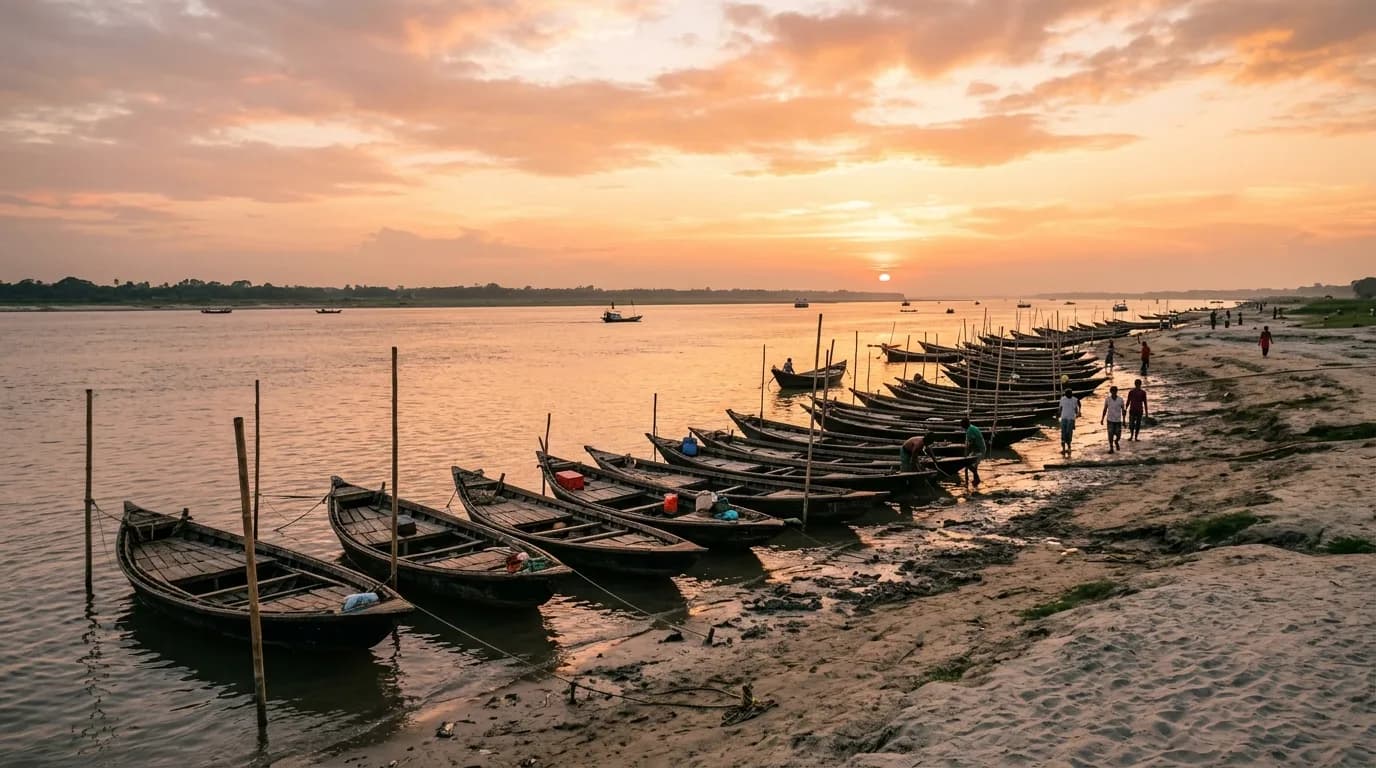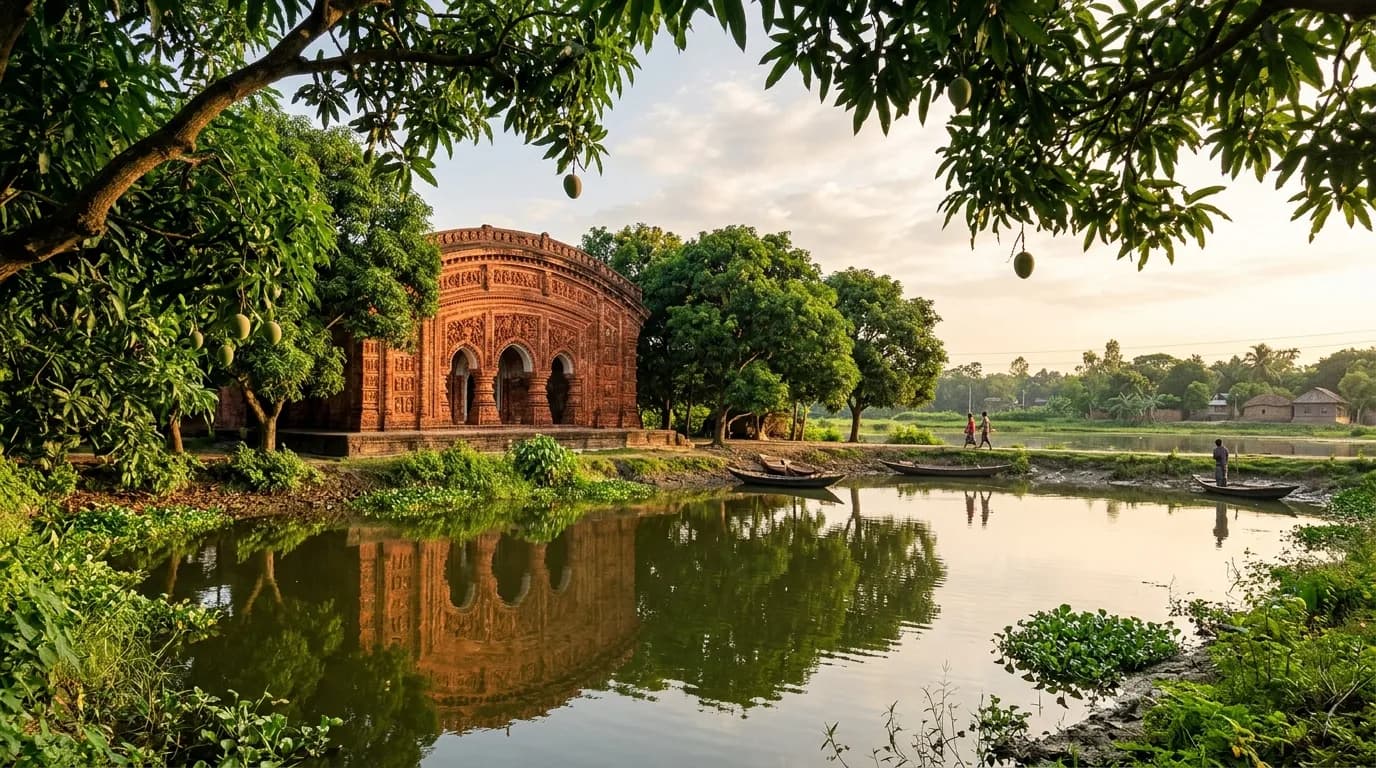
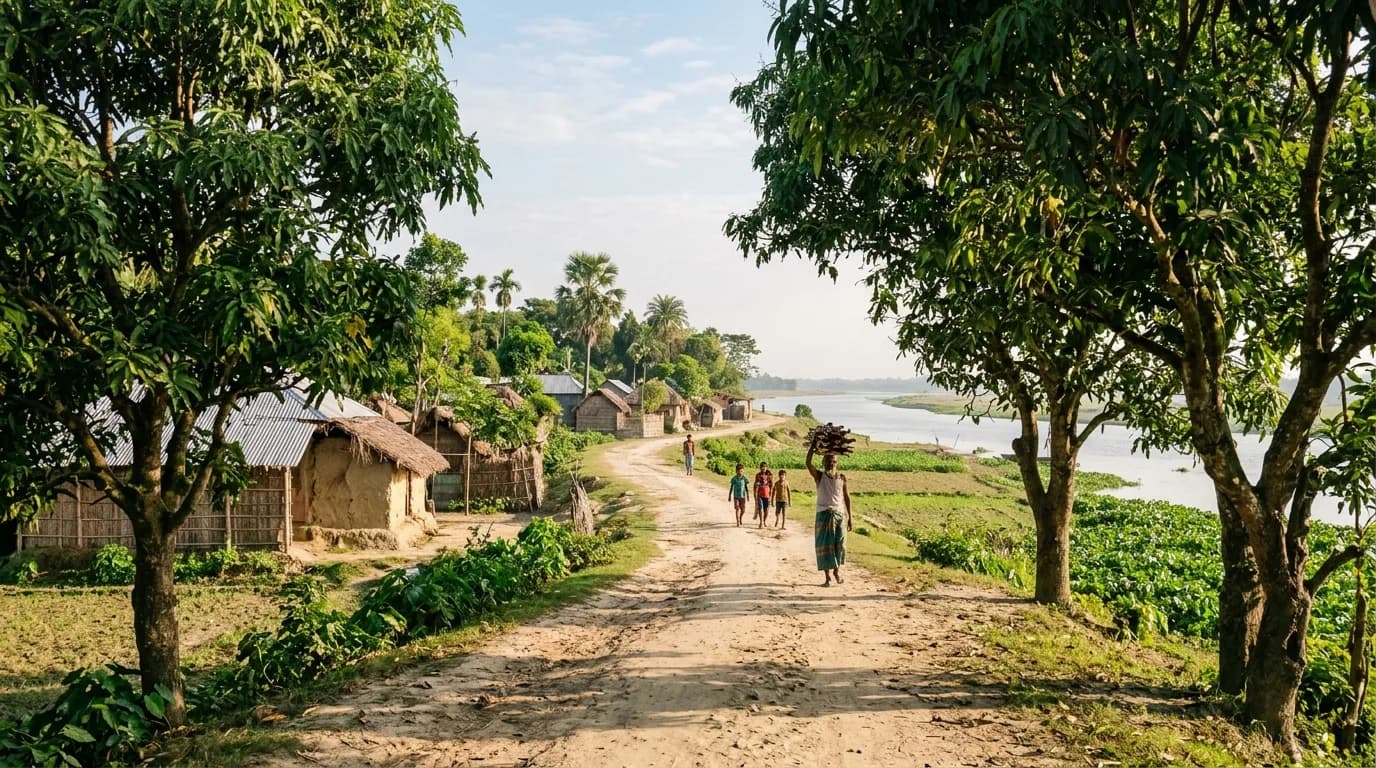
Set along the northern bank of the Padma River, Rajshahi has always lived by the rhythm of its ancient soil, shifting river currents, and agrarian seasons. To really get a sense of Rajshahi culture, you have to look beyond the modern town center and head out into the Barind tract. Out here, local dialects, folk theatre, and harvest cycles still shape daily life.
It is a calm, dignified corner of the country. Life here grew out of hard physical realities: scorching summer heat, stubborn red clay, and fertile river silt. Here is an honest look at the traditions, language, and everyday habits that define the region.
The Varendri Dialect: Voices of the Barind Tract
Walk into any home here and you will hear Varendri, the dialect native to the Barind tract. Standard colloquial Bengali is what children learn in school and officials speak in offices, but everyday conversations run on older speech patterns. In native Varendri, initial sounds soften, and common verbs take on distinct regional conjugations.
The language mirrors the land. The Barind tract is an undulating terrace of dense red clay that takes real muscle to till. Over generations, farmers developed a vocabulary full of precise terms for soil textures, dry spells, seasonal water levels, and working with draft animals—words you cannot easily translate into standard Dhaka Bengali without losing what they actually mean.
Folk Performance and Satire: The Living Art of Gambhira
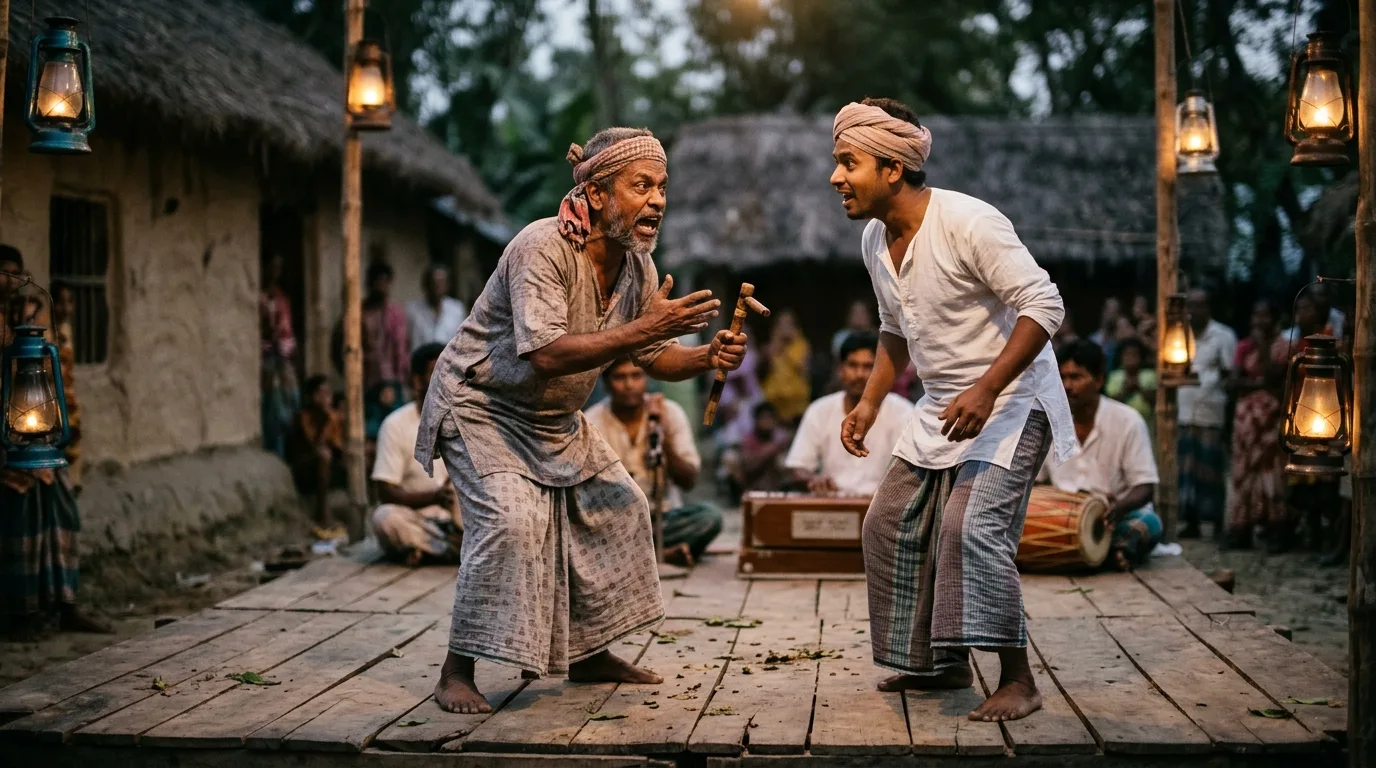
Few traditions capture local character quite like Gambhira, a form of folk musical theatre unique to Rajshahi and Chapainawabganj. It isn't just lighthearted comedy; Gambhira is sharp, rhythmic satire aimed squarely at current affairs.
The act hinges on the back-and-forth between two figures: Nana (the grandfather) and Nati (the grandson). Backed by drums and a harmonium, the pair trade quick, rhyming barbs about local grievances, bad governance, farming headaches, and shifting social norms.
Villagers historically staged Gambhira during Chaitra Sankranti, the close of the Bengali year, using the stage to air complaints directly before village leaders and local deities. Today, even when performed on modern stages or in public awareness drives, it keeps that same bite and remains central to our folk identity.
Sericulture and the Craft of Rajshahi Silk
Rajshahi earned its reputation as the "Silk City" of Bangladesh through generations of sericulture. The entire trade rests on the life cycle of the mulberry silkworm (Bombyx mori), which feeds only on the leaves of cultivated mulberry trees (Morus alba).
It takes quiet patience. Families nurse the delicate larvae through each molting stage, harvest the cocoons, and ready them for boiling, reeling, spinning, and handloom weaving supervised by regional sericulture boards. The finished mulberry silk—known locally as paat—is prized for its soft natural sheen, light weight, and the way it breathes in warm, humid weather.
Culinary Traditions: The Ritual of Kalai Ruti
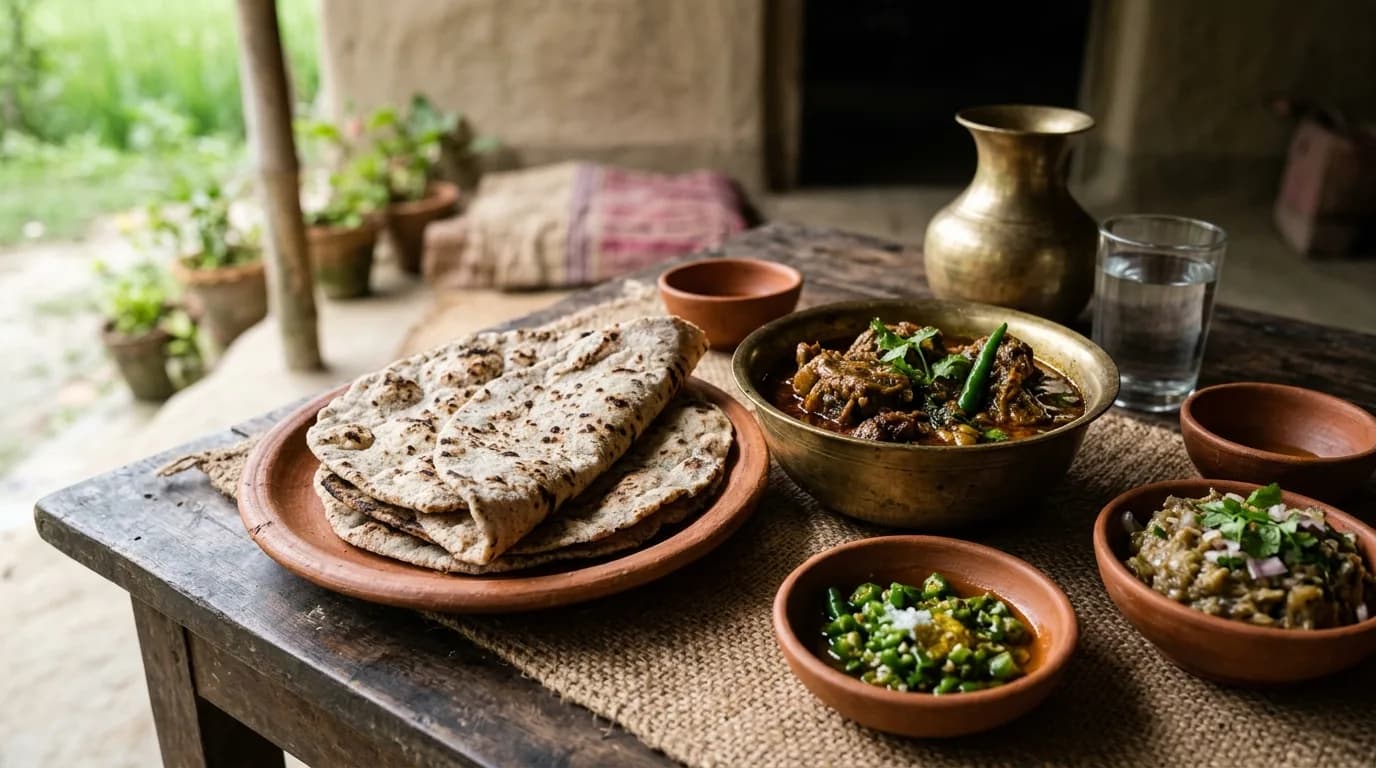
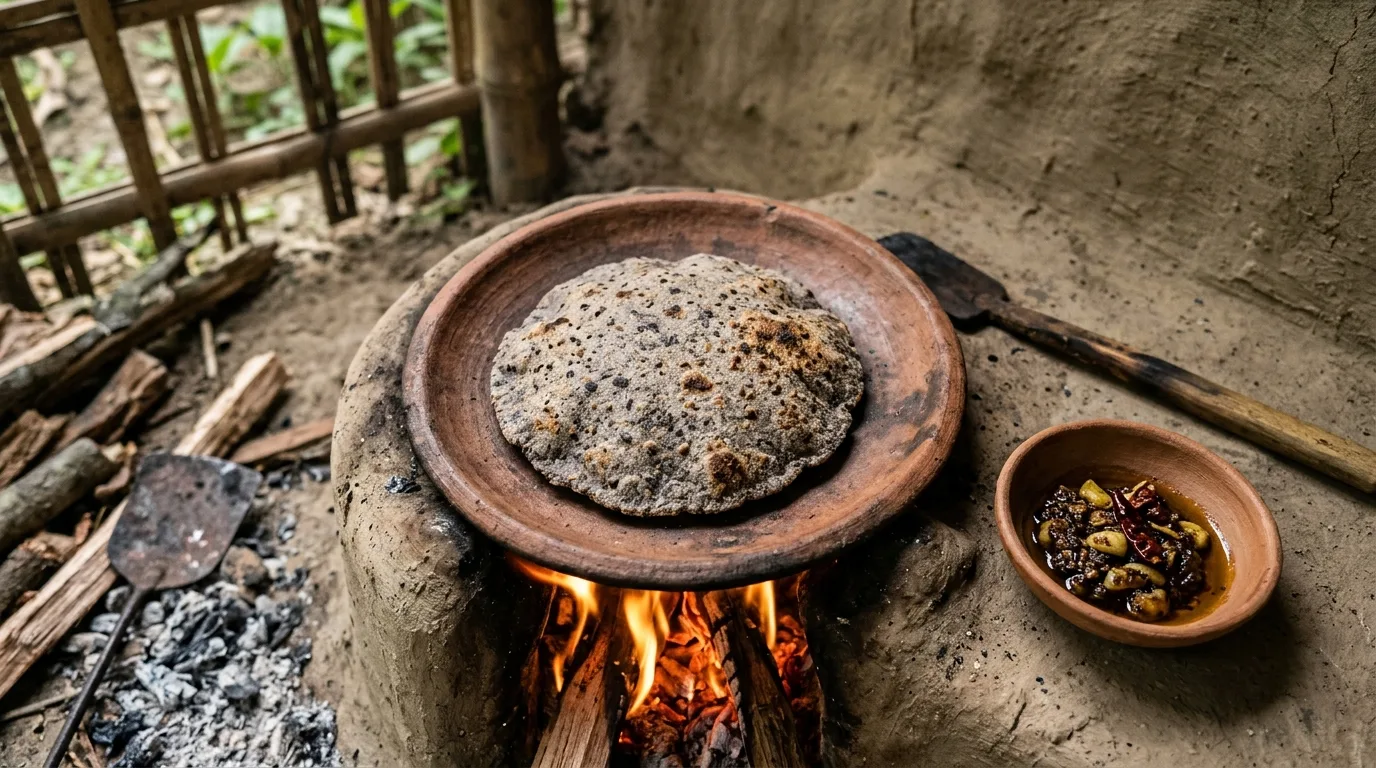
Food here was built for hard work. It is practical fuel meant to keep a person going through long days in the heavy clay fields. At the center of it all is Kalai Ruti, a thick, hearty flatbread made with a specific balance of grains.
The Formulation and Baking Technique
Proper Kalai Ruti relies on a mix of dehulled black gram (mashkalai or Vigna mungo) and parboiled rice flour (atop chal), usually blended in ratios between 1:1 and 1:2. The dough takes nothing more than salt and room-temperature water, worked vigorously until smooth and pliable. Get the water wrong, and the black gram quickly turns sticky and impossible to handle.
You won't see a rolling pin near the board. An experienced maker takes a ball of dough and pats it out between damp palms in mid-air, turning it steadily until it stretches into a flat, round disc. From there, it goes straight onto a dry, unglazed clay pan (matir khola) set over an open wood fire.
How It Is Served
You have to eat Kalai Ruti hot off the clay pan. As it cools, the rice starch sets, and the bread turns tough within minutes. Traditional sides are simple and robust:
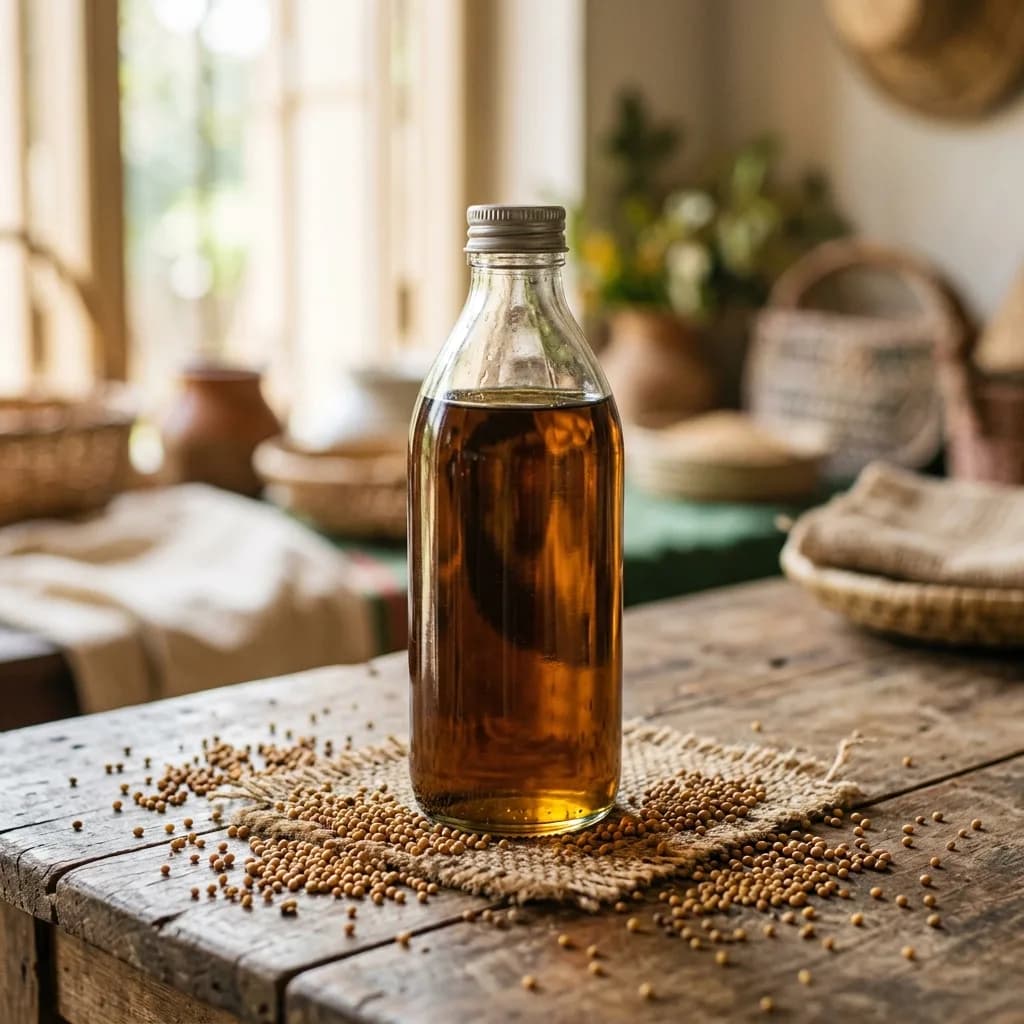
- Freshly pounded roasted garlic paste blended with pungent raw mustard oil and fiery bird’s eye chilies.
- Charred eggplant mash (begun bhorta).
- Rich, slow-cooked duck or beef curries cooked with whole aromatic spices.
The Mango Harvest Calendar: Rajshahi Culture and the Land
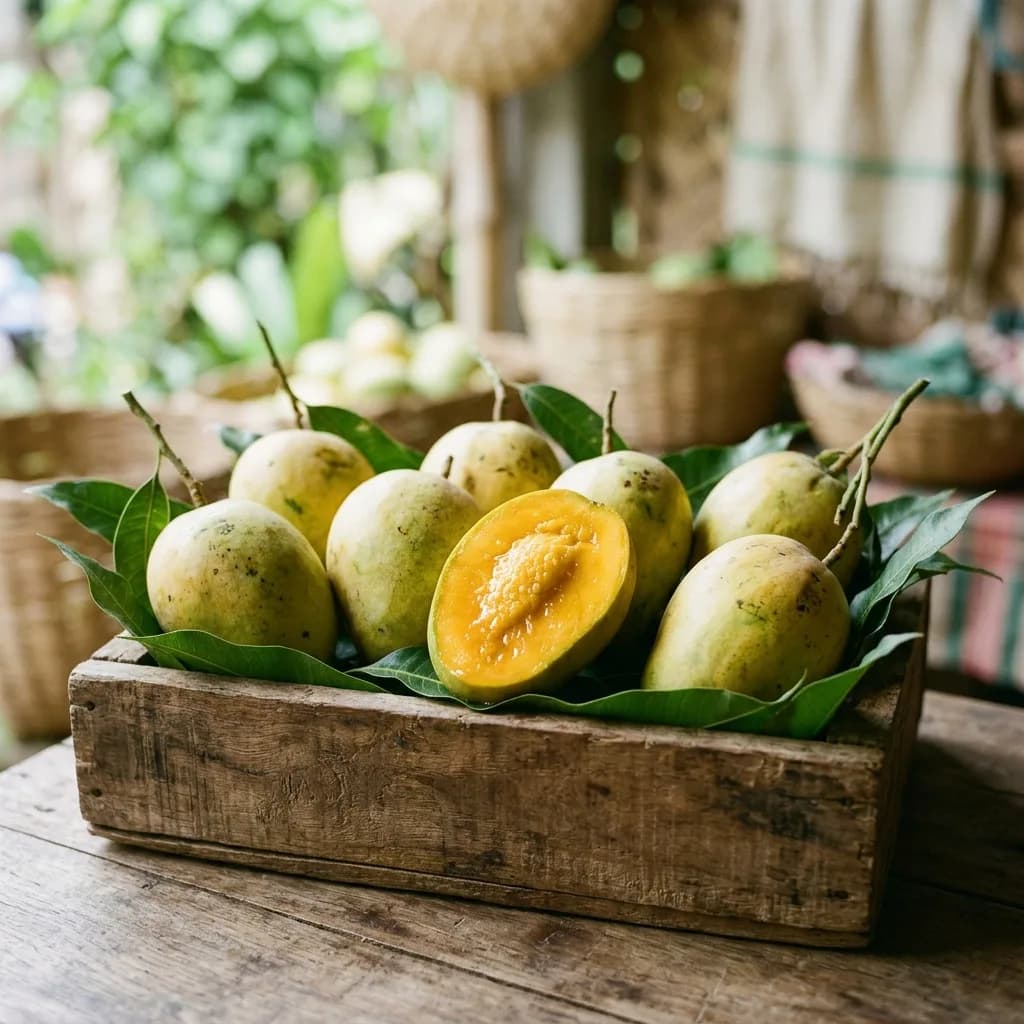
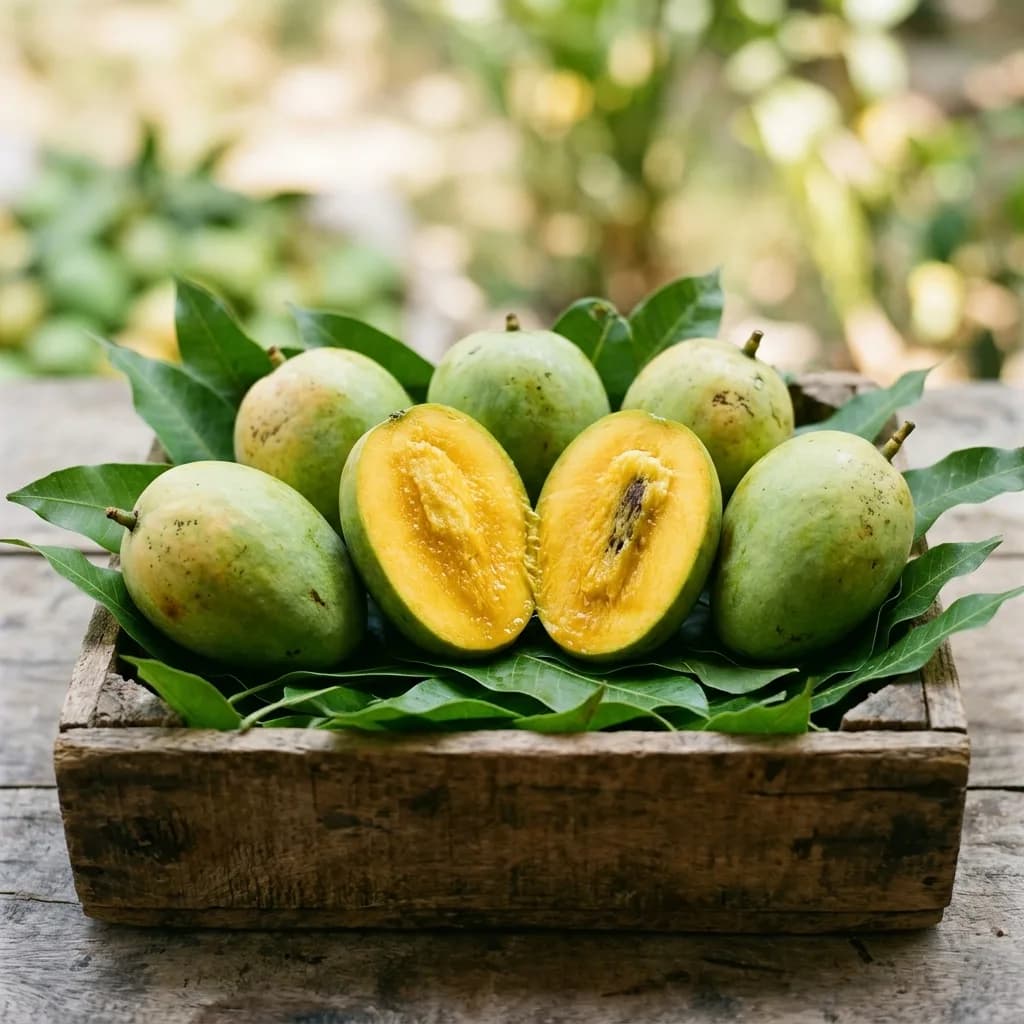
You can't talk about Rajshahi without talking about mangoes. From May through August, daily routines, local business, and almost every conversation center on the orchards. To keep fruit quality high and stop growers from picking unripe batches, the Rajshahi District Administration issues a mandatory harvest calendar each year[2].
| Mango Variety | Permitted Picking Start Date | Characteristics |
|---|---|---|
| Guti (Indigenous Seedlings) | May 15 | Early ripening, high acidity, fibrous |
| Gopalbhog | May 22 | Sweet, thin rind, golden pulp |
| Ranipasand & Laxmanbhog | May 25 | Early table varieties, mild sweetness |
| Khirsapat (Himsagar) | May 30 | Rich aroma, completely fiberless, creamy |
| Langra & Banana Mango | June 10 | Distinct aromatic flavor, highly prized |
| Fazli & Amrapali | June 15 | Substantial size (Fazli) or deep color (Amrapali) |
| Late Season (BARI Aam-4, Ashwina) | July 5 – July 15 | Firm flesh, extends the regional season |
Orchard work teaches patience. If you tear a mango straight off the branch at the base, caustic sap leaks down the peel and burns the skin. Good growers clip the stem clean, leaving an 8 to 10 millimeter pedicel attached so the fruit stays unblemished.
Modern handling backs up these old habits. Research institutions recommend Hot Water Treatment (HWT)—submerging picked fruit in water at 52°C to 55°C for 5 minutes[4],[5]. That short dip takes care of surface anthracnose spores and fruit fly larvae without hurting the pulp[4],[5]. Meanwhile, ripening fruit with calcium carbide ($CaC_2$)—which releases toxic acetylene laced with arsine—is strictly illegal under the Bangladesh Safe Food Act.
Experiencing Rajshahi Through Honest Produce
What makes this corner of Bangladesh special is its respect for honest labor, seasonal boundaries, and unhurried craft. You see it in the sharp wit of a Gambhira performance, and you feel it when an artisan bakes fresh Kalai Ruti over an open clay hearth.
We bring that same seasonal discipline to what we do. Tending our own family orchards in Rajshahi since 2013, we harvest tree-ripened fruit like our fiberless Himsagar Mango and classic Langra Mango strictly according to maturity dates. We pack our fruit carefully in 12 kg and 24 kg crates, sending fresh, formalin-free harvests by trusted courier straight to doorsteps across Bangladesh. Check out our seasonal selection in our fresh mango catalog and bring the honest taste of the Barind tract to your table.